Lifetime Citizen Portal Access — AI Briefings, Alerts & Unlimited Follows
Lawmakers, residents press to change Newtown land deed from economic development to open space; Hubbard foundation seeks financing fix
Loading...
Summary
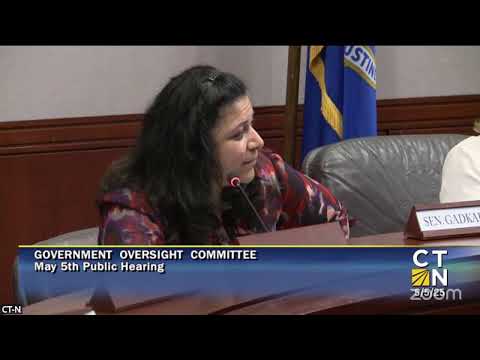
Senator Tony Huang, a state senator, told the Government Oversight Committee on May 5 that he strongly supports Senate Bill 1562 to change the authorized use of a parcel of state land in Newtown from economic development to open space and recreation, and Senate Bill 1564 to amend a prior conveyance to the Catherine Violet Hubbard Foundation so the nonprofit can access financing.
Senator Tony Huang, a state senator, told the Government Oversight Committee on May 5 that he strongly supports Senate Bill 1562 to change the authorized use of a parcel of state land in Newtown from economic development to open space and recreation, and Senate Bill 1564 to amend a prior conveyance to the Catherine Violet Hubbard Foundation so the nonprofit can access financing. "Once gone, [it is] lost forever," Huang said of the meadow and streamside land.
The bills would alter deed restrictions on parcels near Deep Brook and the Catherine Violet Hubbard Animal Sanctuary. Supporters said the change would protect a high meadow and uplands that sit over a sole-source aquifer and above Deep Brook, a Class 1 trout stream, while allowing the sanctuary to build educational and animal-care facilities.
Why it matters: The parcels have been the subject of repeated development proposals for decades without resulting construction, supporters said, and environmental experts and residents now urge preservation. The Hubbard foundation said its current deed language limits its ability to borrow to fund construction of a learning barn and future veterinary intake facilities; the proposed amendment was drafted with guidance from the Office of the Attorney General, witnesses said.
What supporters told the committee: Huang said the 6 Commerce Road parcel had been deeded in February 2004 with an economic-development restriction, but that the community now favors preserving the land. "This is a pivot" toward a different understanding of economic development that embraces ecotourism and environmental education, Huang said. Jennifer Hubbard, president of the Catherine Violet Hubbard Animal Sanctuary, said the foundation has raised millions, completed a learning barn and needs a clarified deed to access traditional construction financing for subsequent phases.
Conservation groups and residents urged protection of habitat. Amy Blaymore Patterson, executive director of the Connecticut Land Conservation Council, said the parcel is valuable for habitat and water protection and urged specificity when lands with conservation value are repurposed. Dave Eckert of the Newtown Conservation Coalition and other residents described the site as meadow and upland that helps prevent erosion and protect groundwater recharge.
Opposition and cautions: Some speakers urged clarity about whether allowing noncommercial uses could still permit some form of housing or other development; Charlie Gardner, a Newtown resident, asked that the bill explicitly state it would not bar the town from considering housing, including affordable housing, so the town retains local discretion. Representatives on the panel asked how the sanctuary's proposed ability to use the property as collateral would be limited in the event of a loan default; witnesses said deed restrictions and guidance from the attorney general were intended to protect the public interest but said legal language would define the limits.
Clarifying details recorded in the hearing: Representative Balinski said the 6/8 Commerce Road parcel comprises about 41.7876 acres. Witnesses said the Hubbard parcel was conveyed to the foundation in 2014, and that the 2004 conveyance applied to part of a larger Fairfield Hills reconveyance and had been marketed for Newtown Tech Park proposals over the past two decades.
What happens next: The hearing was a public fact-finding session; no committee vote on the bills was recorded at the hearing. Supporters urged the committee to approve the conveyance changes so the town and nonprofit can implement the sanctuary’s approved site plan and preserve the uplands and meadows.
Ending: Proponents said the change would preserve a sensitive ecological corridor while enabling the sanctuary’s education and animal-care mission; opponents and some legislators asked for clearer statutory language to protect against unintended commercial development and to specify the limits of any loan collateralization.