Get Full Government Meeting Transcripts, Videos, & Alerts Forever!
Get email alerts on the Agriculture topic
No spam. Unsubscribe anytime.
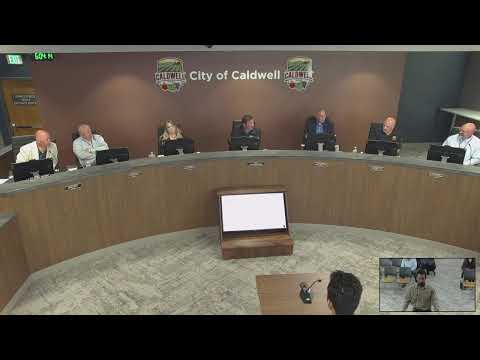
Seed-industry representatives tell Caldwell leaders small-acre farmland drives statewide economy, urge protection
Summary
Representatives of the seed industry described Canyon County's small-acre, high-value seed production to the Caldwell City Council, outlined economic figures and warned that loss of farmland and sprawl could damage an export-oriented sector.
George Crookam, a seed-industry representative, told the Caldwell City Council that Canyon County and the Treasure Valley are a globally important center for seed production and urged local officials to account for the sector when planning land use.
Crookam told council members that “when I say Treasure Valley, this is mainly Canyon County” and that the area’s combination of high desert climate and irrigation produces seed with “reduced disease and insect pressure.” He said the region grows more than 50 seed species and over 100 varieties and that “today, Canyon County, Treasure Valley grows 60% of the world's temperate sweet corn seed.”
The presentation explained why the local seed economy depends on many small fields rather than the large fields found in other states. Crookam said 45% of local seed production fields are 5 acres or less and 59% are 10 acres or less, and he warned that fragmentation caused by residential development reduces the isolation growers need to maintain seed purity. “If we get crop cross contamination by bees on onions or by wind on corn, it renders the crop unsalable,” he said.
Nut graf: The council heard specific economic and land-use arguments aimed at persuading city leaders to factor seed production into growth decisions. Presenters cited statewide and county-level studies, production statistics and examples of international markets to show the scale and export orientation of the industry.
Details and supporting points
- Economic scale: Crookam cited an industry estimate produced with Idaho Eastern Oregon Seed Association data that placed the seed sector’s economic activity at roughly $1.5 billion (the presenter referenced a $1,550,000,000 figure) across production, research, processing and related services. He also said only about 5% of seed is sold inside Idaho while roughly 40% is sold internationally, bringing export dollars into the local economy.
- Value-per-acre comparisons: Crookam compared seed and commodity crops, saying some seed crops (for example, onion seed) return far more per acre than typical commodity crops. He illustrated that a small amount of onion seed can be resown to produce hundreds of 50-pound bags of onions, translating a small seed sale into thousands of dollars in farm-gate value.
- Land-use and fiscal ratios: Using replicated county-level service-cost studies (he referenced work replicating studies by the University of Idaho and BYU and presented county clerk Rick Hogaboon’s projections), Crookam said residential development now produces a higher cost-to-revenue ratio than 20 years ago. He cited a residential service ratio of about 1.4 (meaning residential revenue no longer covers services) and a 20-year residential shortfall he described as $1,115,000,000, and he warned those trends create fiscal pressure if farmland is converted to low-density housing.
- Global markets and protocols: Crookam described international acceptance of Idaho seed, saying in some cases importing countries—he cited Australia as an example—chose Idaho under negotiated protocols rather than other U.S. suppliers because of confidence in quality and phytosanitary controls.
Council and public responses
Council members and at least one county official present discussed next steps. Councilor Stoddick asked whether the presenters planned to take the same material to county commissioners; Crookam said they would try. Other council members said they supported mixed-use and higher-density development patterns, and several speakers emphasized the need to consider impacts on agriculture during rezone or annexation processes. One speaker identified in the record as a commissioner urged that the county engage farm stakeholders before rezoning farmland.
Discussion versus direction versus decision
- Discussion: Crookam’s presentation and council comments centered on industry scale, field-size sensitivity, fiscal ratios and the risks of fragmented farmland.
- Direction/assignment: Council members suggested sharing the presentation with other bodies (county commissioners were mentioned) and called for follow-up engagement; Crookam said he would pursue presenting to the county.
- Formal action: No formal motions, votes or ordinance actions regarding land-use policy were recorded during this presentation.
Ending
Council members thanked the presenters and several said the material reinforced support for higher-density and mixed-use development in parts of the city while urging staff and county officials to consider the seed industry’s needs during land-use and annexation reviews.