Get Full Government Meeting Transcripts, Videos, & Alerts Forever!
Get email alerts on the Jackson Grove Housing topic
No spam. Unsubscribe anytime.
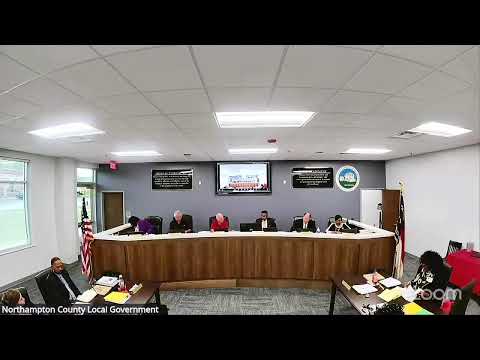
Commissioners approve $275,000 gap for Jackson Grove workforce housing project; vote 3–2
Summary
The board voted 3–2 to cover a $274,970 funding shortfall on a USDA-backed Jackson Grove workforce housing project, reducing the planned scope to six townhome units and leaving the county with ownership responsibilities.
Northampton County commissioners voted to approve a request to cover a roughly $275,000 funding deficit for the Jackson Grove workforce housing project, a residential development on U.S. Highway 305 the county acquired in 2020.
Economic-development staff told the board the county purchased the 10-acre tract in February 2020 for $33,500 and later sought a U.S. Department of Agriculture construction grant. The county received a $3 million USDA award for the project; subsequent design, engineering and bid activity reduced the number of units that can be built with that award.
County staff presented an accounting showing $520,970 spent for architecture and engineering. Bids were re-advertised after initial estimates significantly exceeded projections; the lowest construction bid received was $2,754,000. Combined with the architecture and engineering costs, staff calculated a total projected cost of $3,274,970 and identified a funding deficit of $274,970. Staff asked the board to approve covering that deficit from the county's capital outlay funding.
At the meeting a commissioner moved approval of the project; after discussion the motion carried 3–2. The county attorney reviewed a draft contract with the successful bidder and reported no legal concerns. Staff noted that if the board delayed approval the bidder's price lock would expire — the low bidder had extended their contract through the following day.
Commissioners and some public commenters expressed concern about transparency and use of capital-outlay funds; others said the county needs housing and that county ownership of new units will be an asset. The manager and staff said the county would own six townhome units at project completion and that the units could create future rental income or be used to promote housing stability for county workers.
The board instructed staff to complete necessary contract paperwork and to incorporate the expense into the capital project accounting and next budget adjustments.