Get Full Government Meeting Transcripts, Videos, & Alerts Forever!
Get email alerts on the Public Works topic
No spam. Unsubscribe anytime.
Riley County Noxious Weed director requests modest 2026 increase, flags insurance and contract revenues
Summary
Noxious Weed Director Mike Bowler presented a 2026 budget request with a modest $1,500 increase aimed at rising fleet insurance costs, and reviewed 2024 reimbursements from state and local partners that offset departmental costs.
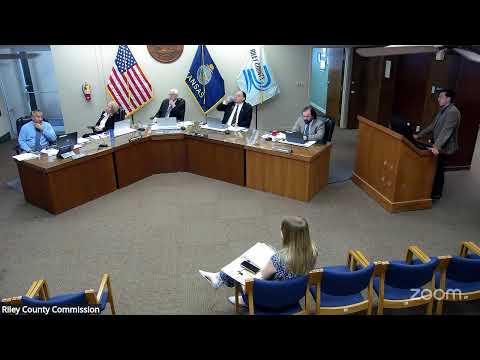
Mike Bowler, Riley County Noxious Weed director, presented the department’s 2026 budget request to the commission on May 5 and requested a modest increase—$1,500—to its contractual-services line to cover an expected jump in fleet insurance.
Bowler told commissioners that most commodity and capital-outlay line items remain flat from 2025—reporting stabilization in several chemical and fertilizer costs after post‑COVID volatility—and that the department’s total operating expenditures including personnel are down approximately 2.7% from 2025 levels due to personnel changes and limits on step increases.
He also provided detailed reimbursements from outside entities for 2024: the state reimbursed the county $6,622.28 for treating state roads; 10 other counties reimbursed $42,215.40 for waste-disposal-related services; and seven township contracts reimbursed $9,596.72. Total 2024 collections from contracts and chemical sales, Bowler said, were a little over $107,000—revenue that offsets the department’s operating budget.
Commissioners asked about the department’s capacity to handle township contracts; Bowler said equipment is sufficient and scheduling, weather and crop timing are the main limiting factors. He said the department typically serves five townships on average and up to eight or nine in some years.
Ending: Bowler closed by inviting questions and noting the department will continue to monitor insurance and contract-reimbursement trends.