Get Full Government Meeting Transcripts, Videos, & Alerts Forever!
Get email alerts on the Budget Fy26 topic
No spam. Unsubscribe anytime.
Williamsburg council trims FY26 budget, weighs admission tax and library plan
Summary
City Council reviewed a revised FY26 draft budget reduced to about $103 million, proposed new revenue measures including an admissions tax and utility rate increase, and left the long-term decision on a new downtown library for later public input.
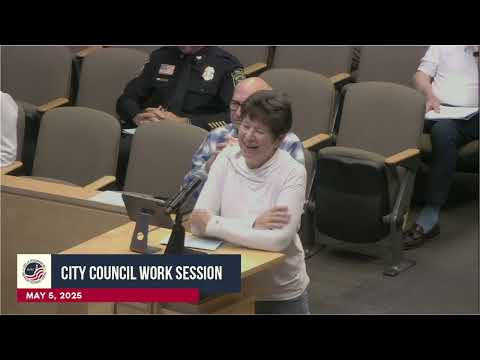
Williamsburg City Council members on May 5 reviewed a revised FY26 draft budget that officials say has been pared down to about $103 million after multiple rounds of reductions and is still likely to include new revenue measures if council adopts it Thursday.
City staff presented the budget and the line-item changes to council and the public. The proposed plan reduces the original $112.3 million request through about $22.8 million in capital project cutbacks, two rounds of expenditure reductions ($1.9 million and $1.3 million), and staffing freezes. City staff said the draft also repurposes $5.5 million in CARES/COVID relief funds and $1 million in reserves to help balance the capital improvement plan (CIP).
The presentation put the revised total at roughly $103,000,000 across six funds. City staff described three potential revenue actions that would not take effect until mid-year if adopted: a 1.5% increase in the real estate millage (estimated to produce about $1.2 million), a 2% lodging tax increase (about $635,000), and a proposed 10% admissions tax with exemptions and caps (estimated to produce about $793,000). Staff also proposed a water rate adjustment that would add $1.59 per thousand gallons to the water rate to fund utility infrastructure work.
The admissions tax proposal would be collected from patrons on ticketed events, capped to the first $10 of taxable admission price, exempt university-sponsored events per state law, exempt public school events, and exempt charitable organizations with fewer than 2,000 admissions per year. The council directed staff to include a 2% dealer discount to reimburse hotels, restaurants and ticket sellers for collection costs. City staff told council the state limits the city’s discretion to tax university-sponsored events.
On utilities, staff proposed investing about $27.6 million over the next 10 years in water infrastructure and returning to annual, incremental rate increases after the larger step this year. The presentation estimated the proposed water increase would add about $6.36 per month for an average residential customer and about $28.62 per month for a commercial user; the increase would apply only to the utility fund.
Council members and residents pressed several themes during public comment: prioritizing needs over wants; pausing major capital projects such as the proposed new library until county plans and usage data are clearer; stronger transparency and public involvement in the budget process; and considering hiring freezes and cuts to nonessential positions. Multiple speakers urged re-evaluating the new library project in light of James City County plans and questioned whether renovation of the existing facility could meet needs at lower cost.
"A budget is not a contract," said Trivette, the city staff presenter, explaining the capital projects in the CIP still require further approvals before borrowing or construction begins. "Just because something is in the budget does not mean that we will proceed with it. That's particularly true on the capital side."
Vice Mayor Dent and other council members repeated that the library remains in the CIP as a placeholder and that the city has not borrowed money or committed to construction; the council intends public input sessions to inform any eventual decision. Staff announced two identical public input sessions hosted by the library contractor on May 15 (5:00–7:30 p.m., Fire Station Apparatus Bay) and May 20 (1:00 p.m., same location).
Council members emphasized trade-offs: several said they sought to preserve basic city services and public safety while trimming capital projects, and noted that schools’ requested increases (about $1.4 million this year) create additional pressure on the city budget.
Votes at a glance: the only formal vote recorded in the transcript was a procedural motion to adjourn, which passed by voice votes from the council members present.
The council will return May 8 for a final adoption vote on the FY26 budget; staff and council asked residents to submit additional feedback before that meeting.