Get Full Government Meeting Transcripts, Videos, & Alerts Forever!
Get email alerts on the Hospital Budget topic
No spam. Unsubscribe anytime.
Guam Memorial Hospital asks Legislature for $21.9M to avoid service cuts; warns of cash shortfall and vendor disruptions
Summary
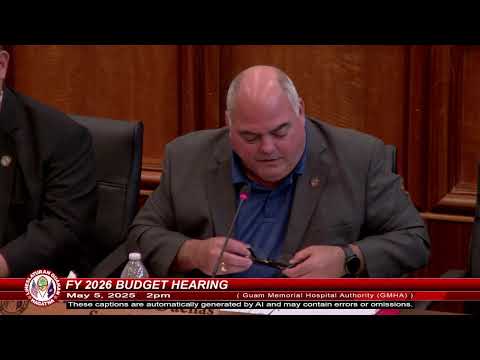
Guam Memorial Hospital Authority (GMHA) officials told the Guam Legislature Committee on Finance and Government Operations on May 5 that the hospital needs an additional $21.9 million in operating funds for fiscal year 2026 and about $29.3 million for capital improvement projects to maintain current services.
Guam Memorial Hospital Authority (GMHA) officials told the Guam Legislature Committee on Finance and Government Operations on May 5 that the hospital needs an additional $21.9 million in operating funds for fiscal year 2026 and about $29.3 million for capital improvement projects to maintain current services.
GMHA Chief Executive Officer Lillian Posadas told senators GMHA is Guam's only public, safety‑net hospital and said the extra funding request equals about 10% of the hospital's projected operating expenses. “If we cannot provide or sustain basic medical care to everyone who enters the hospital because of the limited resources, be it financial, staffing, or supplies, then we all fell in our duties and responsibilities,” Posadas said.
The nut of GMHA's presentation: the authority projects FY2026 operating expenses of $213.6 million and identified projected funding sources of about $191.7 million, leaving a $21.9 million gap that, hospital leaders said, would force service reductions if not filled. Chief Financial Officer Yuka Hetchanova told the committee GMHA's average monthly cash requirement is $16–17 million while monthly receipts average about $13 million, producing roughly a $3 million monthly shortfall.
Hetchanova gave senators a line‑item view of the shortfall: GMHA collections are estimated at roughly $133 million, budgeted appropriations at $54 million from the general and pharmaceutical funds, and $4 million from the Department of Corrections for clinic services. She said payables stood at about $20.8 million as of May 2, 2025, with the largest balances owed to vendors for pharmaceuticals and supplies.
The hospital described several operational consequences if the gap is not closed: bed closures, longer emergency‑department waits for inpatient beds, inability to pay for drugs, oxygen and equipment servicing, and reduced ability to retain nurses and physicians. “Without [the $21.9 million], GMHA will have reduced capacity that will require bed closures,” Hetchanova said.
Reimbursements and Medicare/Medicaid issues
Hospital staff described a widening gap between reimbursement and actual costs. Hetchanova said GMHA's FY2024 Medicare cost report showed a cap per discharge of $13,000 while the hospital's calculated actual cost per discharge was $28,000 — a $15,000 gap. The hospital is seeking ways to rebalance reimbursements, including resuming delayed CMS cost‑report audits and exploring options such as a consultant to pursue rebasing and a potential “critical access hospital” designation; GMHA officials said they are working with Guam's congressional delegation to explore federal options.
Dr. Samuel Eusebio, a surgeon who testified for GMHA, warned the committee the island's long history of expecting "free" care contributes to chronic underfunding and urged measures to enforce collections, streamline procurement and insulate hospital management from political interference. “The reality is that health care is not free,” Dr. Eusebio said.
Collections, self‑pay and social‑case patients
GMHA reported large old receivables: old self‑pay balances totaling about $222 million and roughly $51 million in “social case” uncollectible charges from patients who have exhausted benefits but remain hospitalized. The hospital said it will outsource collections of older accounts while focusing internal staff on current receivables.
Travel nurses and near‑term cash deadlines
Senators were told of an immediate vendor deadline: one travel‑nurse vendor, New West, requires a $2 million payment by May 9 to continue assigning travel nurses to GMHA. Hospital staff said New West currently supplies about 18 nurses and Medical Solutions supplies two; failure to make the payment would mean most travel‑nurse replacements would stop.
Capital improvement needs and IT/EHR
GMHA requested $29.3 million in CIPs, with project urgency color‑coded (red = 0–6 months). Major items include an estimated $14.5 million for an electronic health record (EHR) procurement, $5 million for IT network infrastructure, and an estimated $5.1 million in the first year for replacement of the main electrical distribution panel and emergency generator. Assistant Administrator Bridal Gerardo and others said the EHR and IT work are on a five‑year CIP plan but cannot move forward without identified funding.
GMHA also said it completed an HHS Office for Civil Rights (OCR) risk analysis — the contractor was IS Squared, paid about $50,000 — and that an IT assessment funded through a digital equity grant would further refine EHR scope and cost estimates. Hospital staff cautioned the EHR total lifetime cost could be substantially higher than the FY2026 initial estimate.
Cost containment proposals and personnel
GMHA outlined potential cost containment steps that include: workforce reduction up to 10% (estimated annual savings roughly $10–13 million if implemented), outsourcing outpatient clinic space for high‑cost specialty services, renegotiating radiology contracts from hourly to per‑read billing, reducing on‑call pay (currently $9.25 per hour under a board resolution), and reevaluating all travel nurse and physician contracts.
Personnel costs are the hospital's largest expense. Hetchanova said salaries and benefits rose from about $85.1 million in FY2020 to $138.4 million in FY2024. The FY2026 personnel budget anticipates a higher retirement contribution rate (projected at roughly 34.8%), which GMHA said it cannot absorb without additional funds.
Legislative and administrative fixes requested
GMHA legal counsel Jordan Paul and Personnel Services Administrator Jesse King asked senators for three types of legislative help: raise the local small‑purchase procurement threshold (GMHA suggested $100,000 up to $250,000 to mirror federal simplified acquisition), a statutory true‑up so GMHA receives an assured 6.19% share of the pharmaceutical fund business privilege tax (BPT) collections each year, and an extension or amendment to a sunset on a tax‑credit program (Public Law 35‑138) to encourage private donations, equipment and supplies. King also asked for nurse recruitment funding to capture newly graduated nurses from the University of Guam and Guam Community College.
Department of Corrections billing and other payers
GMHA staff clarified the hospital bills DOC for on‑site clinic operations and inpatient care; GMHA pays the clinic employees and invoices DOC for reimbursement. Old DOC inpatient receivables pre‑2020 were estimated around $3 million; hospital leaders said some older workers' compensation and DOC claims remain unresolved and may be proposed for write‑off if uncollectible.
Several senators pushed GMHA and the Department of Administration (DOA) to resolve withheld Medicaid and other reimbursements that hospital officials say DOA is using to recoup past advances; GMHA said DOA currently offsets about 50% of Medicaid reimbursements to pay prior advances, reducing monthly cash flow by roughly $1–2 million.
Next steps
GMHA leaders said they had submitted written CIP and grant materials to agencies including GURA for CDBG‑DR funding and were pursuing other federal grant avenues. The committee chair closed the hearing and said written testimony would be accepted for seven calendar days. The hospital and senators agreed to continue follow‑up on several items: vendor payment timing, the May travel‑nurse deadline, the final HHS OCR response to the risk analysis, DOA reconciliation of pharmaceutical fund allotments, and next steps for Medicare rebasing and the critical‑access designation.
Ending
Hospital leaders framed the request as essential to keeping Guam's only public hospital operating at current capacity while working on longer‑term reforms. “We are it,” Posadas said of GMHA's role for maternal and child health and other safety‑net services, and urged legislative support to avoid service reductions.