Get Full Government Meeting Transcripts, Videos, & Alerts Forever!
Get email alerts on the Opioid Behavioral Health Funding topic
No spam. Unsubscribe anytime.
Forsyth County staff recommend $4.5 million in opioid-settlement spending and maintain $4.03 million behavioral-health baseline for FY26
Summary
County staff proposed allocating $3 million expected opioid-settlement receipts for FY26, recommended $4.5 million in program awards next year, and recommended maintaining a $4,026,677 annual baseline for behavioral-health continuation funding.
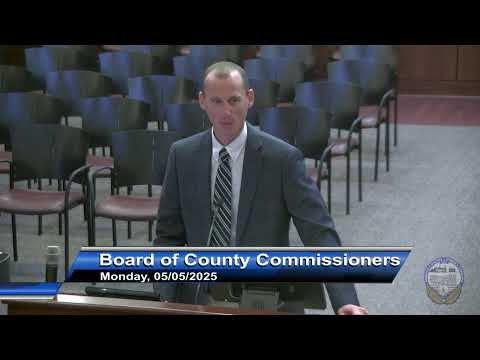
Rhonda Tatum, interim director of Behavioral Health Services for Forsyth County, told commissioners at the May 5 briefing that the county anticipates receiving a little more than $26 million in remaining opioid-settlement funds over the next 14 years and expects about $3,000,000 in FY26.
Tatum presented two related items for the Board of Commissioners: a resolution to appropriate FY26 opioid-settlement funds and a resolution to appropriate the county's annual behavioral-health “maintenance of effort.” She said the county is recommending full appropriation of the maintenance-of-effort figure of $4,026,677 and is recommending $4,500,000 in opioid-settlement awards for FY26 across 30 applications.
The maintenance-of-effort items reflect a continuation approach: staff said the HHS (Health and Human Services) review committee and the full HHS board reviewed applications and unanimously forwarded recommendations to commissioners. Annie Vasquez, the county’s substance-use services coordinator, led the opioid application and scoring process; Amber Humble, behavioral-health services director, also participated in scoring and program oversight.
Tatum told commissioners that in FY25 the county funded 26 opioid-related applications for about $3.3 million and that FY26’s proposal would increase both the number of recommended awards (to 30) and the total recommended amount (to $4.5 million). She said the county received 40 opioid-related applications in the current cycle and that the FY26 request pool totaled more than $9 million.
County staff said not all appropriated dollars are spent immediately because many grants are reimbursement-based; unspent appropriations and interest remain in the opioid special-revenue fund. At the briefing staff estimated there is a multi‑million dollar balance from prior years but said they would provide an exact reserve figure to the board before the Thursday meeting.
Tatum and Vasquez described plans to run a new three-year strategic planning process under the settlement MOA (memorandum of agreement) that will include a community needs and resource mapping exercise and a vendor-led gap analysis. Commissioners asked for clearer outcome measures tied to awards and for an annual impact report; staff said an annual impact report is required under settlement oversight and that they would provide metrics and prior-year comparisons.
Commissioners and staff also discussed the statutory and administrative framing of the county’s behavioral-health “maintenance of effort,” including whether the historical $4,026,677 figure represents a statutory obligation or a locally maintained baseline. County counsel and staff said they would follow up offline to ensure consistent statutory interpretation and to share the underlying documentation with commissioners.
The briefing materials and the HHS board recommendations will be distributed to commissioners ahead of the Thursday meeting; staff said the materials include lists of recommended and unfunded applications and that the county will post the RFP(s) for the strategic-planning vendor once funds are appropriated.
Ending: Commissioners expressed continued interest in outcome reporting for both the opioid-settlement programs and behavioral-health continuation funding. Staff committed to delivering the requested fiscal detail, prior-year comparisons, and planned impact metrics when they forward the ordinances and resolutions for board action on Thursday.