Get Full Government Meeting Transcripts, Videos, & Alerts Forever!
Get email alerts on the Children Youth Families topic
No spam. Unsubscribe anytime.
Tulsa launches Office of Children, Youth and Families and invites tribal partners to new children’s cabinet
Summary
Deputy Mayor Crystal Reyes described a new mayoral Office of Children, Youth and Families and a Tulsa Children’s Cabinet; tribal representatives from Muscogee (Creek), Osage and Cherokee nations outlined programs and offered to coordinate summer feeding, childcare, juvenile services and elder supports.
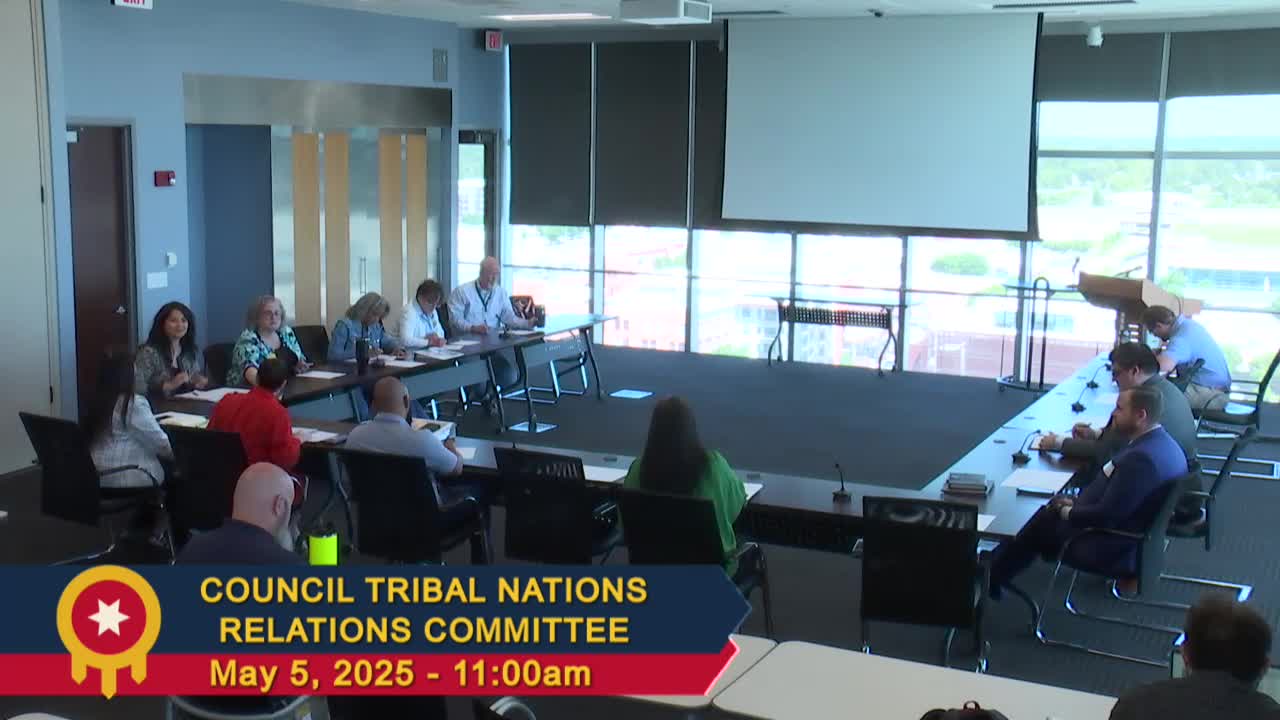
Deputy Mayor Crystal Reyes told the Tulsa City Council’s Tribal Nations Relations Committee that Mayor Nichols has established a mayoral Office of Children, Youth and Families and is forming a Tulsa Children’s Cabinet to align city and tribal efforts on child and family outcomes.
Reyes said the city has contracted with Impact Tulsa, a local cradle-to-career policy organization, to operate the mayor’s office and named Ashley Phillipson as the office director. "The vision is a Tulsa where every child and family, no matter their race, background, income, or ZIP code, thrives," Reyes said, describing the cabinet as a cross‑sector table of roughly 30 representatives plus issue‑focused "action alliances." She said the cabinet will include elected officials and that meetings will begin within weeks and convene roughly every other month for the remainder of the year.
The cabinet is intended to coordinate early childhood, career pathways and family‑stability work across city departments and outside partners, Reyes said, and the mayor has invited tribal nations to take part. "We have invited, and we hope to engage many conversations with our tribal nation partners, to the cabinet," she said.
Representatives from three tribal nations used the committee meeting to summarize programs that serve Tulsa residents and neighboring communities and to suggest specific areas for coordination.
Carmen Tecumseh Williams, cabinet secretary for Chief Hill of the Muscogee (Creek) Nation, described a suite of tribal direct services including a Children and Family Services Administration (CFSA) with prevention and investigative units, tribal foster‑care certification and a tribal juvenile justice system. Williams said Muscogee Creek Nation operates multiple childcare centers and has three newly completed facilities that will expand capacity; the nation also runs elder services, food distribution sites and a caregiver respite program. Williams said the tribe handles WIC services and that some children placed by the state remain a joint concern for tribal and state agencies. On the topic of summer food assistance, Williams credited intertribal cooperation last year and said tribal partners jointly fed roughly 91,000 children when the state declined to operate the program.
Theresa Bledsoe, secretary of social services for the Osage Nation, detailed Osage education and social services. She described Osage WELA early‑learning centers in multiple communities, the Deposca Oncadopy school (a state‑accredited private school the nation operates), scholarships and a new career‑training program that pays for trades training and certifications. Bledsoe said the Osage Nation assisted about 1,748 students this academic year with nearly $7 million in tuition benefits and that the nation’s WIC program serves roughly 3,000 participants per month. She also described a new Osage health benefit card that will provide a $1,000 yearly benefit to members under 65 and additional elder benefits, and she said the nation is expanding clinic and behavioral‑health capacity with planned treatment and transitional living facilities.
Speakers from Cherokee Nation and other tribal offices discussed summer EBT and other shared services. Committee members and tribal presenters suggested operational steps to connect city 311/311 web resources to tribal portals so caller screening can route tribal citizens to tribal benefits and hotlines; Amanda Swope (city liaison) agreed to explore cross‑linking and to provide outreach materials for city staff answering calls.
Committee members and tribal officials raised federal funding risks and the administrative burdens tribes absorb when they operate programs such as summer EBT. Osage and Muscogee speakers said they monitor proposed federal budget changes and that tribal offices often must expand staff and IT capacity to take on programs that previously ran at the state level.
The committee recorded one formal action at the meeting: approval of the Feb. 3, 2025, committee minutes by voice vote. The group set its next meeting for Aug. 4; committee staff said they will follow up with tribal offices to confirm cabinet appointees and share the children's‑cabinet materials distributed at the meeting.
The meeting combined a city policy announcement with operational briefings from tribal service providers; speakers urged the new cabinet to prioritize information sharing (including shared web links and 311 referrals), summer food access, childcare capacity and juvenile‑justice coordination.