Get Full Government Meeting Transcripts, Videos, & Alerts Forever!
Get email alerts on the Humanitarian Crisis Ukraine topic
No spam. Unsubscribe anytime.
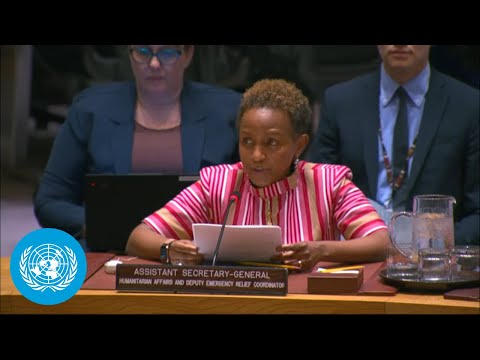
U.N. official: Humanitarian situation in Ukraine has worsened; aid shortfall risks lives
Summary
Joyce Msuya briefed the U.N. Security Council that civilian casualties, displacement and damage to critical infrastructure in Ukraine have risen and urged immediate protection for civilians, scaled-up funding and prioritizing civilians in peace efforts.
Joyce Msuya, speaking to the United Nations Security Council, said the humanitarian situation in Ukraine has worsened since spring and called for urgent protective measures and more funding to reach civilians in need.
Msuya said civilian populations across frontline regions — including Kharkiv, Kherson, Dnipro, Donetsk, Zaporizhzhia and border communities in Sumy — face “constant threat,” and that attacks on populated areas continue to cause mass casualties and damage to housing, schools, hospitals and other critical infrastructure. “So far this year, not a single day has passed without civilians being killed or injured in attacks,” she said.
The briefing summarized verified casualty and displacement figures from U.N. agencies and partner organizations: the Office of the U.N. High Commissioner for Human Rights (OHCHR) verified 2,641 civilian casualties in the first three months of the year — nearly 900 more than the same period in 2024 and more than 600 more than in early 2023 — and reported a 46% increase in verified civilian casualties compared with the same period last year. Msuya said attacks on Kyiv on April 24 alone killed at least nine civilians there and injured about 90 others, including 12 children; 44 people were hospitalized from that attack, according to OHCHR.
Humanitarian workers have also been harmed: Msuya reported that, between Jan. 1 and April 23, three aid workers were killed and 21 injured while delivering assistance. She said almost 13 million people in Ukraine require humanitarian aid. In the first three months of 2025, she said, more than 340 humanitarian organizations — largely national NGOs — reached an estimated 2.3 million people with life-saving assistance.
Displacement figures cited in the briefing included nearly 3.7 million people remaining internally displaced within Ukraine and close to 7 million people registered as refugees, mostly in Europe, according to U.N. refugee statistics referenced by Msuya. The International Organization for Migration, she said, reported that nearly 40,000 people have been uprooted from their homes so far this year in frontline and border areas.
Msuya warned of broader service disruptions: 129 education facilities were reported damaged or destroyed in the first three months of the year, she said, and roughly 600,000 school-age children are learning remotely because of hostilities. She also highlighted a rise in maternal health complications during blackouts and medicine shortages and said gender-based violence and domestic violence have increased, citing U.N. Women figures that showed a 36% surge in gender-based violence and a 20% rise in domestic violence over the past year; she said nearly 2.5 million women and girls urgently need specialized protection services.
Msuya said the U.N. and partners have reprioritized the Ukraine Humanitarian Needs and Response Plan to focus on reaching 4.8 million people with life-saving aid in 2025 and that the revised plan requires $1.75 billion. She urged member states and donors to scale up financial support, to ensure the protection of civilians and humanitarian workers, and to prioritize civilians in any talks aimed at pauses or a longer-term peace.
The briefing reiterated legal obligations under international humanitarian law for parties to protect civilians and civilian infrastructure and to allow rapid, unimpeded passage of humanitarian relief. Msuya specifically expressed concern about the use of cluster munitions and repeated that attacks on healthcare and education facilities run contrary to obligations to protect civilians.
The council discussion moved next to a statement by Jean Marcion; the council record shows Msuya concluded her briefing with the repeated calls for protection, funding and a peace process centered on civilians.