Get Full Government Meeting Transcripts, Videos, & Alerts Forever!
Get email alerts on the Wage Theft topic
No spam. Unsubscribe anytime.
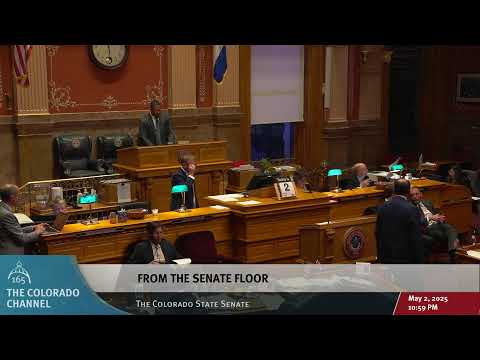
Senate approves wage-theft enforcement bill after contentious debate over penalties and timelines
Summary
Senators passed House Bill 25-1001, a law intended to strengthen enforcement against wage theft in Colorado, after hours of debate over penalty levels, whether to require public posting of complaints and the time employers have to cure alleged violations.
The Senate passed House Bill 25-1001 on May 2 after lengthy floor debate about enforcement processes, penalty amounts and employer timelines.
Sponsors described the bill as an effort to combat wage theft and protect workers on construction sites and in other industries, citing cases in which employees alleged unpaid wages or contractors failed to pay subcontractors. The bill creates a civil enforcement pathway for workers to recover unpaid wages and includes multiple remedies: back pay, reinstatement or front pay if reinstatement is infeasible, statutory interest, a per-employee penalty, and a liquidated-damages provision. The floor debate recited several specific remedies that appear in the bill: a 12% annual interest rate on unpaid wages, a $50-per-day per‑employee penalty for continued violations, and liquidated damages equal to the greater of twice the unpaid wages or $2,000. The bill also permits courts to award reasonable attorney fees to prevailing workers.
Floor amendments were the focus of the day: one proposal (L24) to give employers 90 days rather than 14 to remediate claims was defeated; another (L30) that would have limited the bill’s application to counties with high complaint rates also failed. Multiple amendments aiming to protect employers from public posting on the Division of Labor and Employment website if they remedied claims quickly were debated and rejected. Senators also debated language addressing willful misclassification of independent contractors; the bill contains escalating fines for willful or repeat misclassification.
Proponents argued fast relief and strong penalties are necessary to deter employers who willfully withhold wages; opponents warned the combination of penalties, liquidated damages and attorney‑fee awards could create heavy litigation risk and unintended pressure on good‑faith employers to settle quickly. Several senators urged more time for administrative remediation to reduce the risk of over‑penalizing employers who make clerical errors.
After division votes on multiple amendments, the Senate adopted the bill with the final text as amended and ordered it on to final consideration.
What changed: HB25-1001 increases enforcement tools for workers alleging unpaid wages, adds explicit monetary penalties and attorney‑fee shifting to prevailing plaintiffs, and prescribes administrative processes for handling claims. Several employer-friendly changes were proposed and rejected on the floor.
Next steps: implementing rules, public-posting procedures for the Division of Labor and Employment, and legal standards for willfulness and misclassification are next for administrative guidance and possible litigation.