Get Full Government Meeting Transcripts, Videos, & Alerts Forever!
Get email alerts on the Elementary Literacy Curriculum topic
No spam. Unsubscribe anytime.
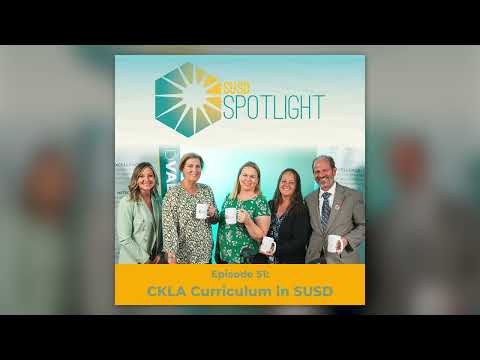
Scottsdale Unified begins first year of K–5 CKLA rollout, district staff describe supports and early observations
Summary
Scottsdale Unified School District this school year began implementing CKLA as its K—6 law adopt for grades K—65; district curriculum staff and teachers described supports and early classroom observations on the district podcast.
Scottsdale — Scottsdale Unified School District (SUSD) this school year began implementing Core Knowledge Language Arts (CKLA) as its adopted K–5 language-arts curriculum, district elementary language-arts curriculum specialist Diane Murphy said on the districtpodcast "SUSD Spotlight." "CKLA stands for Core Knowledge Language Arts, and it's our adopted program for grades K–5. It's through a company called Amplify, and it's our new — we just started implementing this school year and [are] pretty excited about it," Murphy said.
The district's rollout is accompanied by professional development, a network of school-based "CKLA ambassadors," and classroom strategies that teachers say aim to combine phonemic awareness, phonics, fluency and comprehension. "CKLA does a really great job of incorporating all the pieces, the phonemic awareness, the phonics, the fluency, the comprehension," said Sheena Byerly, a first-grade teacher at Sequoia Elementary School.
Why it matters: Early reading instruction lays a foundation for later learning. District staff argued that the programintentionally builds background knowledge alongside decoding skills so students can "read to learn" after initial grades. "There's something called the simple view of reading, which is decoding times language comprehension," Murphy said. "CKLA is one of the best ... programs out there that really promotes knowledge when kids are reading."
What district staff described: Murphy said the district is supporting teachers with training during and after the school day, summer sessions, and monthly ambassador meetings. She described the ambassador role as a school-level point person who attends about an hour-and-a-half of training monthly and then supports colleagues and brings questions back to the district. "At every school, I have a CKLA ambassador ... they come to a meeting/training once a month for about an hour and a half and then they go back and they are the champions for CKLA," Murphy said.
Classroom practice and supports: First- and fourth-grade teachers gave examples of how lessons look across grades. Byerly said CKLA emphasizes phonemic-awareness exercises that some teachers previously skipped, using hands-on activities and decodable readers in small groups. "The phonemic awareness is understanding that dog is made up... and if you take out the... and you put enough, you have fog," Byerly said, describing the kinds of word-play students do. She said she runs small-group instruction three times a week and uses decodable readers sized to a student's level so struggling readers still experience success.
Fourth-grade teacher Rebecca Bentovanja of Echo Canyon School said older elementary lessons increase focus on text-based answers, vocabulary and morphology so students can support responses with evidence from text. "Students are learning more about finding the answer themselves and then being able to go back to the text and support their response," Bentovanja said.
Materials and digital access: Murphy said all teacher and student books and workbook pages in CKLA also have electronic versions through the district's digital systems. "Every single thing on CKLA, for every book that we do have, we also have the electronic version of it," she said, adding that use of print or digital materials is a teacher and classroom choice.
Engagement and anecdotal effects: Teachers reported high classroom engagement tied to CKLA units and cross-curricular projects. Examples cited included a unit called "Eureka" in which fourth-graders designed inventions, a geology unit that included a three-paragraph essay and a volcano project, and first-grade units on ancient Mesopotamia and the American Revolution. One teacher noted 56 students had perfect attendance as of the day of the recording.
Parent resources: Murphy said parents can use the district-provided Amplify resources via students' Clever accounts. The district keeps Amplify open in summer so students can revisit stories, songs and practice activities outside school.
Data expectations and timeline: The hosts asked about assessment outcomes. Murphy acknowledged that districts often see an "implementation dip" in year one of a new program as teachers and students adjust. "Data does show nationwide when you start anything new ... there will usually be an implementation dip the first year because you're just adjusting," she said. She added that, based on research and similar rollouts, many districts see stabilization in year two and stronger outcomes by year three.
What was not decided or changed at the recording: The podcast discussion described implementation and supports; it did not announce any board votes, changes to district policy, budget figures, or formal evaluation results. The district characterized CKLA as the adopted curriculum and described classroom- and district-level supports already in place.
Looking ahead: District staff said they will continue professional development, use ambassadors to surface classroom issues, and monitor assessment data in coming years to measure how instruction and outcomes evolve as implementation continues.