Get Full Government Meeting Transcripts, Videos, & Alerts Forever!
Get email alerts on the Municipal Budget topic
No spam. Unsubscribe anytime.
Brigham City mayor proposes $110 million 2025-26 budget, cites fleet costs and utility planning
Summary
Mayor presented a $110 million budget that includes $33 million in capital projects and a proposed property-tax increase to cover an unexpected $450,000 rise in fleet costs; council set work sessions to review utility rates and taxes.
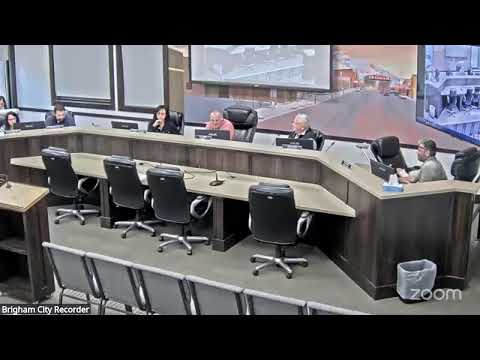
Brigham City’s mayor presented a $110 million proposed budget for fiscal year 2025–26 on May 1, asking the City Council to review planned utility-rate decisions and a possible increase in the city’s portion of property tax to cover rising fleet costs.
The budget as presented includes $33 million in capital projects and about $19 million earmarked for overpass and corridor preservation work, and the mayor said he proposes holding the transfer from the utility fund to the general fund at 12 percent. He also proposed setting the city’s power purchasing adjustment (PPAC) to zero for 2025–26 while continuing to monitor wholesale power markets.
The mayor said Brigham City faces an unexpected roughly $450,000 increase in the general fund’s fleet-related expenses and that his proposed property-tax increase—Tom Carter, the city’s financial director, estimated the city’s portion at about a 15 percent rise—would cover that shortfall.
“If we don’t have an incremental rate increase that reflects the inflation … we will fall behind,” the mayor said during the presentation, urging the council to consider the long-term implications of underfunding infrastructure and public-safety needs.
The mayor outlined other elements in the proposal: ongoing work on the 100 South roadway and utilities project; a planned rate study to begin after July 2026; continued use of the rate-stabilization fund for electric customers; and a proposed per-month increase for the city’s blue-can (recycling) service as a pass-through to reflect higher recycling costs (the exact dollar amount stated during the meeting was not clear in the record).
He also described the fleet fund model used to purchase and replace city vehicles, noting the fund has struggled with inflation-driven cost increases and that the budget applies a modest inflation factor for replacement planning. The mayor said public-safety spending has grown substantially in recent years, from about $5.1 million in 2016 to a proposed $12.5 million in the upcoming year.
Councilmembers asked for more detail on utility-rate changes and the property-tax proposal. The council scheduled two work sessions: May 15 to focus on utility (electric) rates, and May 22 to continue discussion including public safety and fleet impacts. Council members said they wanted staff to present more granular cost breakdowns at the sessions.
The mayor also said staff continues to study longer-term options for local power generation, including potential participation in larger-generation projects, to stabilize rates for future decades.
Ending: The council did not take a final vote on the budget at the May 1 meeting; staff will provide more detailed analyses at the scheduled work sessions before any final action. The budget remains a council item for public meetings and further review.