Get Full Government Meeting Transcripts, Videos, & Alerts Forever!
Get email alerts on the County Budget topic
No spam. Unsubscribe anytime.
Daviess County first reading of $110.2 million budget; amendment to add $500,000 for drainage fails 2-2
Summary
At a May 8 Daviess County Fiscal Court meeting, officials presented the fiscal year 2025–26 budget totaling $110,219,426. An amendment to add a $500,000 line item for drainage maintenance failed on a 2-2 vote; the budget remains on first reading with a second reading set for June 5.
Daviess County Fiscal Court held the first reading of its fiscal year 2025–26 budget on May 8, 2025, with county treasurer Terry Johnson presenting proposed appropriations totaling $110,219,426. During the public portion of the discussion, Commissioner Marksberry moved to add a $500,000 maintenance line item for county drainage projects; the motion was seconded but failed on a 2-2 roll call.
The proposed budget presented on first reading shows appropriations by fund that include: General Fund $60,274,222; Road Fund $6,275,100; Jail Fund $11,546,724; Local Government Economic Assistance (LGA) Fund $137,500; Economic Development Fund $1,770,000; Bond Fund $3,066,700; Solid Waste Fund $26,768,180; and County Clerk Permanent Storage Fees Fund $381,000. Johnson said the budget assumes a 2.9% cost-of-living adjustment and no new levies or debt; detailed documents are available in the county judge executive’s office during regular business hours. The second reading and adoption are scheduled for June 5, 2025.
Why it matters: Commissioners and residents framed the proposed drainage line item as a response to recurring flooding and storm damage. Supporters argued a dedicated fund would let the court act quickly on repairs; opponents said allocating a large sum without a specific plan is premature and could be misdirected. Jerry Fisher, identified in public comment as a resident of Owensboro, urged the court to fund maintenance, saying targeted repairs could reduce emergency responses and save county resources.
Commissioner Marksberry asked for an initial $2 million when the matter was first raised, then revised the motion to $500,000. Marksberry said, “I would like to make a motion to the following changes to the budget, which would be a line item for maintenance drainage projects in the amount of $500,000.” Commissioner Conner seconded the motion to allow discussion, and several court members spoke for and against adding the line item.
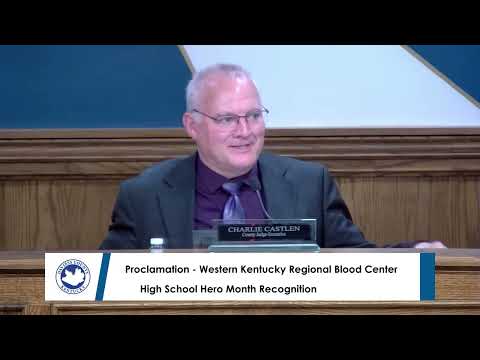
County Judge Executive Charlie Caslin (listed in the meeting as presenting and moderating) opposed placing unspecified funds in the budget without a concrete plan, citing the county’s standard budget process and the need to base appropriations on identified projects and cost estimates. Caslin described prior efforts after major rain events, said staff and outside agencies have been consulted, and argued the court can amend the budget later if a plan and project estimates are available. After the roll call vote, the judge announced, “Motion fails 2 2.”
Public comment and local context: Jerry Fisher, a longtime resident who said he served on a drainage commission for years, told the court small maintenance projects can reduce flood impacts and that funding modest maintenance could lower emergency responses and associated taxpayer costs. Fisher and others described repeated storm damage in February and April as motivation for dedicated drainage funding.
Next steps: The budget remains on first reading; the court will take a second reading and a final vote on June 5, 2025. Commissioners indicated they may return with project-specific recommendations or future budget amendments addressing drainage once scope and costs are identified.