Get Full Government Meeting Transcripts, Videos, & Alerts Forever!
Get email alerts on the Land Use topic
No spam. Unsubscribe anytime.
Kenai denies conditional-use permit for proposed 82-unit heated storage at 1001 Third Street after neighbors raise access, noise and light concerns
Summary
The Kenai Planning and Zoning Commission on Wednesday declined to grant a conditional use permit for an 82‑unit indoor heated storage facility proposed at 1001 Third Street after a 3–3 tie vote.
The Kenai Planning and Zoning Commission on Wednesday declined to grant a conditional use permit for an 82‑unit indoor heated storage facility proposed at 1001 Third Street after a 3–3 tie vote.
Planning staff recommended approval of Resolution PZ 2025‑17, finding the proposed indoor heated storage met the conditional-use criteria in Kenai Municipal Code Section 14.20.150. Staff described the proposal as a heated, indoor mini‑storage facility intended to serve local demand and recommended moving the property entrance to Third Street to reduce potential impacts on Redoubt Avenue. Staff also recommended customary conditions requiring compliance with federal, state and local regulations and on‑site inspections with city staff.
Several nearby residents testified in opposition, raising concerns about road condition, lighting, noise and the effect on neighborhood character. Michael Erceoli, who lives at 1004 Third Street, said the road is maintained informally and cautioned that Third Street is “not up to the city specs” and that increased traffic would require improvements. “I don’t think any of you would want that across the street from you,” Erceoli said, arguing the parcel was intended for multi‑unit housing.
Gwen Urcioli, a resident on Third Street, said she was “concerned about lighting” and the potential for increased night activity and security lighting to affect homes with open‑plan windows.
The applicant and a business partner spoke in support. Applicant Adam Tuchen took questions about site plans and operations; business partner Jeremy Byrd told the commission they were “looking at doing a 7AM to 7PM site access only” and that they were “willing to do some type of different, lighting schematics” to avoid constant nighttime lighting. Byrd also said the developers planned to install fencing and security cameras and that unit access and payments would be managed remotely.
Commissioners pressed the applicant on access, road upgrades, staffing and building systems. Staff clarified that access and driveway permits are issued by Public Works at the building‑permit stage and that any driveway off Third Street would require the developer to improve the road to city specifications “up to the point of access.” Staff also noted that the CUP request did not rezone the property; it would remain in the urban residential zone and any future use would require its own review.
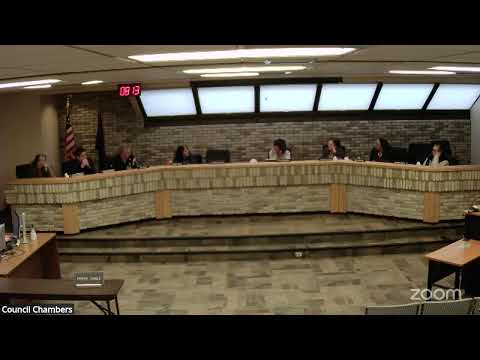
During deliberations the commission approved two amendments to the CUP by unanimous consent: a condition requiring site‑obscuring fencing along Third Street (to a height consistent with city code and sufficient to block views) and a limitation on hours of operation of 7 a.m. to 7 p.m. The amendments were incorporated into the main motion to grant the CUP. After further discussion the main motion failed on a 3–3 roll call: Commissioners Reveal, Vice Chair Ersley and Chair Tweed voted yes; Commissioners Fikes, Krauss and Woodard voted no.
Planning staff said an aggrieved party has 15 days from the action to file an appeal with the city clerk. The applicant may revise the proposal and return with additional materials, including a final site plan, driveway/right‑of‑way permits at the building permit stage and more detailed security and lighting plans.