Get Full Government Meeting Transcripts, Videos, & Alerts Forever!
Get email alerts on the School Construction topic
No spam. Unsubscribe anytime.
Region 15 feasibility committee narrows school options to three; community meeting May 22
Summary
The Regional School District 15 feasibility study committee has reduced its long list of 11 options for elementary school facilities to three choices, favoring new-construction approaches to maximize potential state reimbursement. The board heard details May 12 and was asked to encourage community participation at a May 22 meeting.
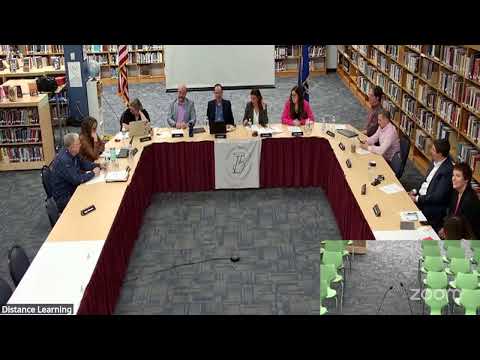
The Regional School District 15 Board of Education on May 12 received a detailed update from the district's feasibility study committee, which narrowed an initial field of 11 facility options to three and outlined next steps including a community conversation on May 22.
Mary McGuire, who presented the committee's work, said the group met 10 times since formation and conducted multiple site visits, interviews and community conversations. "We narrowed down our field of options from 11 to 3," McGuire said, adding that the committee's selections favor new construction in part to increase the district's chance of higher state reimbursement.
The three preferred options the committee flagged are: (1) a combined new elementary school on a to-be-determined site (referred to in committee materials as option 3D); (2) expanded-enrollment new construction for both schools on their existing properties (4B); and (3) expanded-enrollment new construction with one school remaining on existing property and the other located on new land (4C). McGuire emphasized the presentation used concept art and preliminary draft slides: "This is concept art. This is not a real plan," she said.
The committee explained its preference for new construction because, the presentation said, new buildings typically have shorter timelines, fewer temporary "swing-space" needs and potentially lower escalation costs. Committee materials also contrasted typical reimbursement levels: the presenter described a baseline of roughly 38% for new construction and 48% for renovation, and noted that in some cases state rules allow higher reimbursement for new construction if the district can show it is more cost-effective than renovation.
Committee members also discussed enrollment-management concepts: the plan could shift about 100 students over an eight-year period to relieve capacity pressures and create roughly 80 additional prekindergarten seats to improve access across the district. McGuire said two of the three preferred options assume acquisition of new land; the committee also selected at least one option that does not require new property, to preserve flexibility.
Board members pressed for clarity about next steps and timelines. McGuire and others said Tecton, the district's consultant on the study, will attend a community conversation on Thursday, May 22 from 6 to 7 p.m. at Long Meadow Elementary School to present the three options in more detail. The committee expects to provide a formal recommendation to the board prior to the board's June 9 meeting and said it may convene one additional feasibility meeting in June so all members can participate.
Board members and other speakers urged that any published cost figures be clearly framed as preliminary baseline estimates and accompanied by the spreadsheet and supporting assumptions as preread materials. One board member asked that, if a property purchase becomes part of a recommended option, the district map out possible sequences of referendum or other approvals (for example, whether a property purchase and a building referendum would be separate questions).
McGuire said the committee collected feedback from multiple community conversations and stakeholder meetings, and she encouraged public participation on May 22. No formal board action was taken at the May 12 meeting on the feasibility recommendations; the committee's work will return to the board as a formal recommendation for discussion and possible action in coming weeks.
The presentation also noted practical constraints on some existing school sites, including limited parking and sewer capacity, and the committee highlighted that renovation projects can require more complex phasing and temporary space for students.
The district finance and facilities report at the same meeting reviewed year-to-date balances and identified an $856,000 projected positive balance heading into the year's final months; the facilities committee also approved recommending a $0.25 increase in some school lunch prices and a transfer of $232,000 to an educational expense fund for board action at a subsequent meeting.
The feasibility committee's next community conversation is scheduled for May 22, 6 p.m., at Long Meadow Elementary School; the committee intends to present more detailed materials, collect community feedback and then forward a formal recommendation to the board.