Get Full Government Meeting Transcripts, Videos, & Alerts Forever!
Get email alerts on the Graffiti Removal At Archaeological Sites topic
No spam. Unsubscribe anytime.
BLM archaeologist: report graffiti on archaeological sites; don’t try to remove it
Summary
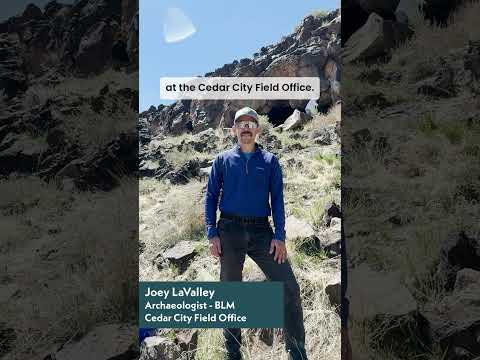
At a Bureau of Land Management site near Cedar City, archaeologist Joey LaValley advised visitors to report graffiti to land managers or the Utah Cultural Site Stewardship Program and warned against attempting removals near petroglyphs.
In a short recorded message at a Bureau of Land Management site near Cedar City, Utah, Joey LaValley, archaeologist with the BLM Cedar City Field Office, advised visitors to report graffiti on archaeological sites and not to attempt removals themselves.
LaValley said rock imagery sites are sensitive and that removing graffiti near or on petroglyphs requires a professional art conservator. "The reason you shouldn't remove graffiti yourself is because rock imagery sites are very sensitive, and it actually takes a professional art conservator to remove any kind of graffiti from petroglyphs or immediately near petroglyphs," he said.
The recording opened with a presenter who urged people to report graffiti "whether that is to the local land manager or to the Utah cultural site stewardship program" and to avoid attempting removal. The message identifies the Utah Cultural Site Stewardship Program and local land managers as the reporting channels for vandalism to cultural sites.
LaValley said the BLM uses trained site stewards and staff to remove graffiti when it is not on or immediately adjacent to petroglyphs. "Fortunately for us, it's not on or near the petroglyphs. So we have the ability to remove it ourselves without involving a art conservator. We're using site stewards and BLM staff, and they are using elephant snot, a graffiti remover, to remove all of the paint from the rocks," he said.
Describing the product, LaValley said: "It eats into the paint, It doesn't disturb the rock, and it's all biodegradable, so it goes away and doesn't harm the little critters." The recording does not specify the manufacturer or regulatory approvals for the remover.
The recording focused on two clear recommendations: report graffiti on public archaeological sites to the appropriate land manager or the Utah Cultural Site Stewardship Program, and do not attempt to remove graffiti yourself if the vandalism is on or near petroglyphs. No formal actions or policy changes were recorded in the message.
For locations and agency contact details, the recording directs people to report to "the local land manager" or the Utah Cultural Site Stewardship Program; specific phone numbers or web addresses were not provided in the recording.