Get Full Government Meeting Transcripts, Videos, & Alerts Forever!
Get email alerts on the Public Law 280 And Trafficking topic
No spam. Unsubscribe anytime.
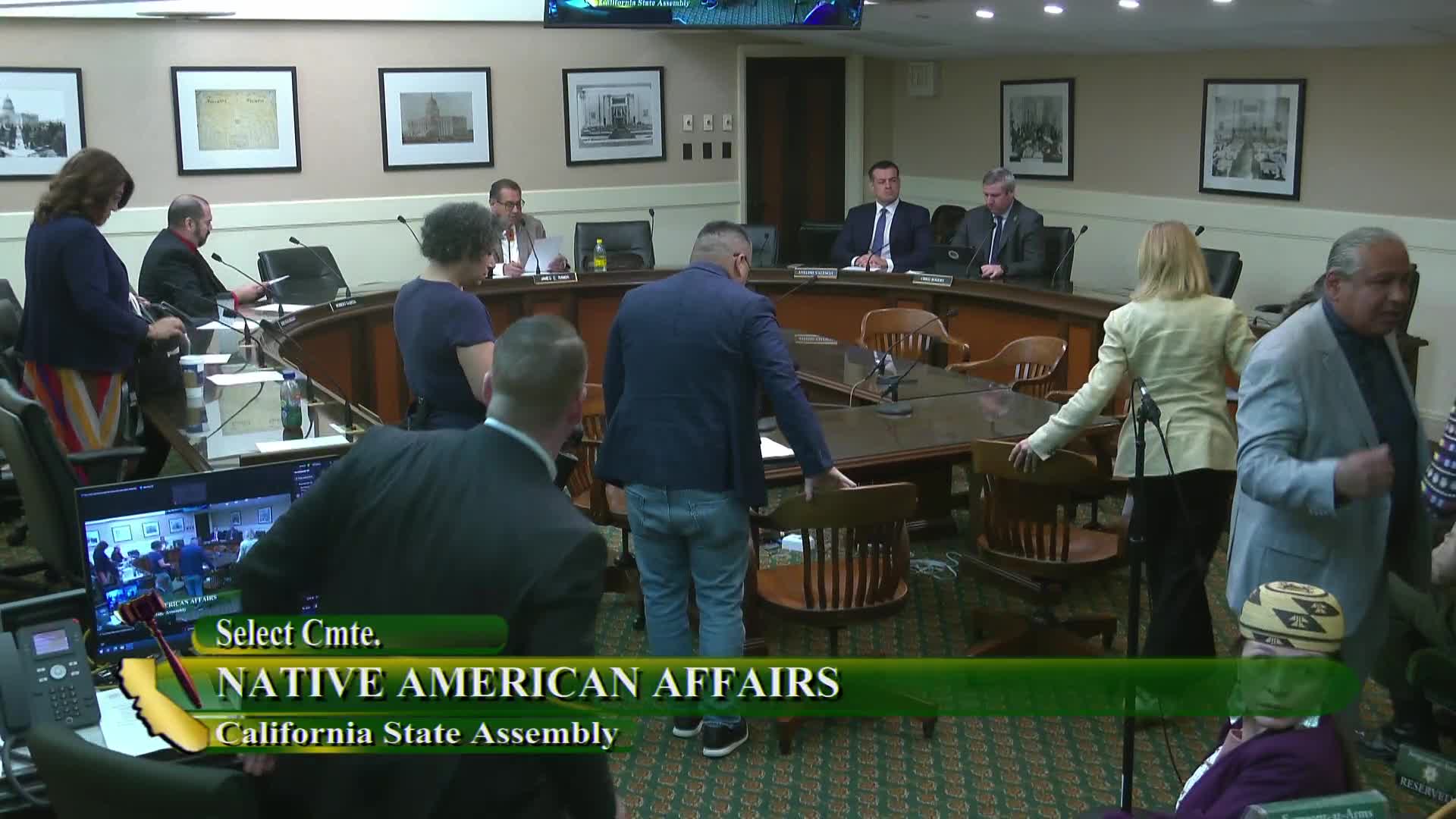
Experts and advocates tell Assembly Public Law 280 and underfunding magnify trafficking and MMIP crisis
Summary
Legal scholars, tribal leaders and anti‑trafficking advocates told the Assembly select committee that Public Law 280's jurisdictional shifts and chronic underfunding contribute to poor investigative outcomes and enable traffickers to target Native communities; witnesses proposed training mandates, cross‑deputization and retrocession as remedies.
At a California State Assembly select committee hearing, legal scholars, tribal leaders and anti‑trafficking advocates said Public Law 280 (PL 280) — the 1953 federal law that shifted certain criminal jurisdiction to states — has magnified the crisis of missing and murdered Indigenous people in California by producing chronic underfunding, jurisdictional confusion and lower trust between tribal communities and state or county law enforcement.
Carol Goldberg, a law professor who has researched PL 280 for decades, said PL 280 created “one of the very first unfunded federal mandates,” removing federal jurisdiction without attaching federal funding to implement it in state agencies and leaving tribes with denied federal funding for their own policing and justice systems. Goldberg told the committee this under‑resourcing produces slow or nonresponse and that perpetrators target communities perceived as having a law‑enforcement vacuum.
Chairman Joe James of the Yurok Tribe and advocates linked trafficking and exploitation to PL 280's effects. Morning Star Gali, speaking for MMIP families and survivors’ groups, said traffickers and violent offenders “deliberately target Native communities because they know that jurisdiction is fractured between state, county, and tribal authorities with no clear chain of accountability.” She called for state actions including restoration of tribal criminal jurisdiction where appropriate, substantial tribal public‑safety funding, mandatory tribal consultation, culturally grounded victim services and strengthened repatriation protections.
Anti‑trafficking practitioner Dustin Contreras said partnerships are a practical model: Kern County’s coalition work, he said, shows strong results when tribal advocates, NGOs and law enforcement form local task forces and integrate Indigenous lived‑experience experts. He emphasized prevention, prosecution and services, and the need to sustain survivors’ long‑term care after rescue.
Professor Goldberg and other witnesses proposed specific remedies: mandated and resourced PL 280 training for county and highway patrol officers; formal cross‑deputization and policing agreements (with state incentives as in other PL 280 states); making tribal peace‑officer status equivalent where possible (examples cited: Oregon policies); and the possibility of retrocession — returning jurisdiction to tribes — as an option for some tribes.
Ending: Witnesses urged the Legislature to pair any statutory fixes with recurring funding, mandatory training curricula, and mechanisms for tribal input in program design to reduce exploitation and improve investigative outcomes in MMIP cases.