Get Full Government Meeting Transcripts, Videos, & Alerts Forever!
Get email alerts on the Missing And Murdered Indigenous People topic
No spam. Unsubscribe anytime.
Tribal leaders, families press California Assembly panel on missing and murdered Indigenous people
Summary
Tribal chairpersons and Assembly members testified at a California Assembly select committee hearing calling for sustained funding, better data collection, stronger tribal consultation and immediate law-enforcement response after decades of cold cases and recent failures in alert systems.
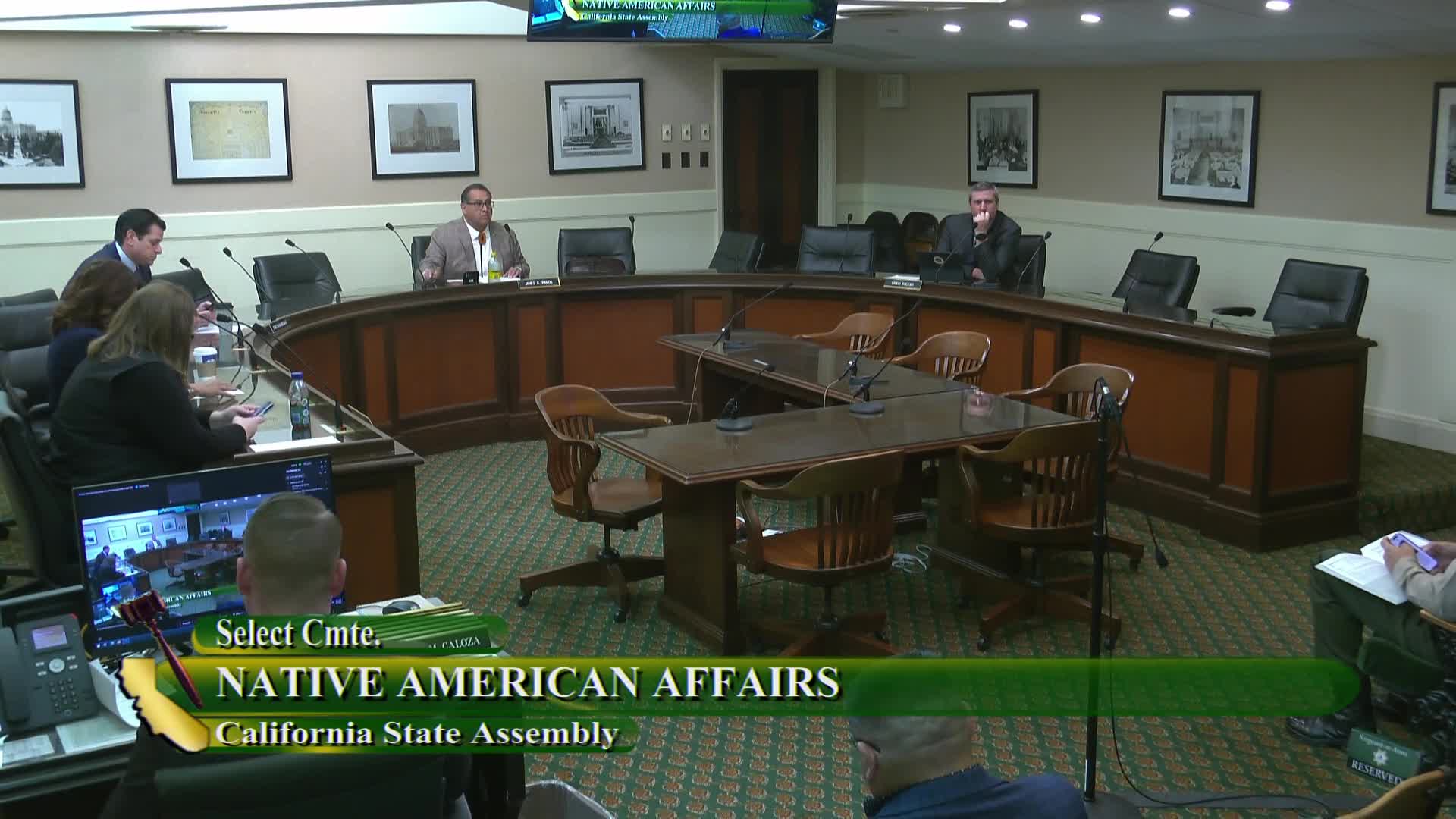
Assemblymember James Ramos convened the California State Assembly Select Committee on Native American Affairs for a multi-panel hearing focused on missing and murdered Indigenous people (MMIP), where tribal leaders described long-standing underresponse, named local cold cases and urged the state to increase resources and formal consultation.
Tribal leaders said decades of losses and recent cases demonstrate predictable breakdowns in response. Chairperson Antoinette Del Rio, of the California Valley Miwok community, said tribal education and public awareness remain limited: "...people don't even know what that is and that's sad especially in our education systems," and called for programs to ensure names of murdered and missing tribal members are publicly recognized. Chairperson Cheyenne Stone of the Big Pine Paiute Tribe of the Owens Valley recounted historical forced removals and recent archaeological discoveries along US Highway 395 — she said excavations unearthed skeletal remains and cultural items and that assessments reported a minimum of 61 individuals and an estimated 875 individual human remains across multiple sites.
Chairperson Charles Martin of the Morongo Band of Mission Indians recounted the September 2024 disappearance and death of a tribal citizen, Amy Porter, and criticized delays in the feather alert process: the alert was issued Sept. 21, he said, nearly a week after she went missing and one day before her body was found by a family-organized search party. Martin said county law enforcement later acknowledged procedural failings and that tribes must be able to request alerts and receive timely responses without relying on ad hoc channels.
Multiple Assembly members supported the panel's calls. Assemblymember Sharon Quirk Silva said the core issue is equity in response: living on a reservation should not reduce the urgency of missing-person responses. Assemblymember Jackson emphasized the role of resources and media attention in placing value on lives and said more data is needed to reveal disparities in response and resource allocation.
Panelists and members pointed to a set of systemic problems: inconsistent reporting and data collection; underfunded tribal historical preservation offices (THPOs) that limit repatriation and burial protection; and gaps in public awareness and school-based education about MMIP. Several witnesses pressed for stronger tribal consultation in state decisions, expanded culturally appropriate victim services and permanent budget commitments to sustain tribal-led responses.
The committee said it will follow with additional panels involving law enforcement and the attorney general's office to explore evidence standards for cold cases, how far back investigations should go and what resources counties and the state can allocate. Assemblymember Ramos noted recent feather alerts issued with committee involvement but stressed that alerts alone are an early step: "Just yesterday or Monday, there was 2 more feather alerts that went out with our office having to get involved. So that shows that there is, that knowledge, moving forward, but there still needs to be a lot more that needs to happen."
Ending: The committee adjourned panel one after roughly an hour of testimony and said it will continue the hearing with panels on trafficking, jurisdictional issues under Public Law 280, and the state's operational response including data and training.