
Chronically absent rate edges down; board hears mentorship and Graduation Alliance reengagement updates
Get AI-powered insights, summaries, and transcripts
Sign Up Free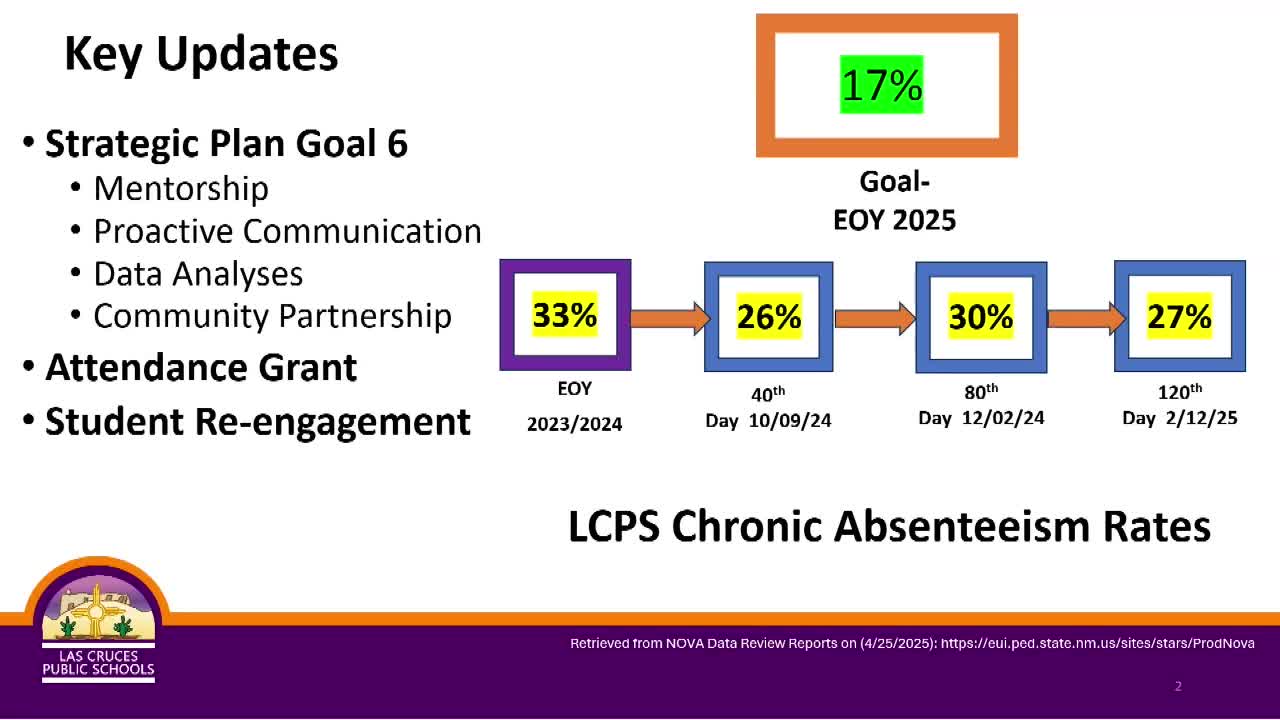
Summary
The district reported a decline in the chronically absent rate from 30% (80th day) to 27% (120th day), continuing mentorship expansion with NMSU interns and Graduation Alliance reengagement work; staff set targets and are continuing home‑visit and wraparound strategies.
Las Cruces Public Schools presented attendance and reengagement progress during the May 6 retreat, including mentorship expansion, home‑visit activity and work with Graduation Alliance for credit recovery.
District staff said the 120th‑day state reporting count showed a district chronically absent rate of 27%, down from 30% at the earlier count. The district reiterated a strategic goal to cut chronic absenteeism 50% from prior levels (a target of about 17% by district definition).
Kathy (Attendance for Success team) and Amy (student reengagement lead) described an expanded mentorship program that began with a smaller pilot and has grown to multiple schools. Staff reported positive outcomes for mentees: interns' work was associated with improved engagement (a reported 77% increase in students passing at least one class compared with their prior status) and an overall attendance rate of about 82% for students actively engaged in mentorship activities. District staff also highlighted intensive outreach: in one recent quarter the reengagement team reported roughly 737 home visits and 102 attendance‑team meetings across schools.
Graduation Alliance, the district’s dropout recovery/credit‑recovery partner, had 267 students enrolled at the time of the report; 40 students had already earned diplomas through the platform and district staff projected about 65 diplomas by the end of summer school if current progress held. Graduation Alliance also added an in‑person “engage” layer: local staff will work directly in high schools with seniors at risk of not graduating and can offer up to three online credit recovery classes even for students not otherwise enrolled in the Graduation Alliance platform.
Staff emphasized that early attendance (particularly kindergarten) is a strong predictor of later performance and that academic difficulty frequently drives school avoidance. Presenters described increased use of tutoring paired with mentoring, targeted professional learning for staff (Safe and Civil Schools), and distribution of engagement tools (book vending machines, sensory and reward equipment) purchased with grant funds.
The board did not take formal action on policy or funding during this presentation. Staff said they will continue to track chronically absent rates by reporting days, monitor outcomes for mentored students, and coordinate with community partners to reduce barriers to attendance.