Las Cruces Public Schools presents wellness framework and baseline data to board
Loading...
Summary
District leaders presented a nine‑component wellness framework and a normalized baseline built from multiple surveys and walk‑throughs; staff set modest growth targets (2 points per component) and will develop action steps for 2025–26.
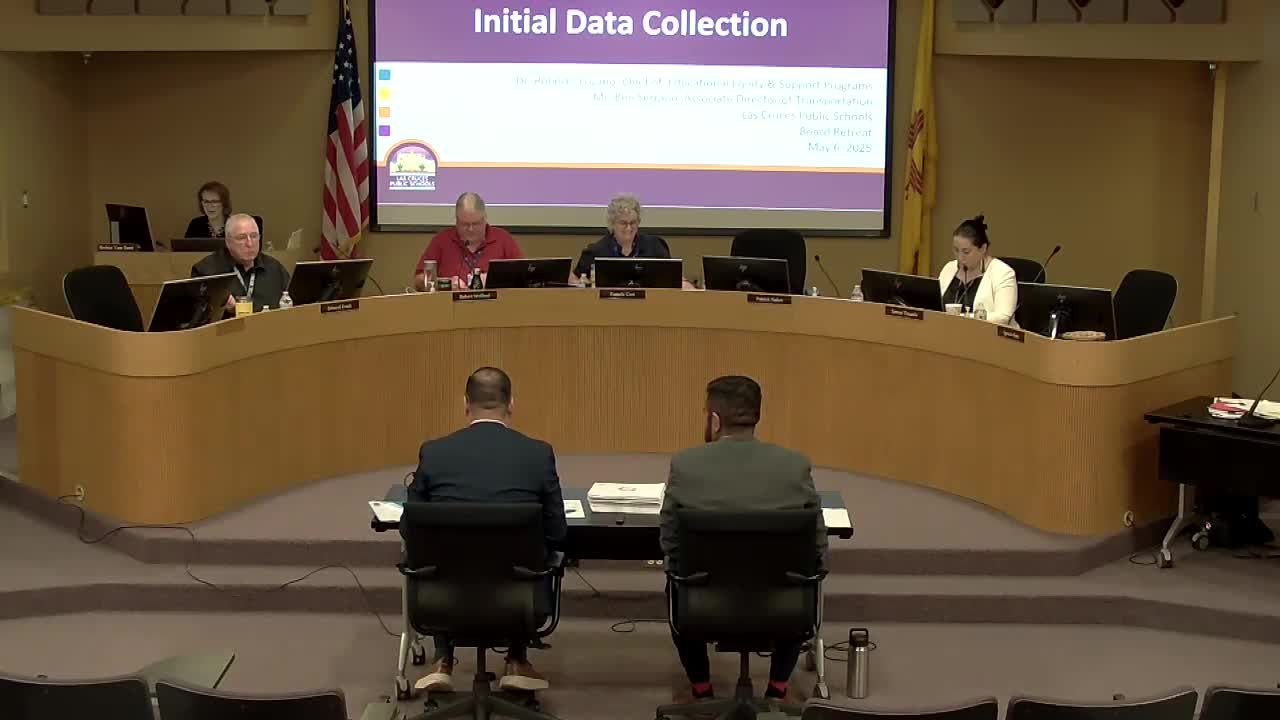
Las Cruces Public Schools presented a new district wellness framework and initial data analysis to the board during the May 6 retreat. The framework groups district activities into nine components intended to support the whole child, and the presentation included a normalized baseline of perceptions drawn from multiple surveys and school walk‑throughs.
Doctor Lozano and Ben Serrano, who led the work, said the framework aligns with New Mexico Public Education Department guidance and the district’s strategic plan. The nine components are (as presented): nutrition services; physical activity and health education; health services; counseling/psychological/social services; safe and supportive school environment; social‑emotional climate; digital safety; staff/employee wellness; and family engagement/community involvement. Each component includes indicators, “look‑fors” used on walk‑throughs, and links to resources for schools.
To summarize disparate data sources (Hanover culture and climate survey, Panorama K–12 survey, New Mexico Youth Risk and Resiliency Survey, wellness walk‑throughs and a principals’ self‑assessment), the district worked with analytics partner Everest to rescale and normalize results onto a single continuum (–100 to +100) and then report baseline favorability scores for each component. Examples from the presentation: - Physical education/physical activity: normalized score 56.1 - Social‑emotional climate: normalized score 15.9 - Family engagement/community involvement: normalized score 10.6
Everest staff explained the normalization process in response to board questions and noted that the baseline reflects combined inputs — different surveys have different respondent sets and purposes, so some components have broader data sources (for example, social‑emotional climate was covered by multiple instruments) while others rely on fewer inputs.
District staff recommended modest, statistically meaningful growth targets: an increase of 2 normalized points for each wellness component in the coming year, with district teams building action plans tied to data and resources. Lozano said the district will post resources and work with principals and departments to design actions tied to the data.
Board members asked about source validity and the breadth of inputs; Everest and district staff said the tools used are validated instruments and the walk‑through methodology was calibrated. Staff also said materials and links for school leaders will be publicly available so principals and community members can see the resources that support the framework.
No formal board action was required at the presentation; staff said they will return with action steps and updated measurements.