
Board hears report on feeder‑pattern site support teams and instructional walks; more student academic discourse observed
Get AI-powered insights, summaries, and transcripts
Sign Up Free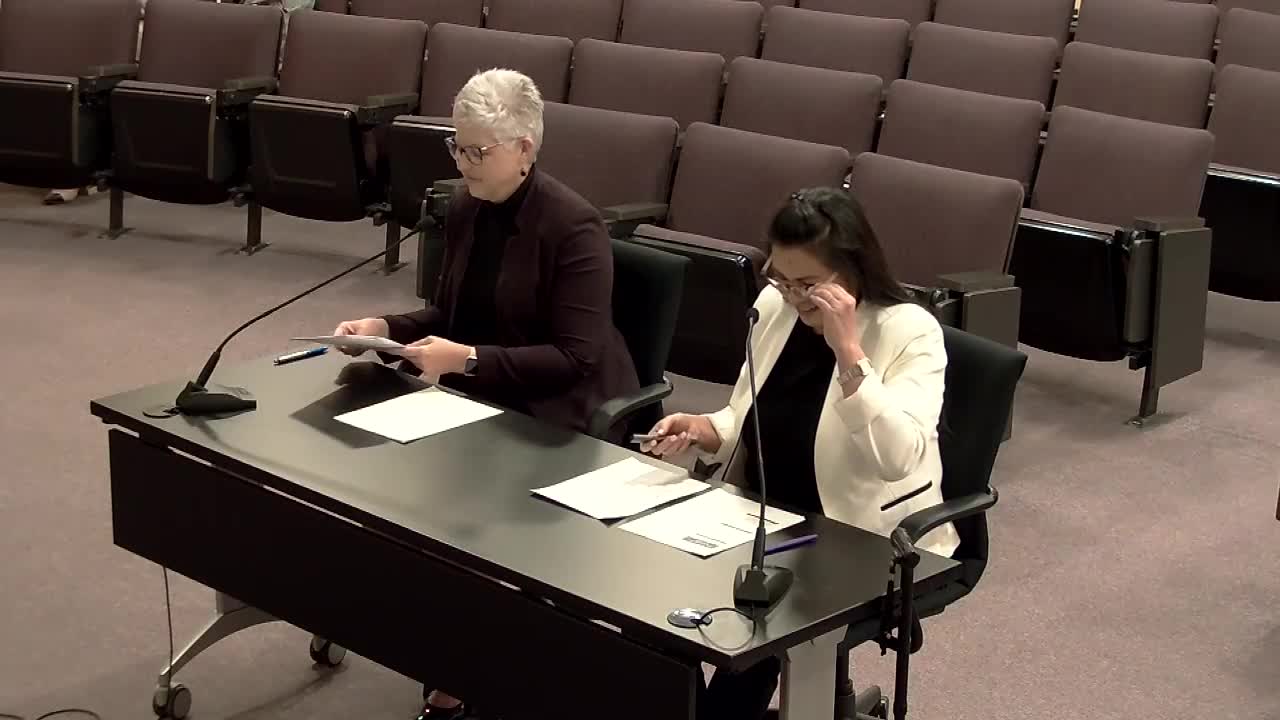
Summary
Leadership executive directors described feeder‑pattern site support teams that conduct differentiated professional learning, PLC coaching and non‑evaluative instructional walks. District instructional‑walk data show increases in observed academic discourse and a need for more visible models and teacher-to-teacher classroom visits.
Las Cruces Public Schools’ leadership executive directors told the board May 6 that feeder‑pattern site support teams have been deployed to provide differentiated, campus‑level professional learning and to support the district’s transition to an equity‑driven standards‑based instructional framework.
Tara Favor and Leanne Garcia, leadership executive directors, described teams that include content specialists, bilingual and data specialists, and special education administrators. The teams conducted initial campus visits, developed individualized action plans and provided modeling, coaching and PLC facilitation at schools.
Garcia explained how the site teams connect district goals to classroom practice: teams worked with teachers to develop and use student‑facing proficiency scales, plan around district priority standards, and implement the 3‑moments lesson structure and interactive processing strategies. She said the teams emphasize that “the ones who are doing the work are the ones that are actually engaged in that cognitive thinking,” and that students at Las Cruces High told teams they value hearing classmates explain their learning.
The board saw results from district instructional walks conducted in three rounds (beginning, middle and April end‑of‑year). Instructional walk indicators tracked whether students could articulate what they were learning, evidence of standards‑based learning, academic discourse and purposefully planned interactive processing structures. The presenters said the most visible gains were in academic discourse: the share of classrooms where academic discourse was “not observed” fell from 51% in October to 41% in April. District staff called that a notable improvement while stressing continued work on making interactive, planned processing more visible.
Favor said school support teams have coached teachers on using assessment data in PLCs to set student goals and to target instruction and interventions. Presenters said support is differentiated by campus needs: for example, some schools needed additional vocabulary professional learning across grade levels.
Board members asked about cross‑feeder collaboration, calibration of the walk‑through instrument, and whether principals and teachers have explicit models to follow. Staff said LEDs meet weekly, feeder meetings occur monthly, and the district will scale video models and inter‑school classroom visits next year to make exemplar lessons more visible to teachers.
The presentation did not include a formal board vote. Staff said the work will continue as a coherent cycle — district professional learning followed by site‑level coaching, observation and targeted next steps — and will be monitored with both walk‑through and student outcome data.