Get Full Government Meeting Transcripts, Videos, & Alerts Forever!
Get email alerts on the Vehicle Recovery Rental Car Theft topic
No spam. Unsubscribe anytime.
Committee advances bill allowing limited geofencing and tightening rental‑car key rules to curb organized theft
Summary
AB 1197 would permit geofencing to locate rental vehicles in limited circumstances and adjusts liability presumptions tied to returned keys. The committee approved the bill as amended after debate on privacy, consumer protections and enforcement mechanics.
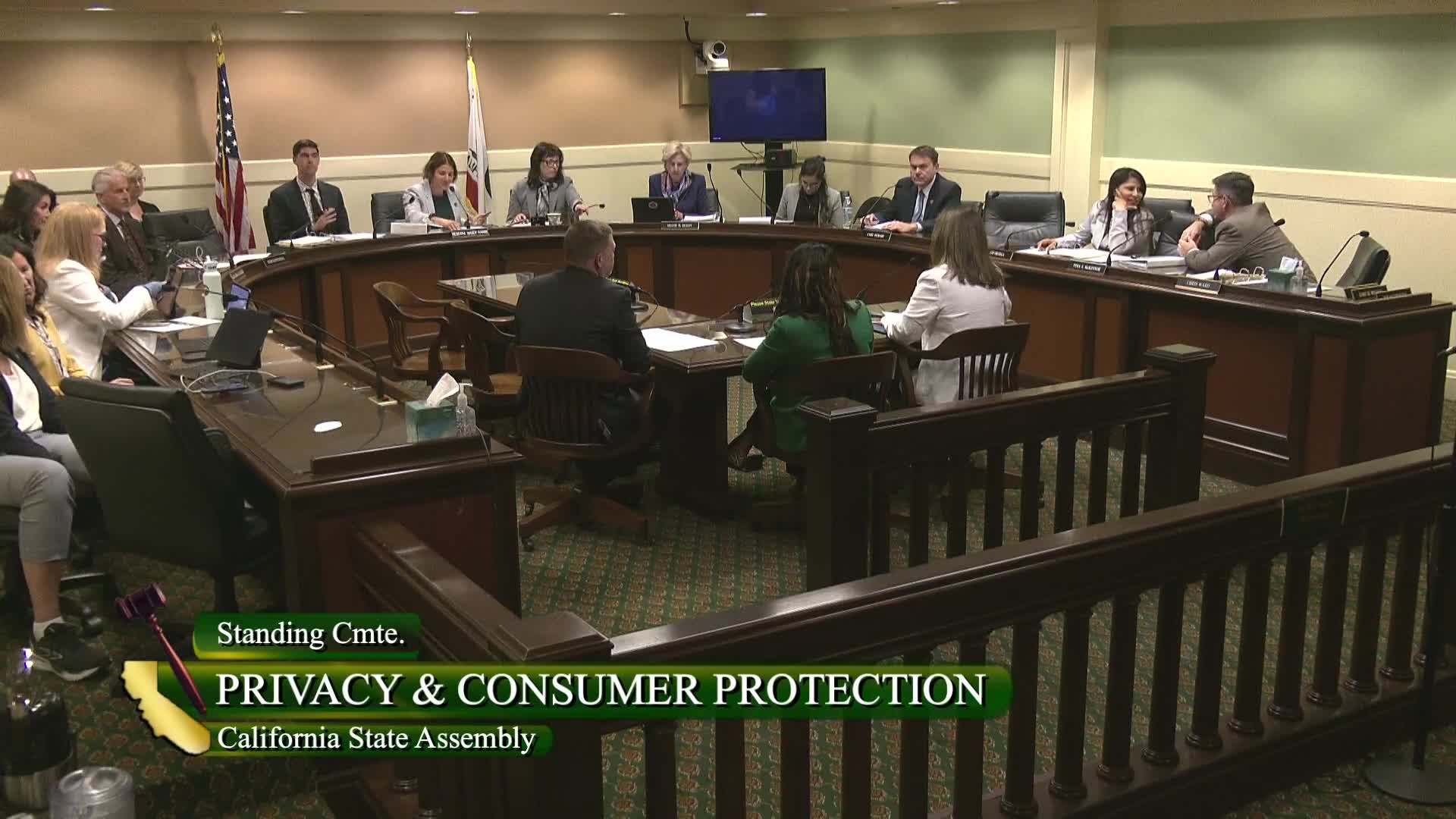
Assemblymember Calderon’s AB 1197, aimed at discouraging organized rental‑car theft and clarifying rental‑company recovery tools, advanced from the Assembly Privacy and Consumer Protection Committee with committee amendments limiting location‑tracking tools to geofencing in narrow scenarios.
Calderon told the committee rental vehicles are frequent targets of theft and abandonment and said the bill would allow geofencing to detect movement outside the country when unauthorized and to locate vehicles abandoned in tow yards after a specified period. The author accepted an amendment to limit location‑based technology to geofencing and said the change balances recovery tools with privacy protections.
Industry witnesses for Enterprise, Hertz and Avis Budget described operational problems the bill seeks to address, including tow‑yard delays that generate sizable recovery fees and a statutory “keys” provision that some rental companies say has been exploited. John Moffitt of Enterprise explained that the bill clarifies financial responsibility when a renter returns the key and files a police report versus scenarios where a key is not returned.
The Consumer Federation of California supported the bill’s direction but raised concerns that geofencing could be used broadly around many impound lots and asked the committee to ensure the bill remains consumer‑protective. Committee members questioned practical scenarios—such as stolen purses containing keys—and the author and proponents said the bill preserves defenses where customers exercised ordinary care and adds a presumption of no liability where conditions are met (return of key, police report, cooperation).
After discussion the committee moved AB 1197 as amended; committee staff recorded the vote and reported the measure advanced. Sponsors said the approach targets bad actors while maintaining consumer protections; supporters and opponents agreed to continue technical discussions about implementation details.