Get Full Government Meeting Transcripts, Videos, & Alerts Forever!
Get email alerts on the Public Health Vaping topic
No spam. Unsubscribe anytime.
Committee advances 'Vape Free Futures' bill with tiered fines for retailers
Summary
Philadelphia City Council’s Committee on Public Health and Human Services on Oct. 26, 2025, adopted an amendment to Bill 250213, the “Vape Free Futures Act,” updating Philadelphia Code §9-633 to revise definitions and set tiered fines and enforcement options for sales of electronic smoking devices and unapproved nicotine delivery products.
Philadelphia City Council’s Committee on Public Health and Human Services on Oct. 26, 2025, adopted an amendment to Bill 250213, the “Vape Free Futures Act,” updating Philadelphia Code §9-633 to revise definitions and set tiered fines and enforcement options for the sale of electronic smoking devices and unapproved nicotine delivery products. The committee voted to report the bill from committee with a favorable recommendation and asked Council to suspend rules to permit first reading at the next council session.
The Department of Public Health supports the measure as amended. Ben Hartung, a public policy adviser with the Philadelphia Department of Public Health, told the committee, “The Department of Public Health supports the Vape Free Futures Act, bill number 250213 as proposed to be amended today. And we thank council member Ahmad for her work on this important issue.”
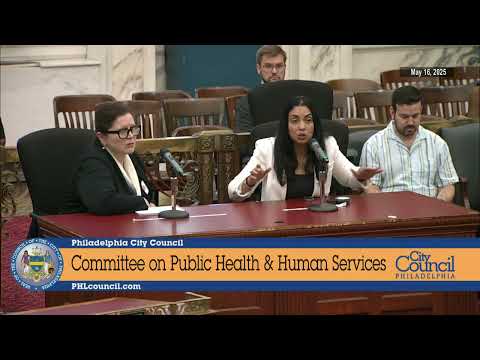
The bill drew public comment from small-retailer representatives and community members who said the proposed penalties could unduly burden neighborhood stores. Margarita Collado, speaking for what she described as “the bodega community,” said, “we are finding that the fines are too high.” Delfina Arias of the Dominican Grocery Association said she did not support the bill as drafted and raised concerns about past enforcement records and the effect of steep fines on family-owned stores: “Especially the fine is one of them.”
Committee members and staff responded to procedural and implementation questions during public comment. A committee member noted that the ordinance as amended sets a tiered fine structure (first offense $500, second $1,000, third $2,000). Councilmember Isaiah Thomas emphasized the limits of the legislative branch on clearing past fines, saying the disposition of outstanding fines and any “clean slate” determinations would be handled by the executive branch and the departments responsible for enforcement and collections.
An attorney in the gallery, Joseph Vaccaro, asked whether the council had considered similar legislation in other cities and raised a constitutional question about whether the proposed fines could be excessive under federal and state law. His remarks were taken for the record.
After public comment, the committee moved and adopted an amendment to the bill by voice vote. The committee then voted to report Bill 250213 as amended with a favorable recommendation and to request that the rules of council be suspended so the bill may receive first reading at the next full Council session; both motions were approved by voice vote and the chair announced that “the ayes have it.”
The next formal step is first reading on the Council floor, pending the rules suspension granted by the committee; the committee record does not include a roll-call tally for the voice votes.