Get Full Government Meeting Transcripts, Videos, & Alerts Forever!
Get email alerts on the Debt And Cip topic
No spam. Unsubscribe anytime.
Council briefed on $23 million certificates of obligation to fund roads, public-safety technology and water projects
Summary
At a May 14 budget work session the council was briefed on a proposed $23 million certificates of obligation issuance—split between general‑obligation (streets/public safety tech) and utility projects (water system repairs)—and on a pending state bill that could limit future debt capacity if not closed before an expected Sept. 1 effective date.
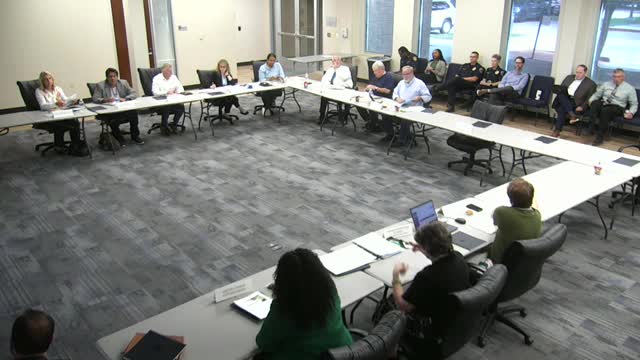
City Council members at a May 14 budget work session reviewed a plan to issue up to $23 million in certificates of obligation to pay for street work, updated dispatch software and a range of water and sewer repairs.
The presentation by Jason Hughes (presenter) outlined about $6.6 million in projects tied to the city’s interest-and-sinking (I&S) tax rate — largely road work (McMillan Road) and public-safety technology — and roughly $16.4 million for utility projects including water service line replacements, cast-iron main replacements, a Timber Ridge street rebuild and maintenance on the Rodeo Drive elevated storage tank. Hughes said the two purposes would be issued together but kept separate in the city’s accounting and that the general‑fund portion was assumed at a conservative 20‑year repayment schedule.
Why this matters: Hughes told the council the schedule is accelerated in part because of proposed state legislation (House Bill 19) that would, as currently drafted, cap a jurisdiction’s annual debt-service payments at 20% of the three‑year average of property tax collections. He said the bill, if enacted as written, would be “highly restrictive and punitive.” The city’s proposed timeline is intended to permit pricing and closing before an anticipated Sept. 1 effective date for any legislative changes; Hughes said issuances closed before that date likely would be excluded from the cap as drafted.
Key details and options - Size and split: Hughes summarized the plan as “approximately $23,000,000 in capital needs,” with the general‑fund (I&S) portion of about $6.6 million and a utility portion of about $16.4 million. He said the city can structure the issuance so the I&S tax rate need not increase above the current rate in the examples shown. - Term and structure: Hughes said the presentations assume a 20‑year repayment for both purposes (shorter terms could apply for some technology items). He noted that utility financings are commonly extended 25–30 years but the city used a conservative 20‑year assumption for planning. - Cash‑flow options: One scenario in the financial schedules defers principal on the utility portion for four years to reduce near‑term debt service growth; Hughes cautioned that deferring principal raises long‑term interest costs. - Police dispatch software: The requested public‑safety technology includes replacing an aging CAD/RMS dispatch platform that staff said fails frequently and increases IT workload. Hughes and public‑safety staff described the new system as a cloud‑based Motorola solution that would migrate the city’s data (Hughes noted roughly $300,000 of the first‑year cost would be for data migration) and would carry an ongoing annual licensing/maintenance cost staff estimated in the $75,000–$80,000 range.
Calendar and approvals: Hughes proposed a calendar that would put the council on record with a notice of intent at an upcoming council meeting (publication dates shown as May 29 and June 5), an anticipated pricing date of July 31, and a closing targeted for Aug. 28 so proceeds would be delivered before the Sept. 1 legislative effective date discussed in the presentation. He emphasized no formal action was requested at the May 14 session and that a future council meeting would be required to finalize sale authorization.
Legislative risk: Discussion centered on House Bill 19. Hughes described multiple “anti‑debt” provisions under consideration, including the 20% debt‑service cap, potential changes to GO bond election dates and restrictions on using short‑term tax notes after a failed election. Mayor Scott Bradley and other council members said the 20% provision would “lock us up” for needed infrastructure and noted the city’s current profile could already exceed the proposed cap under the draft formula.
Next steps: Staff recommended proceeding with preparatory work for a notice of intent and the official statement while monitoring the legislature. Council members asked for follow‑up details on the debt math and for continued updates on the bill’s status.
Ending: City staff said they will bring a formal notice of intent and supporting documents to the council for vote as early as the May 20 council meeting and will return with final numbers at the July pricing session if the council elects to proceed.