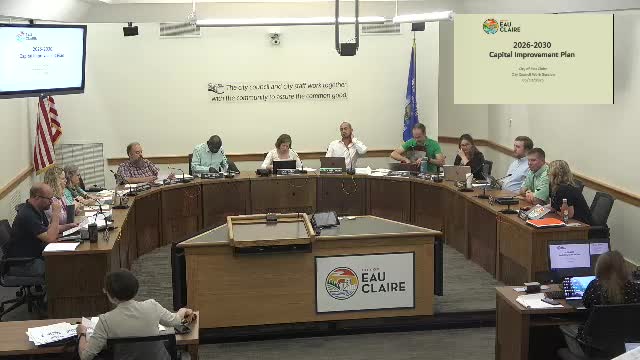
CIP work session: council weighs timing for downtown parking structure and trade-offs with street projects
Loading...
Summary
At a work session the city manager and finance staff asked the council whether to defer a proposed $14 million downtown parking structure to keep the 5-year capital plan within the city’s debt-policy targets and to preserve flexibility for other large projects.
City staff presented the draft five-year capital-improvement plan (CIP) at a May 13 work session, urging the council to consider strategic trade-offs to keep the city within its internal debt-policy targets and to preserve flexibility for future large projects.
City Manager Stephanie Hirsch and Finance staff described the city’s fiscal guardrails — a statutory 5% of equalized value borrowing cap and an internal 3.5% self-imposed limit on outstanding debt — and explained how the city’s rapid valuation growth has kept the debt ratio below policy targets even as borrowing needs rise. Staff said the draft CIP totals about $266 million across five years, in part because five large projects fall in the 2026–2028 planning window, including a $14 million downtown parking structure and an estimated $22–25 million sewer project in 2027.
Staff asked the council for direction on whether to push the parking-structure project out of the five-year window to avoid exceeding the city’s internal policy thresholds. City staff said preserving the project as a placeholder and investing modestly in the existing Gibson ramp to keep it open (an estimated $150,000 per year for structural and safety maintenance) would be an option. Staff also noted that paid parking and ramp revenues could be structured to build a future replacement fund and that any ramp replacement would need to be ADA compliant and collocated with other downtown stakeholders.
Council members’ comments tracked several priorities: several spoke in favor of directing more CIP funds toward affordable housing and smaller-scale neighborhood park or playground investments; others emphasized a continued commitment to transportation maintenance and to preserving the city’s ability to compete for economic development projects. Several council members also raised the possibility of reallocating some transportation funding short term, while noting that reducing annual street investment can reduce state transportation aid through the aid formula’s multi-year average.
Staff asked the council for a near-term decision point: remove the $14 million parking-structure project from the five-year CIP (push it to a later plan) so the published five-year CIP remains inside current policy limits, or leave it in the five-year window and accept a future need to reevaluate debt-policy thresholds. Staff said they preferred to publish a CIP that keeps the city within current policy rather than show amounts that would exceed the internal limits.
The council did not take a final vote at the session but generally signaled they were open to moving the project out of the five-year window if staff continued to work with the convention center and other downtown partners on timing and cost-sharing arrangements. Staff said they will publish the full CIP on Monday, include the proposed change as a public explanation, and bring the CIP to council adoption on June 24.