Get Full Government Meeting Transcripts, Videos, & Alerts Forever!
Get email alerts on the State Fiscal Impacts topic
No spam. Unsubscribe anytime.
MACo director warns Dorchester County council: state and federal shifts could push costs to local governments
Summary
Michael Sanderson of the Maryland Association of Counties told the Dorchester County Council that state budget fixes and potential federal changes threaten county budgets, highlighting a $3 billion state shortfall and risks tied to Medicaid and education funding.
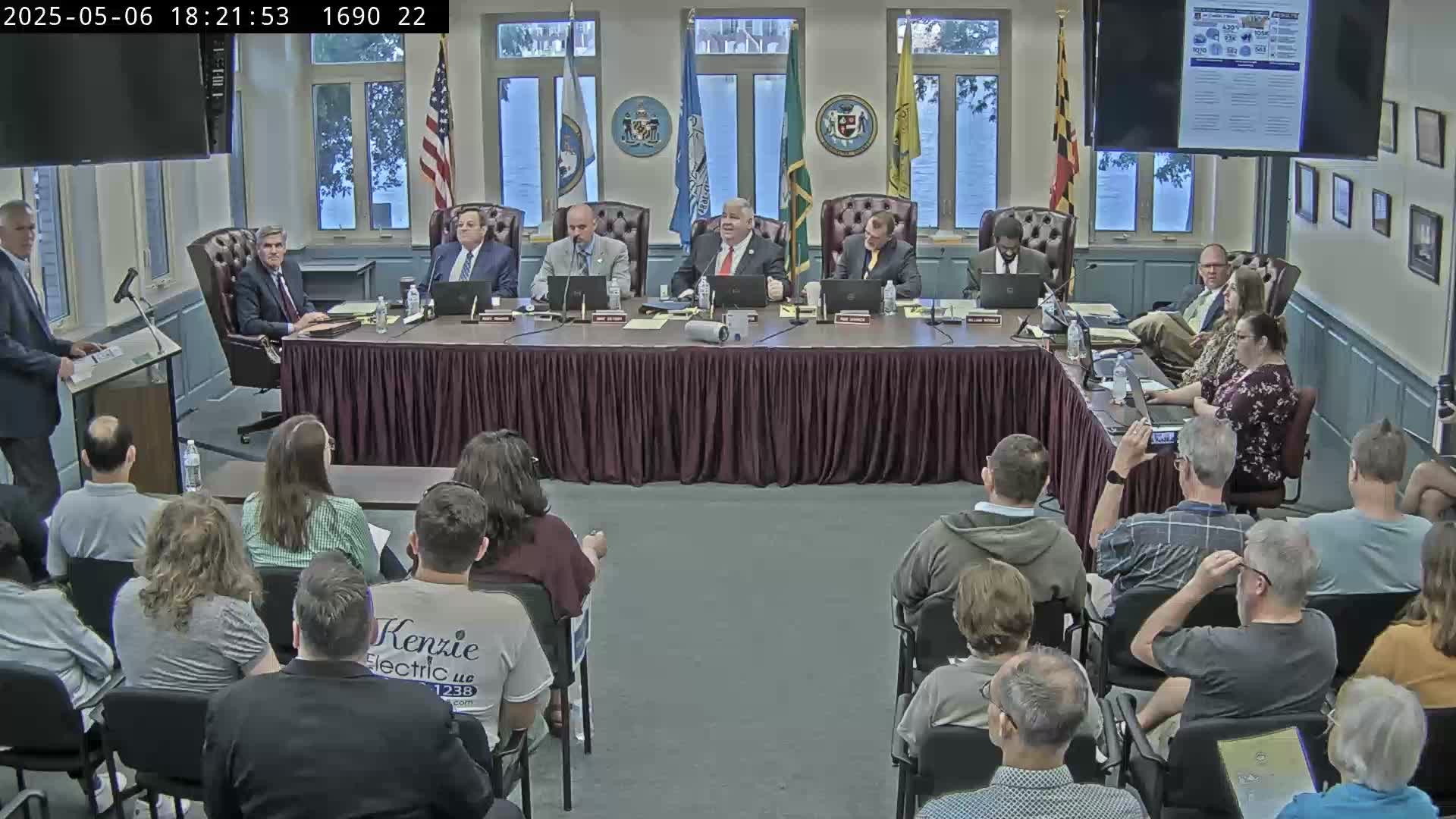
Michael Sanderson, executive director of the Maryland Association of Counties (MACo), told the Dorchester County Council on May 6 that state budget actions and possible federal changes could substantially affect county finances.
Sanderson said Maryland entered the year facing an estimated $3 billion budget shortfall and that the state’s approach to patching the gap included measures that may shift costs to local governments. “Coming into the year with a $3,000,000,000 projected budget shortfall,” Sanderson said, he warned that counties may feel continuing pressure if federal and state funding arrangements change.
He highlighted Medicaid and education policy as two major fiscal pressure points. Sanderson noted that Maryland’s Medicaid program is roughly a 50–50 federal-state split and said that large federal changes could increase Maryland’s share of costs substantially; he described scenarios in which fiscal adjustments could add “billions” to the state budget over time and lead to renewed pressure on counties.
Sanderson also discussed statewide energy siting and land-use issues, saying the Legislature and courts have been grappling with how to site large-scale clean energy projects without unduly consuming productive farmland. He described the recent legislative session as difficult for smaller, rural counties such as Dorchester and urged continued collaboration through MACo to protect local interests in Annapolis.
County officials thanked MACo for its advocacy; several council members said the association’s work helps small jurisdictions make their case to state lawmakers. Sanderson offered to follow up with county staff and provide more detailed numbers and technical assistance to help the county evaluate potential fiscal impacts.
The presentation was part of a broader meeting with municipal leaders and public testimony at the May 6 council session.