Get Full Government Meeting Transcripts, Videos, & Alerts Forever!
Get email alerts on the Mecos Ordinance topic
No spam. Unsubscribe anytime.
Supervisors delay decision on home‑kitchen (MECO) ordinance after questions on on‑site consumption, city coordination and staffing
Summary
The board heard a proposed ordinance to allow licensed microenterprise home kitchens (MECOs) countywide but elected to delay formal first‑reading action; staff will return with clarified language addressing city coordination, staffing, fee waivers and potential pilot limits.
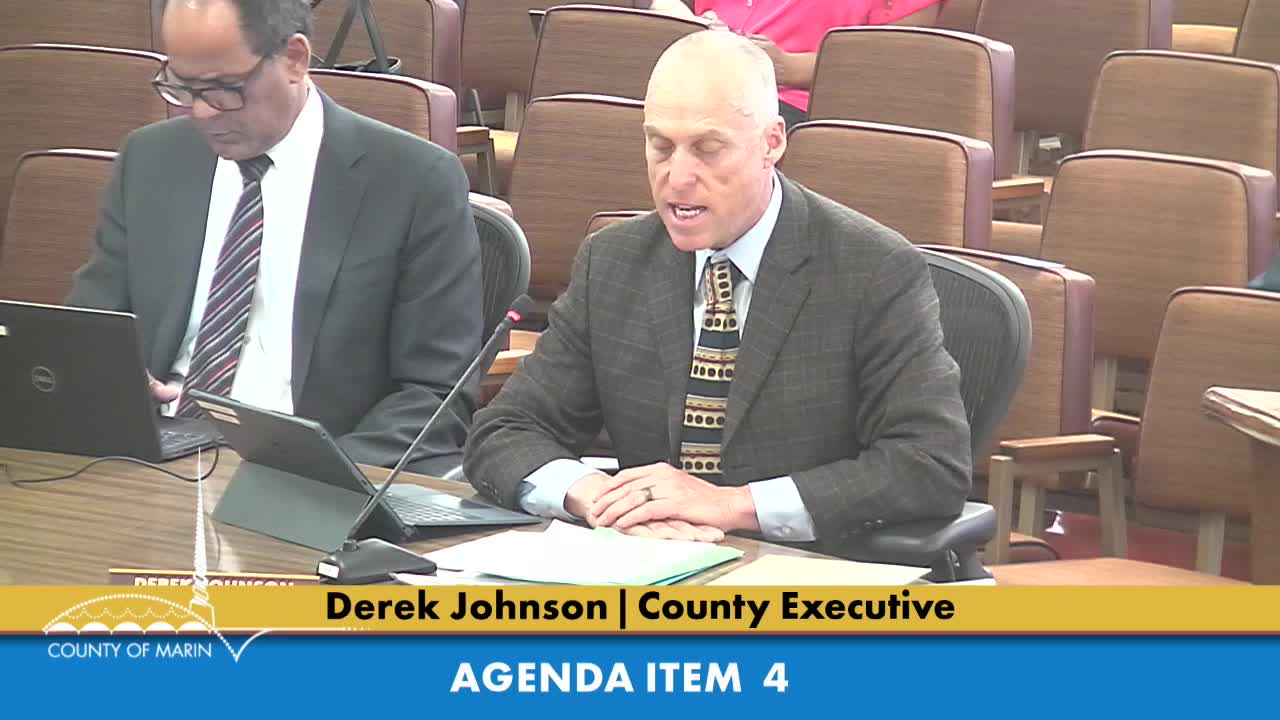
The Marin County Board of Supervisors on Tuesday heard a proposed ordinance that would allow Microenterprise Home Kitchen Operations (MECOs) — small, permitted home kitchens authorized under recent state law — but the board deferred formal adoption and asked staff to return with further details.
Environmental Health and Consumer Protection staff described how the MECO permit would expand the existing cottage food framework to allow the same‑day sale of potentially hazardous cooked foods prepared in private residences, with limits: up to 30 meals per day and 90 meals per week and gross annual sales capped at $100,000. The staff presentation noted exemptions from some structural and plan‑review requirements that apply to commercial kitchens, while emphasizing that MECOs would be subject to food‑safety rules, a one‑year annual permit, and routine inspections. The presentation also described SB 972, which allows operators to provide commissary services to up to two mobile carts.
Staff outlined a permitting path, a $725 application review fee and a $414 annual permit fee, and proposed a targeted fee‑waiver program for residents in census tracts that rank at or below the 70th percentile on the Healthy Places Index. County staff said grant funds and pooled resources (including a $6,000 grant from a statewide public‑health health directors’ group) could be used for outreach and to subsidize fee waivers.
Supervisors asked several policy questions. Supervisor Lukin pressed on the potential for on‑site consumption at private residences and whether a popular home‑kitchen could become a neighborhood nuisance; staff responded that state law allows on‑site consumption and that local zoning restrictions remain applicable and could limit some on‑site activity, but they agreed to clarify how the county’s permitting framework would interact with local municipal rules. Supervisor Colbert and others asked how the county would staff the new permit program and whether a modest pilot or cap on initial permits should be used to limit workload and allow the county to evaluate impacts.
The item drew supportive public comment from Cook Alliance (a statewide nonprofit that helped draft the enabling legislation), local anti‑poverty and community food advocates, and members of the Canal neighborhood who said MECOs could provide legitimate pathways to work for residents who currently operate informally.
After discussion the board asked staff to return with clarified ordinance language and implementation details — including the county’s authority compared with city and town zoning, staffing and fee‑waiver thresholds, and options for an initial cap or pilot approach — and tabled final action until a forthcoming meeting (staff suggested the board’s May 20 agenda). No ordinance or fees were adopted at this hearing.
Ending — Staff will revise the draft ordinance and present a first reading with clarifications requested by supervisors. The item was not adopted and will return to the board for further action.