Get Full Government Meeting Transcripts, Videos, & Alerts Forever!
Get email alerts on the Opioid Settlement Grants topic
No spam. Unsubscribe anytime.
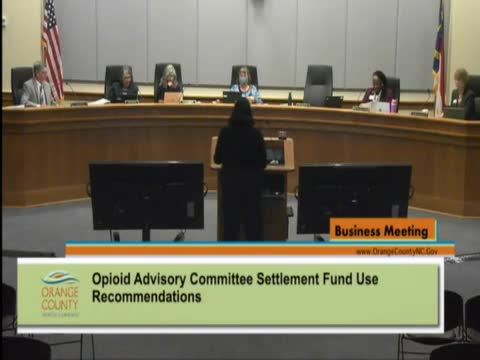
Opioid advisory committee recommends $230,000 in community grants; board approves allocations
Summary
The county’s opioid advisory committee recommended community grants totaling $230,000 to five local programs focused on medication‑assisted treatment, harm reduction, peer support and youth reintegration; the board approved the recommended awards and directed staff to implement contracts July 1.
The Orange County Opioid Advisory Committee proposed and the Board of Commissioners approved community grant awards totaling $230,000 at the May 6 meeting, allocating settlement funds for local programs that the committee said target high‑risk populations, harm‑reduction services and recovery supports.
Committee process and priorities
Committee chair Stuart (presenting) summarized the application process: applications were solicited in January, workshops and technical assistance were offered, applications were scored using a rubric (project narrative, sustainability, equity impact, organizational readiness, partnerships and evaluation) and a subcommittee of community and health‑department volunteers reviewed proposals and recommended awards aligned with the committee’s priority population (people actively misusing opioids, those at high risk, people in recovery needing ongoing support and harm‑reduction needs). The committee emphasized evidence‑based strategies and cultural/linguistic access for underserved populations.
Recommended awards and board action
The committee recommended funding these proposals (amounts recommended; requested amounts in parentheses):
- P My Health Services — $50,400 (requested $50,400) to provide medication for opioid use disorder (MOUD) at no cost to 36 new patients at Carrboro and Chapel Hill sites. - El Futuro — $50,000 (requested $74,115) to train and expand community mental‑health worker capacity and provide services to Spanish‑speaking residents. - Freedom House — $72,000 (requested $144,926) to fund a peer‑support specialist position (committee recommended peer support funding given hiring constraints for a medical provider). - UNC SHEC syringe program — $37,600 (requested $196,000; committee recommended continued, limited support for community syringe‑program operations). - Reintegration Support Network (RSN) — $20,000 (requested $20,000) to fund mentor training and supports for youth with justice involvement.
After presentation of the recommendations, a commissioner moved approval of the allocations and another seconded; the board approved the recommended awards by voice vote and directed health department staff to prepare contracts for a July 1 start date. The advisory committee noted that the county’s opioid settlement payments will decline beginning in fiscal 2027 and that award decisions were made with the payment schedule and program sustainability in mind.
Why it matters
The awards use county opioid settlement funds to sustain and expand local treatment, harm reduction and peer‑support services. The committee prioritized programs that target populations most at risk and increase culturally appropriate access to services.
Ending
The board adopted the committee’s recommendations and asked staff to execute contracts and report progress; final authorization and contract details will be completed ahead of the July 1 contract start date.