Get Full Government Meeting Transcripts, Videos, & Alerts Forever!
Get email alerts on the County Budget Tax Rate topic
No spam. Unsubscribe anytime.
Orange County manager presents FY 2025–26 budget; commissioners press for cuts, options to limit tax impact
Summary
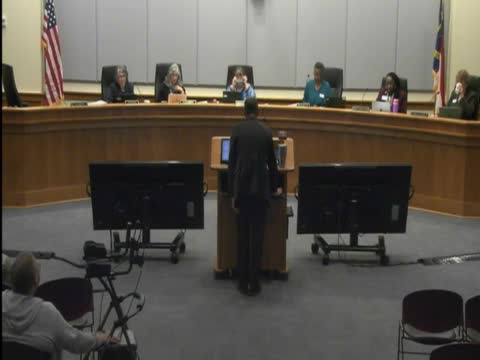
County Manager Travis Mahren presented a recommended FY 2025–26 operating budget on May 6, 2025, that would raise the county tax rate 2.95¢ above the revenue‑neutral rate to fund school pay‑go capital and county operations while preserving core services.
County Manager Travis Mahren presented a recommended fiscal year 2025–26 operating budget to the Orange County Board of Commissioners on May 6, 2025, proposing a modest tax‑rate increase above the revenue‑neutral rate to fund school planning and county operations while preserving core services.
Mahren said the manager’s recommendation reflects six priorities: minimize tax increases, preserve social safety‑net services, continue school funding, invest in employee compensation, align spending with the county strategic plan and create budget flexibility to respond to likely appeals from the recent property revaluation. He told the board the package includes a 2.95¢ increase above revenue neutral: 1.94¢ for school pay‑go capital and 1¢ for school continuation and county operations. “All of the good ideas that are in here are theirs. All of the bad ideas are mine,” Mahren said as he introduced the budget and budget staff.
The recommendation translated to a total county tax rate of about 65.59¢ and, according to the manager, would raise about $9 million to support the recommended spending. Mahren gave examples of homeowner impacts: under the manager’s approach, the additional county tax cost on a $400,000 home would be roughly $118 per year for the pay‑go component and $60 for the operational 1¢, he said. He also described the county’s assumptions about appeals to the revaluation: informal appeals filed through April 30 requested about $334.9 million in reductions, and the tax office adjusted its assumed successful appeal share from 5% to 3% for planning purposes.
Why it matters: Commissioners and members of the public stressed the immediate effects of any tax change on long‑time and fixed‑income residents. Commissioners said the board must weigh preserving services and staff compensation against the cumulative tax burden on households already reporting hardship because of higher valuations.
Key discussion points and options raised
- Debt versus pay‑go: Several commissioners asked for scenarios that would replace part or all of the pay‑go with debt (issuing bonds) or delay projects a year to lower the near‑term tax impact. Mahren and staff said modeling of debt versus pay‑go and of delaying projects was underway and would be available at upcoming budget work sessions.
- Potential cuts and timing: Commissioner McKee asked for a specific agenda item showing cuts needed to reach the revenue‑neutral rate; she renewed a petition for presentations on specific cuts at a May work session. Several commissioners said they intended to use the budget‑amendment process to propose targeted reductions and emphasized that the board can submit amendments after the manager’s recommendation.
- Department and position changes: The manager described a range of adjustments to limit the tax increase, including 16 of 27 departments proposed below base, a 10% travel and training reduction (excluding required certifications), four vacant positions eliminated, and moving some general‑fund expenses to other funding sources (for example, occupancy tax for an arts commission coordinator). He also described adding positions paid for by savings or enterprise revenues (mechanics for fleet services, a facilities maintenance technician offset by contract reductions, and a billing position projected to bring additional EMS revenue).
- Employee compensation and benefits: The recommended budget includes a 2% across‑the‑board wage adjustment for permanent employees (costed at roughly $1.8 million), continuation of merit awards and step programs in certain departments, and budgeted increases tied to employer retirement and health insurance cost growth.
- Schools: The manager recommended a 3% current‑expense increase for both school systems in planning numbers (about $3.2 million), and a $6.4 million pay‑go allocation tied to the school capital program. The manager noted uncertainty about the state salary funding number (the Senate and schools are using differing planning assumptions), and commissioners flagged the timing mismatch between state budget outcomes and the county adoption schedule.
Background and next steps
Mahren outlined the schedule for public hearings and work sessions: a May 13 public hearing at Southern Human Services, additional work sessions, and an intent‑to‑adopt schedule aimed at adopting the budget in mid‑June; he noted budget amendments must be submitted by the board by June 4. Commissioners asked staff to provide alternate scenarios (debt versus pay‑go, one‑year delay of capital projects) as soon as possible.
Ending
Commissioners did not vote on the recommended budget that evening; instead they used the meeting as the formal launch of the public hearing and amendment process. Mahren and budget staff asked commissioners to call with questions and said staff would provide the requested scenarios before the next scheduled budget work sessions.