Get Full Government Meeting Transcripts, Videos, & Alerts Forever!
Get email alerts on the School Budget topic
No spam. Unsubscribe anytime.
Beacon City School District presents $87.72 million budget, warns $2.4 million in cuts if voters reject
Summary
District leaders presented a proposed $87,720,000 budget for 2025–26 (a 4.61% increase), explained tax impacts and capital-project debt tied to a $49.9 million project, outlined program additions and federal funding risks, and held a public budget hearing ahead of the May 20 vote.
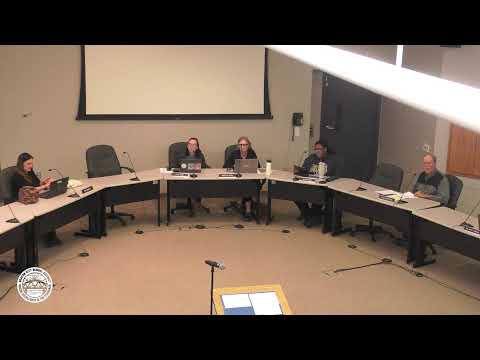
Beacon City School District officials on May 5 held a public budget hearing on a proposed $87,720,000 budget for 2025–26, a 4.61 percent increase over the current year that district staff said will be presented to voters on May 20.
The budget hearing is required before the district’s annual vote. Anne Marie (district staff) told the board the district is using the governor’s proposed state-aid number for planning because a final state budget had not been passed: “The budget that we're putting in front of the voters in 2 weeks from tonight is $87,720,000,” she said. Superintendent Matt (district superintendent) framed the spending plan as reflecting district priorities such as class-size reduction, mental-health supports and expanded extracurriculars: “the budget really reflects what we value here in the district,” he said.
District officials said the tax levy is at the statutory tax-cap calculation and noted that principal-and-interest payments tied to a $49,900,000 capital project voters approved last May will add debt service in future years. Anne Marie said the allowable levy growth uses the lesser of the consumer price index or 2 percent within the state formula and that the capital exclusion for debt service also affects the levy.
Why it matters: district leaders said the budget preserves recent program expansions — including elementary class-size reductions (average class size 17–18), fourth-grade instrumental music, added social workers and guidance counselors, and expanded clubs and extracurriculars — while also funding capital work the district previously approved. Administrators warned that if the budget fails twice, the district would be forced to adopt a contingency budget and cut about $2,400,000 from the proposed plan, which the superintendent said would almost certainly require reductions that affect students.
Key details and program changes - Capital project and facilities: The $49.9 million capital project approved by voters last year includes more secure school entrances, infrastructure improvements (roofing), new or improved HVAC/air conditioning for up to 50 percent of classrooms, resurfacing of tennis courts at Beacon High School, and renovations to the Seager Theater. District staff said timing and next steps were discussed at the facilities committee meeting preceding the board meeting. - Instructional and student supports: Officials cited continued investment in class-size reduction at elementary grades, addition of two social workers and an extra middle-school guidance counselor, a half-time speech teacher to support IEPs, new intervention teachers at the elementary level, and professional development focused on the science of reading and inclusion. - Pre-K and summer programs: The district said it has moved toward a full-day pre-K pilot (UPK funding), is offering summer workshops targeted to incoming ninth-graders and students entering AP/GCC classes, and will operate a site-based mental-health clinic at RMS and a “bridal” (transition) program at BHS for students returning from hospitalization. - Transportation and buses: The district said two electric buses and two chargers will arrive under a New York State grant; those buses can be supported by the existing bus garage electrical service. Because recently ordered 72-passenger buses have not yet arrived, the district is not placing a bus proposition on this year’s ballot. - Federal funds: District staff said Title funds and federal special-education grants (Section 611 and 619) provide roughly $1.3 million that supports reading teachers, intervention services and some special-education positions. Officials noted that if federal funds were eliminated, the district would need to include those costs in the general fund.
Tax impact and calculations Anne Marie presented several tax scenarios using the district’s median home value and assessment-change assumptions. Using last year’s assessments (a conservative approach, she said), the median home value in Beacon is $420,200; the worst-case annual increase tied to the proposed budget would be about $240 per year ($20 per month). Using an illustrative 5 percent across-the-board increase in assessments, the district estimated the median Beacon homeowner’s tax increase would drop to about $31 per year ($2.58 per month) because newly assessed properties absorb part of the levy.
Public comment and board response A parent attending the hearing said she has two children at JVF with IEPs and described concerns about IEP meetings. The parent said she was at the hearing because “a lot of this is attached to what happens with this budget.” Superintendent Matt and board members acknowledged the parent’s concerns and reiterated that some positions and services in the budget support special-education and reading services.
Board discussion and next steps Board members praised the presentation and the district’s outreach ahead of the vote. The district plans a Zoom webinar and in-person community sessions, will post the budget presentation and school data sheets online, and will distribute a printed budget newsletter. The board closed the budget hearing by voice vote and returned to the regular meeting.
Ending note: The budget will appear on the May 20 ballot. District officials emphasized that the state budget and federal funding developments could change final revenues, and they told residents the figures included in the public materials reflect current assumptions the board used in adopting the proposal.