Get Full Government Meeting Transcripts, Videos, & Alerts Forever!
Get email alerts on the Code Enforcement topic
No spam. Unsubscribe anytime.
Harrington commission weighs next steps on long-running code-enforcement cases, including Trapp Street shop and Arnold trailer park
Summary
City commissioners reviewed four long-open code-enforcement public hearings and discussed a prioritized approach to demolition and property remediation, directing staff to return with a prioritized list and to invite code staff back for the next substantive meeting.
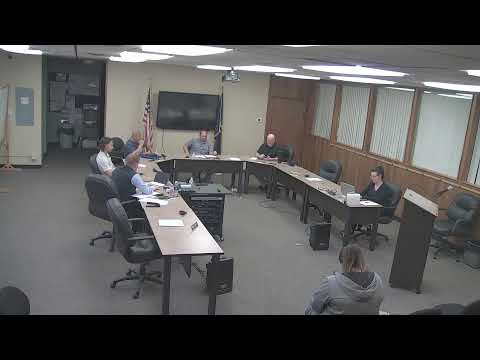
HARRINGTON, Kan. — The Harrington City Commission spent an extended portion of its meeting reviewing long-running code-enforcement matters on properties that have remained open since 2023, debating whether to close stale files, reopen hearings and proceed toward demolition where necessary.
Commissioners focused on four cases the city identified as outstanding, including the auto-body property at 219 West Trapp Street and multiple trailers at the 901 East Arnold trailer park. Staff reported the Trapp Street property was largely cleaned through voluntary compliance but said the remaining unsafe roof structure and newly appearing brush and junk piles mean the matter remains unresolved. On the trailer-park properties, staff said owners had made some improvements but that multiple resolutions and removal orders remain open and that scheduled timelines to remove certain trailers have lapsed.
Commissioners and staff debated the best procedural route: re-open existing public hearings that are based on older resolutions and pursue enforcement (which could lead to court or demolition) or close stale files and start fresh enforcement actions. Code staff and the city manager told the commission they prefer to close and reopen cases when long gaps and staff turnover have left the files out of date; others cautioned that closing without enforcement could appear weak and risk leaving unsafe structures in place. No demolition was ordered at the meeting.
City code staff emphasized limits on city capacity and the staff time required for enforcement. They said some successful cases had been resolved informally after outreach, but noted a handful of large properties will require concentrated staff time or could result in significant city expense if the city must contract demolition and assess costs back to owners.
The commission asked staff to assemble a prioritized list of problem properties, including the four discussed, and to present recommended next steps at the first meeting in June (staff noted the code lead would be unavailable for one upcoming meeting but promised a prioritized spreadsheet on return). Staff also recommended inviting the city—s code enforcement lead, Brad, to the next meeting to advise on whether to formally reopen hearings or begin new enforcement actions.
Commissioners discussed trade-offs: targeting many properties at once strains staff and budget; focusing on high-visual-impact items (sheds/garages) could yield broader neighborhood benefit than tackling a small number of expensive house demolitions. Commissioners asked staff to provide cost estimates and to outline which cases were already under resolution and which would require new legal steps.
The commission did not take a formal punitive vote at the meeting. Instead it directed staff to return with a prioritized list of properties, clearer timelines, and recommended procedures for either closing stale files and re-filing or proceeding directly under existing resolutions.