Get Full Government Meeting Transcripts, Videos, & Alerts Forever!
Get email alerts on the Kickbacks Illegal Remunerations topic
No spam. Unsubscribe anytime.
Committee hears proposal to criminalize improper remunerations including grant‑related kickbacks
Summary
House file 3043, discussed at the May 5 hearing, would create a state offense targeting illicit remunerations (kickbacks) tied to government contracts and grants; the committee received testimony and nonpartisan counsel noted the provision is novel relative to federal law and needs careful drafting.
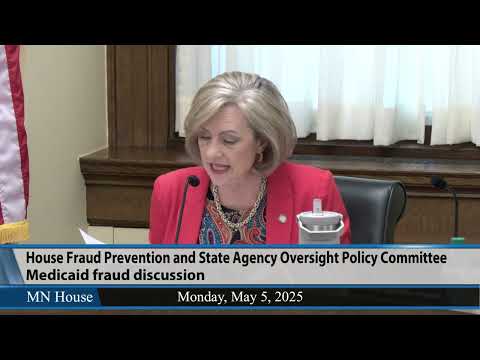
House File 3043, a committee bill discussed May 5 by the House Fraud, Waste and State Agency Oversight Committee, would add a state crime for illegal remunerations (commonly called kickbacks) tied to government grants, contracts and similar public programs.
Why it matters: witnesses and staff said current gaps can impede administrative and criminal accountability when an individual who influences awards later receives private benefit. Committee members asked nonpartisan staff and prosecutors to review the proposed language for overbreadth and prosecutorial discretion.
What was presented
Chair Robbins, the bill's author in committee, said HF3043 responds to agency requests gathered during committee hearings. She told members the proposal would close a gap revealed in testimony where agencies said conduct that looked like kickbacks sometimes did not meet a threshold the agency needed to withhold payments administratively.
Nonpartisan House counsel John Bowler (nonpartisan staff appearing as Mr. Johnson in the hearing) told the panel the draft is largely novel in state law and that comparable federal law does not give a neat analog. "To my knowledge, there's nothing specifically like this in federal law," he said. He warned that proving a kickback can be challenging because it may not always be straightforward to tie an individual action to an actual theft or misapplication of funds.
Prosecutorial and policy concerns
Representative Michael Salah (committee discussion) and other members urged careful drafting. Salah said the proposed subdivision could be broad and asked the committee to ensure the bill would not criminalize routine actions like a recommendation letter or routine employment transitions without a wrongful intent element. He recommended review in Public Safety to tighten language and clarify mens rea and jurisdictional limits.
Chair Robbins said the bill was drafted based on agency requests and that the committee would work with Public Safety and others to refine language. "There are specific examples... where someone who had grants management authority awarded contracts then later became an employee of a company they had awarded a grant to," Robbins said; she added lawmakers want to prevent such arrangements that improperly leverage public authority for private gain.
Ending
Committee members agreed additional review of the draft is appropriate. The committee did not take formal votes on HF3043 at the hearing; members signaled interest in refining language to clarify the statute’s scope, mens rea (intent), and interplay with existing theft statutes and administrative remedies.