Get Full Government Meeting Transcripts, Videos, & Alerts Forever!
Get email alerts on the Criminal Justice Recovery Court topic
No spam. Unsubscribe anytime.
Burke County leaders back continued opioid-settlement funding for Recovery Court; graduates and judges praise program
Summary
Burke County commissioners heard updates on the county's Recovery Court, where opioid-settlement dollars have kept the court running after a federal grant lapse. Officials reported program growth, improved outcomes and asked commissioners to extend funding through December 2026 while staff seek alternate grants.
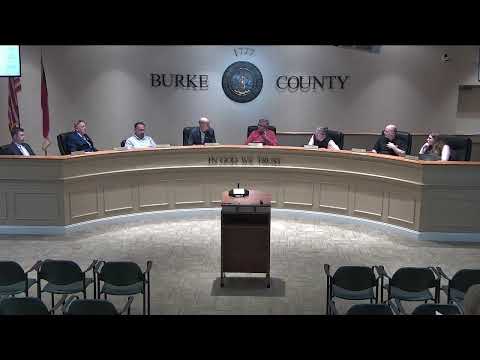
Burke County commissioners on Monday heard an update on the county's Recovery Court and were asked to continue funding the program with opioid-settlement dollars through Dec. 31, 2026, while staff pursue longer-term grants.
The county has partnered with Cognitive Connections, a vendor based in Hickory, to provide recovery-court services since the program restarted in February 2019. Hugh Sandow, the county's budget strategy and performance analyst, told commissioners the program originally received Bureau of Justice Assistance grant funding that was later denied for renewal; the county then allocated opioid-settlement funds to avoid disrupting participants.
Sandow said the county now receives monthly reports from Cognitive Connections tracking participants, services and outcomes. As of April, there were 19 active participants, 16 program graduates since 2022 and a 12-month success rate of 57 percent. Sandow said that exceeds typical national averages for similar programs.
"Most program participants come into the program without stable housing or employment. Post-graduation, 94 percent have stable housing and employment," Sandow said.
Commissioners heard from a graduate, Chris Ocstadt, who said the program was life-saving and credited court staff and the judge with giving participants hope. "Without this program, I wouldn't be standing here today. I'd be in prison or dead," Ocstadt told the board. Ocstadt also said she now works for Burke County Recovery Court and Catawba County Recovery Court and helps other participants.
Chief District Court Judge Robert Mullenax described the program as an important additional sentencing and treatment option. "This gives one extra tool for us," Mullenax said, noting recovery court provides structured treatment, drug screening, job training and housing help over a months-long progression to graduation.
County staff asked commissioners to keep the matter on the consent agenda so final action to extend funding can be included on the regular meeting agenda. No formal adoption vote on the funding extension was recorded at the pre-agenda meeting.
The county said continuing opioid settlement funding at current levels would allow the program to serve up to 30 participants. Staff said they will continue to track outcomes and seek other funding sources to sustain the program.
Commissioners and speakers emphasized the program's community impact, including reduced incarceration and improved participant stability.
A follow-up item to extend opioid-settlement funding will appear on the county's regular meeting consent agenda for formal action.