Get Full Government Meeting Transcripts, Videos, & Alerts Forever!
Get email alerts on the Post Conviction Procedure topic
No spam. Unsubscribe anytime.
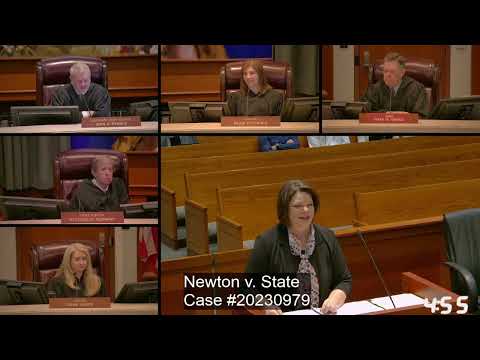
Utah Supreme Court Hears Argument Over Use of Summary Judgment in Newton v. State Post‑Conviction Case
Summary
At an oral argument before the Utah Supreme Court, lawyers for the petitioner and for the state disputed whether a petitioner may obtain post‑conviction relief on summary judgment and how courts should apply procedural bars and the Strickland ineffective‑assistance standard in collateral proceedings.
At an oral argument before the Utah Supreme Court, lawyers for the petitioner and for the state sparred over whether a petitioner may obtain post‑conviction relief on summary judgment and how courts should apply procedural bars and the Strickland ineffective‑assistance standard in collateral proceedings.
The dispute in Newton v. State focuses on two linked questions: when a state can obtain summary judgment dismissing post‑conviction claims and whether a petitioner may cross‑move for summary judgment on ineffective‑assistance claims using affidavits and expert reports. Defense counsel said the record here contains undisputed facts showing counsel’s failures and prejudice; state lawyers said the post‑conviction context and extensive trial evidence require deference to the jury verdict and an evidentiary hearing in most cases.
Counsel for the petitioner, Taliferro, representing appellant Bridal Newton, told the court that “this case is not complicated” and argued trial and appellate counsel rendered ineffective assistance that deprived Newton of a fair trial. Taliferro summarized the defense theory that a new defense expert, Jean Lee Carver, reviewed the SANE (sexual assault nurse examiner) records and photographs and would have rebutted key trial testimony: Carver concluded the SANE overstated and mischaracterized injuries, misapplied dye testing and misidentified petechiae as signs of strangulation. Taliferro said those criticisms “would have changed the evidentiary picture of the trial” and that the post‑conviction petition front‑loaded declarations and reports to show prejudice and ineffective assistance.
State counsel Daniel Day responded that post‑conviction proceedings are “not typical civil cases” and stressed the prior factfinding: Newton’s conviction was reached before a jury, has been affirmed on appeal, and multiple post‑verdict evidentiary hearings already occurred. Day told the court that summary judgment in the post‑conviction context must account for the jury verdict and for findings by earlier factfinders, and that a petitioner who survives a state summary‑judgment motion usually should receive an evidentiary hearing rather than having a conviction vacated on affidavits alone.
The argument dealt in detail with the procedural mechanics. Defense counsel said the Post Conviction Remedies Act and Rule 65C impose a petitioner’s burden by a preponderance to evade procedural bars, and that when the state seeks dismissal on procedural grounds at the summary‑judgment stage this shifts the burden onto the petitioner to show an exception. Taliferro argued that if the petitioner adduces undisputed facts that meet that burden, the court can grant relief as a matter of law without an evidentiary hearing.
Multiple justices pressed both sides on what courts can and should decide at the summary‑judgment stage. One justice asked whether denying the state’s summary‑judgment motion merely produces a disputed fact that requires an evidentiary hearing; Taliferro agreed that in some cases an evidentiary hearing is warranted but argued that where undisputed facts establish ineffective assistance and prejudice, summary judgment for the petitioner should be available. Day and other justices observed that many post‑conviction claims must be tested by live testimony and cross‑examination, especially where trial testimony and a jury verdict provide strong corroboration. Day pointed to the trial record, including the SANE testimony, more than 30 photographs of injuries introduced at trial, testimony that the alleged victim appeared injured and disheveled shortly after the incident, and prior post‑verdict findings as reasons to require a hearing.
Both sides discussed case law the justices raised from the bench. Defense counsel cited earlier appellate decisions in which courts found ineffective‑assistance claims on the record and remanded for relief; state counsel repeatedly referenced the Post Conviction Remedies Act, Rule 65C, Rule 56 (civil summary‑judgment procedure), and the Strickland standard for ineffective assistance as the governing framework. The parties debated whether Rule 65C’s requirement that findings of fact and conclusions of law accompany grants of relief conflicts with typical summary‑judgment practice and whether that tension precludes petitioner‑initiated summary judgment.
On specific evidentiary points, Taliferro described his expert’s conclusions: the SANE allegedly overstated the extent and timing of injuries, misinterpreted dye uptake as abrasion, and misread petechial patterns attributed at trial to strangulation; defense counsel also pointed to the possibility of prior intimate contact that could explain some injuries and to a second male DNA profile that was not presented to the jury. Day replied that much of that material is impeachment evidence and that impeachment alone will often be insufficient to overcome the trial record where corroborating evidence exists.
Several justices queried whether the case before them was suitable for immediate relief if the court agreed that the trial and appellate records showed undisputed legal error. Day and other justices emphasized the state’s view that, given the extensive trial evidence and prior rulings, an evidentiary hearing would commonly be required; Taliferro said the rules should be applied uniformly and asked the court to clarify whether petitioners may seek summary judgment in appropriate cases.
The court took the case under advisement and said it would issue a written opinion.