Get Full Government Meeting Transcripts, Videos, & Alerts Forever!
Get email alerts on the Oversight Dnr Retaliation topic
No spam. Unsubscribe anytime.
House oversight hearing examines allegations DNR, prosecutors targeted Detroit Animal Welfare Group
Summary
Members of the Michigan House Oversight Committee on Weaponization of State Government heard testimony alleging that Michigan Department of Natural Resources officers and the Macomb County prosecutor repeatedly targeted the Detroit Animal Welfare Group and its director, Kelly Labonte, through inspections, criminal charges and permit-revocation attempts.
Members of the Michigan House Oversight Committee on Weaponization of State Government heard testimony alleging that Michigan Department of Natural Resources (DNR) officers and the Macomb County prosecutor have repeatedly targeted the Detroit Animal Welfare Group and its director, Kelly Labonte, through inspections, criminal charges and attempts to revoke her wildlife rehabilitation permit.
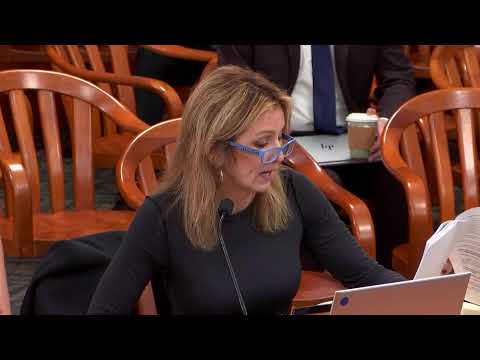
The committee's opening statement said the body was investigating whether state power is being misused against citizens who criticize government decisions. Celeste Lisonbee, the group's attorney, told the committee, “The case I'm gonna tell you about today is probably 1 of the most disgusting cases of retaliation that I've seen in my experience.” She presented internal DNR emails and other documents she said showed officials discussing withdrawing Labonte's permit after public criticism and outreach connected to a 2018 Clarkston deer matter.
Why it matters: Committee members said the hearing raised questions about whether a regulatory agency used its enforcement power in response to criticism rather than solely for animal-welfare reasons. The dispute has had financial and operational consequences: testimony said Labonte spent about $150,000 of her personal funds defending against the proceedings, committee witnesses estimated taxpayer costs in the DNR and prosecutor actions at roughly $500,000, and the facility rehabilitates roughly 1,000 wild animals a year — the witnesses said Macomb County would lose an important local capacity if the permit were revoked.
Testimony and evidence
Celeste Lisonbee described a chain of events that began after a 2018 episode involving emaciated deer kept in an enclosed property near Clarkston. Lisonbee said she and others met with the late Oakland County executive Brooks Patterson and proposed a refeeding and relocation plan that the DNR rejected. Lisonbee showed emails she said were written by DNR staff calling Labonte a “radical animal activist” and asking, “Can we not pull their rehab license?”
Lisonbee told the committee that DNR officer Chris Keel led surprise inspections and that agency staff pursued revocation proceedings under the Administrative Procedures Act rather than issuing a corrective action plan. She said the ensuing administrative trial lasted about a year; an administrative law judge issued a roughly 90-page opinion ruling in Labonte's favor.
Labonte described the practical work of Detroit Animal Welfare Group and the toll the enforcement actions have had on her operation and personal life. “It has been 7 years of terror for me and living every day in fear of, you know, a government agency is not a fun way to live,” Labonte said. She told the committee the nonprofit handles a wide range of species from a 25-acre farm and is relied on by local police and shelters to take animals that other facilities cannot.
Lisonbee and supporters also described several specific incidents they said showed questionable DNR conduct: multiple inspections with armed officers present, DNR officers video-recording animals on Labonte's property and a contested poaching investigation that committee witnesses said was not followed by a clear DNR prosecution. Committee testimony said that in 2021 the DNR revised the state Wildlife Conservation Order to more explicitly prohibit a practice called “soft release” (supplemental feeding during release), a change witnesses said was made after Labonte successfully challenged agency charges.
Agency practices and legal posture
Witnesses contrasted DNR practice with inspections by other regulators such as the U.S. Department of Agriculture or the Michigan Department of Agriculture and Rural Development, which they said provide checklists, on-site explanation and corrective action plans. Lisonbee said the DNR pursued revocation rather than remediation and that DNR staff who led enforcement had limited training in wildlife medicine and rehabilitation.
Committee actions and next steps
Committee chair Representative Regas (opening the hearing) said oversight staff will request related records from the DNR and the prosecutor's office and indicated the committee may pursue legislative reforms if misconduct is found. “If we find misconduct, we will recommend accountability,” Regas said.
The committee noted that the administrative law judge had ruled in Labonte's favor on earlier proceedings but witnesses said the DNR continued enforcement actions and has filed further revocation proceedings. Lisonbee told the committee the group has at times entered limited pleas or sought to work with regulators, but she said the DNR's stated objective — to revoke the permit — has persisted in internal documents.
Ending
Committee members expressed concern about both the alleged conduct and the practical consequences for wildlife care in Macomb County if the facility loses its permit. Vice Chair Pawlotsky and several representatives said the testimony warranted further document requests and follow-up. The committee adjourned after making preliminary requests for additional agency records and saying it would continue to investigate whether agency action constituted improper retaliation or misuse of enforcement authority.