Get Full Government Meeting Transcripts, Videos, & Alerts Forever!
Get email alerts on the Sidewalks topic
No spam. Unsubscribe anytime.
Councilors and DPW Clash Over Sidewalk Backlog as Hiring, Coordination Lag
Summary
Providence council members pressed Department of Public Works staff on a years-long sidewalk backlog, hiring shortfalls for cement finishers and project managers, and delays that leave many neighborhood requests unresolved despite $8 million in contracts and ARPA allocations.
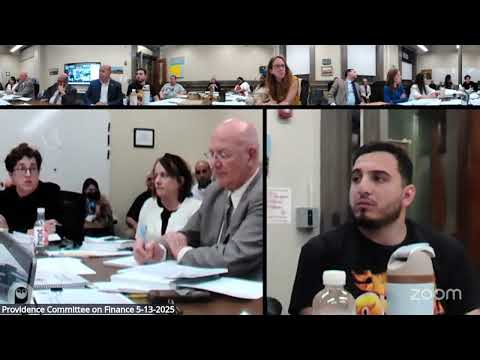
Providence council members pressed Department of Public Works (DPW) leaders Tuesday over a persistent sidewalk backlog, staff vacancies and coordination problems that councilors say leave residents waiting years for repairs.
Council members raised the issue after DPW presented its engineering and highway division budgets for fiscal 2026. Councilors said sidewalks that were on lists a decade or more ago have not been completed, and they sought a clearer timeline for completing projects funded by city capital and federal ARPA allocations.
DPW staff said the department is working through competing constraints including contractor availability, utility coordination, seasonal windows and recruitment difficulties for specialized positions. “We—e got $8,000,000 of sidewalk contracts on the streets today,” a DPW staff member said, noting the city has a mix of internal crews and private contractors and that some contracts are staged to match other utility work.
Why it matters: sidewalks are a frequent constituent complaint and a visible sign of government performance. Council members said the delays undermine trust and asked for better information so residents can be told a realistic schedule.
What councilors pressed for - A clearer timeline and public list of addresses slated for construction. Several councilors said constituents report addresses on an active list dating back to 2009 and earlier. - More coordination with utilities so paving and sidewalk repair are not repeatedly delayed when a water or gas main replacement is later scheduled. - Faster use of available funds. Councilors noted existing reserves and ARPA allocations and urged DPW to convert planning into construction more quickly.
DPW explanation and staffing constraints DPW explained several causes for the backlog: many sidewalk projects require coordination with gas and water utilities (which may displace work for months), smaller contractors often won—t bid on micro-jobs, and the department has struggled to recruit for several newly created or vacant positions.
Staff described vacancies in the engineering division including two newly created positions (assistant chief engineer and project manager) and a civil engineer vacancy; the GIS coordinator position had recently been filled. DPW said it has candidates for some roles but is competing with private-sector pay. The department said it is exploring non-monetary recruitment incentives such as flexible hours and improved workspaces once staff move into a new building.
Contracting and smaller jobs DPW staff and councilors discussed using a standing construction contract (a non-call contract) to speed small sidewalk jobs and to break projects into clusters so smaller firms will bid. Staff said there are currently seven vendors on the standing contract and that the highway division has begun handling smaller sidewalk patches internally to relieve pressure. DPW also said some trades like cement finishing are specialized and that crews have been hard to hire; the highway division currently has two cement finishers and the sewer division two, and the city has added an extra crew in recent budgets.
Council requests and next steps Council members asked DPW to: provide a ward-by-ward schedule of sidewalks slated for work; identify which addresses are delayed because of utility coordination; and produce a plan for spending sidewalk-focused ARPA funds so projects can move into construction next spring. DPW said it maintains project tracking in GIS and will share available lists and timelines with councilors; staff urged patience when work is constrained by utility sequencing.
Ending: Councilors signaled they expect a follow-up report with address clusters and an implementation timetable to share with constituents. DPW acknowledged the pressure and said it will pursue targeted recruitment and contracting steps to accelerate smaller repairs.