Get Full Government Meeting Transcripts, Videos, & Alerts Forever!
Waukesha officials review major zoning rewrite, seek input on ‘node’ overlays and housing options
Summary
Waukesha City staff and a consultant presented a draft rewrite of the zoning code and proposed “node” overlays for neighborhood, collector and arterial commercial areas; the plan commission asked for revisions and took no formal action.
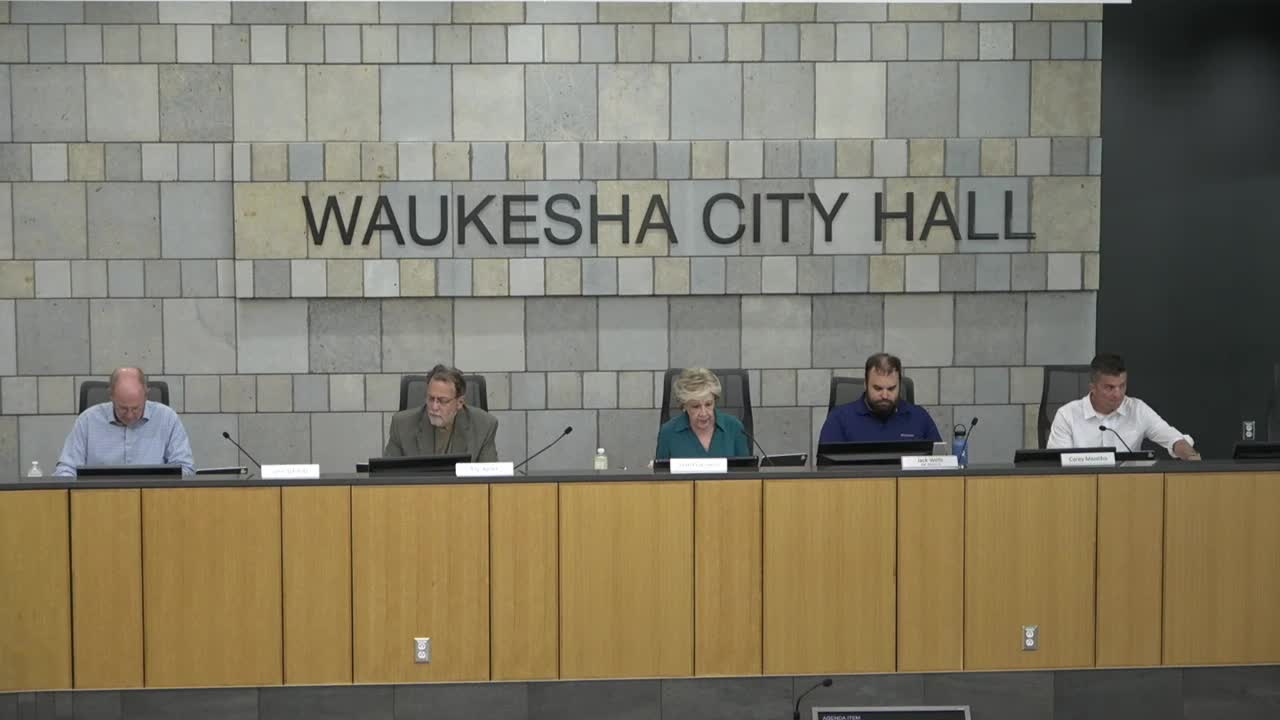
Waukesha City staff and members of the Plan Commission and Common Council met in a joint special session to review the first two chapters of a proposed rewrite of the city’s zoning code, focusing on new “node” overlay districts and changes to residential district structure. The commission made no formal recommendation or vote; staff and the consultant will revise the draft and return for further review.
The meeting opened with Jennifer Andrews, head of community development, framing the effort as a follow-up to the city’s recently adopted comprehensive plan. “The comprehensive plan is the overall vision. The zoning is the tool by which we achieve that vision,” Andrews said, urging attention to how the draft code implements goals such as redevelopment, flexibility in housing types and encouraging accessory dwelling units.
The draft presented by consultant Carrie Papalbon of Housia Levine would consolidate several existing residential districts into fewer categories (examples presented included suburban neighborhood, general neighborhood, urban/mixed residential and a multifamily/transitional district), introduce new housing types such as cottage homes/tiny-home courts, row houses and live-work units, and set new dimensional standards. “The purpose of of this meeting is really to go over the major changes to the draft,” Papalbon said, and solicited specific policy direction on district names, dimensional thresholds and use tables.
Why it matters: speakers said the rewrite aims to modernize a zoning code that staff described as decades old and to reduce routine variance requests by better matching regulations to the city’s existing lot patterns and the comprehensive plan’s priorities. The proposal also seeks to create three overlay “node” types — neighborhood, collector and arterial —…
Already have an account? Log in
Subscribe to keep reading
Unlock the rest of this article — and every article on Citizen Portal.
- Unlimited articles
- AI-powered breakdowns of topics, speakers, decisions, and budgets
- Instant alerts when your location has a new meeting
- Follow topics and more locations
- 1,000 AI Insights / month, plus AI Chat