Get Full Government Meeting Transcripts, Videos, & Alerts Forever!
Get email alerts on the Landlord Registry topic
No spam. Unsubscribe anytime.
Jacksonville councilman proposes landlord registry; will pursue ordinance after public input
Summary
Councilman Jimmy Paluso introduced a resolution to study a landlord registry and a tenant ombudsman, drawing public comment and legal questions about state preemption. Paluso said he will withdraw the resolution and work toward an ordinance after meetings with stakeholders and the city attorney.
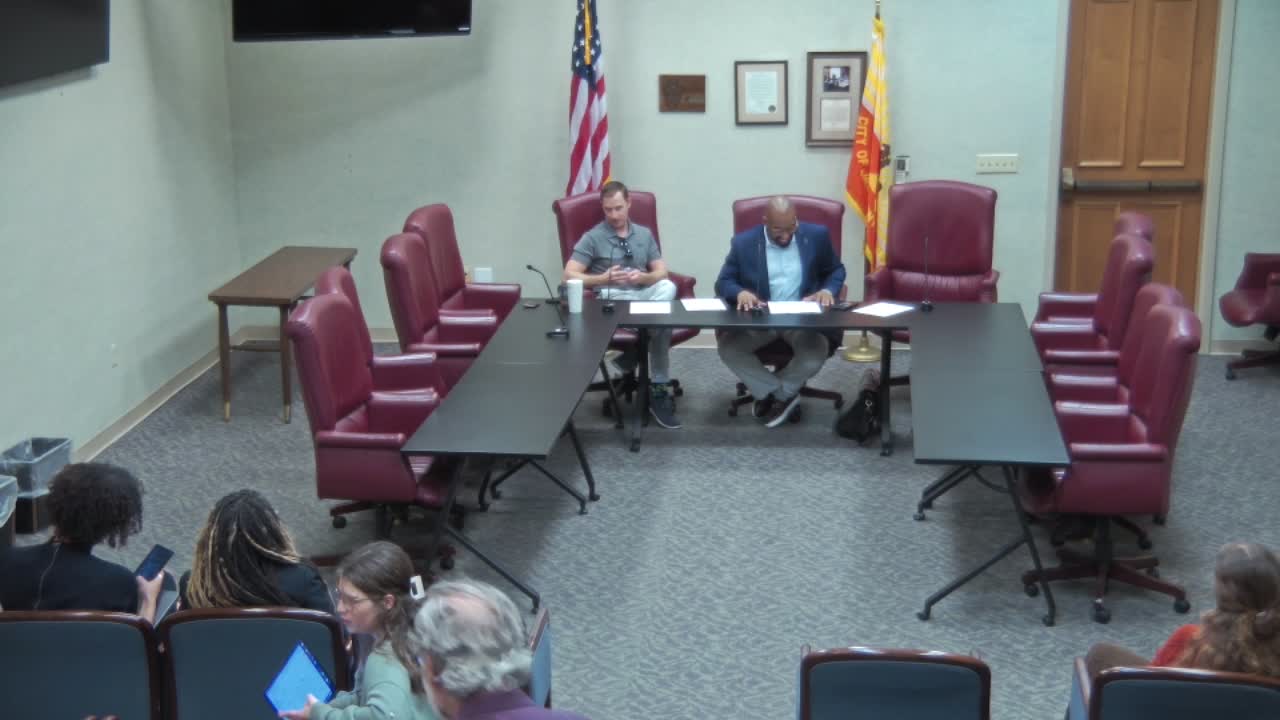
Councilman Jimmy Paluso, D-7, introduced a resolution to create a landlord registry and a city ombudsman for tenants during a public meeting on what the packet identified as Resolution 2025-293.
Paluso said the registry would make “who owns the property” and basic ownership and compliance information accessible to renters and create “a one‑stop shop” where tenants can ask, “I don't know what my rights are. I don't know what resources exist.” He said the position could act as an ombudsman to help tenants find rental assistance or connect them with city services.
The resolution prompted detailed questions from fellow council members, city attorneys and dozens of public commenters about scope, legal authority and technical design. Council member Rahman Johnson, D-14, asked whether the proposal would require an FTE, how apartment complexes would be included, and whether the registry should rely on or link to state databases administered by the Florida Department of Business and Professional Regulation (DBPR).
Mary Stifafolis of the Office of General Counsel told the council that creating and operating a registry could raise separation‑of‑powers and preemption issues and that the council could consider an ordinance to establish a registry in the city code. Stifafolis and other staff said the administration and relevant departments would need to be at the table to define how a registry would be administered and enforced.
David Jaffe of the Jax Rental Housing Project (and a professor) told the council that a locally searchable database is necessary because property‑appraiser and other public records often list ownership under opaque LLCs, making it hard for city staff or tenants to identify responsible owners. “A publicly searchable database that anybody in Jacksonville... would be able to look up the person who owns the apartment complex that they live in,” Jaffe said, would help monitor patterns such as eviction filings and code violations.
Public commenters urged different approaches. Tenant advocate Jason Johnson described losing housing while trying to help his 10‑year‑old son, saying managers often cite corporate policy and do not resolve tenant issues. Wells Todd and other speakers said renters need protections and accountability. Paul Hoffman urged caution, warning that small “mom‑and‑pop” landlords could be hurt and urging a fact‑based approach.
Council members and staff discussed technical design choices raised in the packet and amendments: whether to exclude properties defined as public lodging establishments under Florida Statutes chapter 509 (generally properties with five or more units), whether to require registration or make it voluntary, whether to charge a fee, whether to include eviction filings and code violations as searchable fields, and whether to hire an FTE or use an outside vendor or nonprofit to run the registry.
Paluso said the resolution was intended to spur collaboration with the administration, the Northeast Florida Association of Realtors, the First Coast Apartment Association, tenant groups such as Florida Rising, researchers from the University of North Florida and other stakeholders. Because of legal and design questions raised during the meeting, Paluso said he would withdraw the resolution and pursue drafting an ordinance after further meetings and coordination: “I will withdraw this bill, and we will put it in an ordinance,” he said.
Next steps Paluso described include additional notice meetings at different times to gather input from apartment owners, realtors and individual landlords; follow up with the general counsel’s office on preemption and separation‑of‑powers issues; and exploring whether the registry would be run in‑house, by a contracted community group, or as a small team within neighborhoods/housing departments. Staff noted existing resources such as 211/United Way and city social services but also said those resources are limited and, in United Way’s case, have exhausted available funding.
No formal vote was taken on the resolution at the meeting. The discussion closed with Paluso and other members agreeing to further collaborative drafting and legal review before introducing an ordinance for council consideration.