Get Full Government Meeting Transcripts, Videos, & Alerts Forever!
Get email alerts on the Urban Agriculture topic
No spam. Unsubscribe anytime.
Frontline Farming presentation urges Littleton to integrate urban agriculture into stewardship plan
Summary
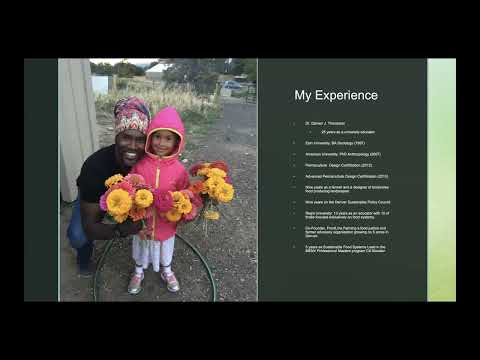
Damien Thompson, a sustainable-food-systems educator and co-founder of Frontline Farming, told the Littleton City Environmental Stewardship Board that municipalities can expand climate resilience, food access and community engagement by supporting local farms and related programs.
Damien Thompson, a sustainable-food-systems educator and co-founder of Frontline Farming, told the Littleton City Environmental Stewardship Board that municipalities can expand climate resilience, food access and community engagement by supporting local farms and related programs.
Thompson said the city could use municipal land and partnerships to create a network of community farms, community-supported agriculture (CSA) and neighborhood food exchanges, and he urged the board to consider water access, staffing and zoning as immediate constraints to address.
Thompson outlined three municipal leverage points: climate resilience, food access and equity, and preserving agricultural heritage. He described the Arvada partnership as a model: Frontline Farming operates on roughly 2 acres at Majestic View Nature Center under a municipal lease, and the organization last year reported about 22,242 pounds of produce across its sites, roughly half of that from Majestic View. Thompson said Frontline Farming's CSA goals include about 90 members this year, with a quarter of those targeted as SNAP or WIC recipients.
"It's not just about the food. It's not just about the infrastructure," Thompson said, emphasizing public engagement and education as components of successful municipal partnerships.
Board members and residents pressed on details municipal staff would need to resolve before launching similar programs in Littleton: water access and taps, land tenure and lease length, zoning changes to allow agriculture on municipal land, and capacity in city staff to support farms. The group discussed existing local assets including the Littleton Museum properties, nearby Chatfield farms, and locally run community gardens.
Pam Chatburn, a resident who spoke during public comment, said the city's environmental action planning is hampered by organizational stovepiping and by capacity gaps on related staffing. "I'm not seeing it advancing much," she said, urging the board to request staff reports on hiring and to broaden integration across public works and community development.
Board members discussed next steps including mapping the city's food ecosystem, interviewing potential municipal and nonprofit partners, and using student capstones or consultant work to develop an urban agriculture plan. One board participant offered to draft a memo for a future meeting recommending a Council discussion about joining Colorado Communities for Climate Action; that memo would be subject to board review before referral to City Council.
The board did not take formal policy action at the meeting. Members asked staff to prepare background material for future sessions that would include more detail on water rights, costs for irrigation taps, site suitability analyses and options for funding or pilot partnerships.
The presentation and Q&A lasted about 45 minutes. Thompson recommended incremental approaches (start with an acre or two, build infrastructure as capacity increases) and pointed to Arvada's five-year lease approach and city-provided water access as critical enablers.
Ending
Board members agreed to continue the conversation at subsequent meetings and to try to assemble a resource map and a short set of next actions for the June meeting, including identifying potential pilot sites and whether existing local groups could scale to meet community food needs.