Get Full Government Meeting Transcripts, Videos, & Alerts Forever!
Get email alerts on the Sidewalks And Pedestrian Safety topic
No spam. Unsubscribe anytime.
Residents push 'get stuff done' sidewalk plan; city details phased repairs and funding
Summary
A resident-led proposal urging a rapid, in-house "get stuff done" sidewalk program drew support from council and staff. Public Works Director Mark Russell said the city spent about $500,000 last year and has another $500,000 for 2025, with a longer-term capital plan estimating roughly $3 million a year for sidewalks.
A public comment appeal on May 6 from Larry Jezza, chair of the Olympia Council of Neighborhood Associations, urged the Olympia City Council to start a "get stuff done" initiative to accelerate sidewalk repairs across the city rather than wait for multi-year policy development.
"I am suggesting that we adopt a get stuff done initiative in the city," Jezza said, urging the city to hire a dedicated crew of city workers to repair sidewalks, post signs saying "your Olympia tax dollars at work," and show visible neighborhood progress while longer-term policy options are developed.
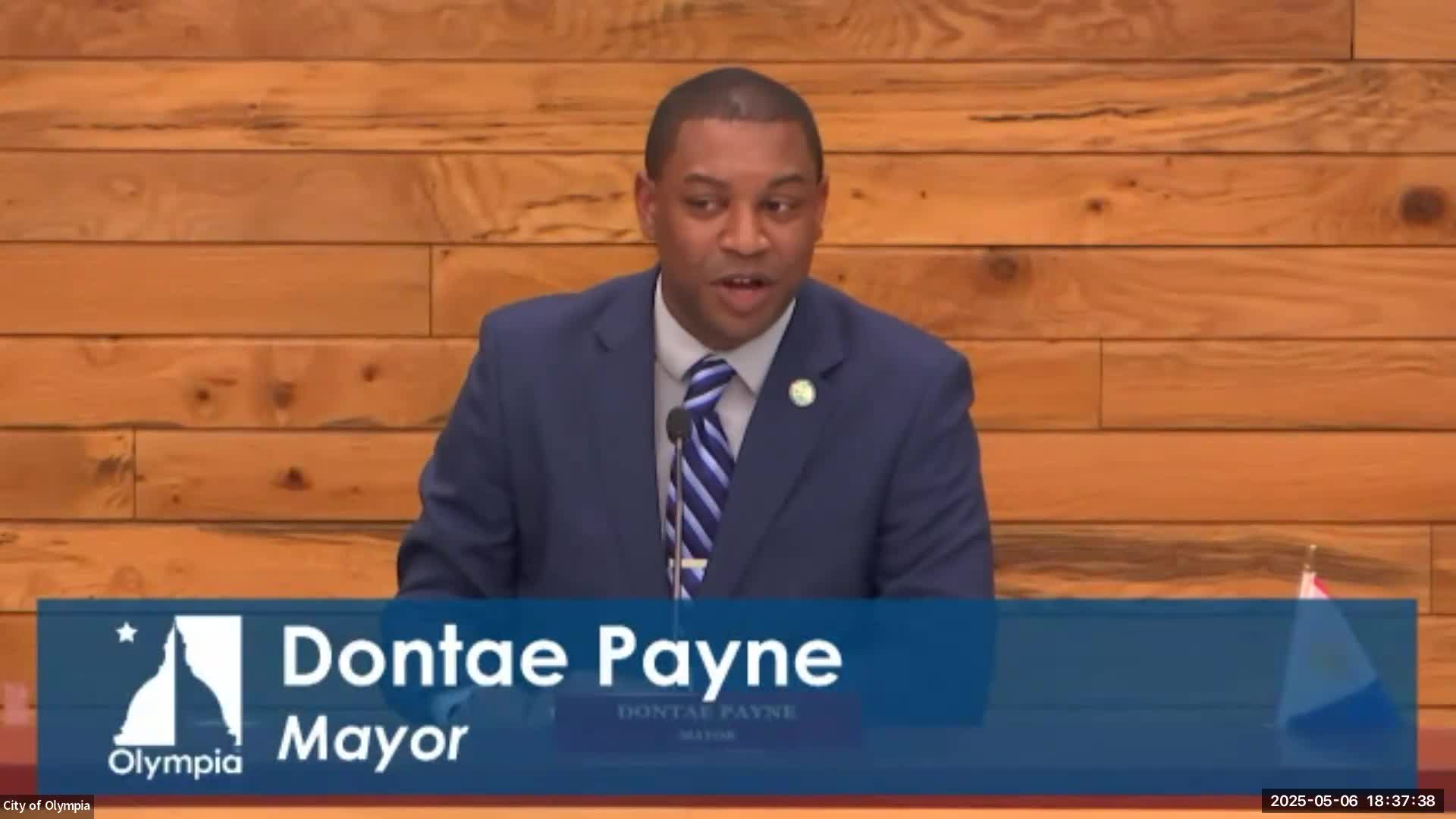
Councilmembers and staff responded with descriptions of current activity and funding. Public Works Director Mark Russell said the city spent about $500,000 on sidewalk repairs in 2024 and has another $500,000 programmed for 2025. He told the council the city is collecting a previously approved 0.1% tax (one-tenth of one percent) that began being collected in April of last year and that staff are planning a multi-year capital facilities program that anticipates roughly $3,000,000 per year for sidewalk work.
"Last year we spent about a half a million dollars doing sidewalk repair throughout our community," Mark Russell said. "Plan for this year is another half a million dollar project. As you know, projects are expensive and we have to collect a certain amount of money before we can really get going on that. But as you'll find through our CFP process, we've got a plan for how to spend that money at roughly $3,000,000 a year."
Councilmember Cooper told the meeting that the city is already pursuing both contractor-based and in-house approaches and that staff work had shown it would take more than a century at current pace to fix all sidewalks, stressing the need to define a target level of service and a funding strategy.
"Even at the city staff version of this project, we're more than a hundred years before we fix all of our sidewalks," Cooper said. "We have to have a conversation about level of service and where we want the priority level of service to be in our city before we fully invest all of these dollars."
Councilmember Vanderpool and others noted additional funding options and tools that could accelerate work in particular neighborhoods, including district-level funding or targeted assessments if residents seek faster repair in a specific area.
City Manager Jay Verney said staff will consider communication improvements, including signage at work sites, to highlight progress and taxpayer investments — an idea Jezza had suggested.
Russell and staff also said they would continue returning to the Land Use and Environment Committee and the council during the capital facilities planning and budget cycle to discuss staffing options, funding levels and whether to dedicate city crews to sidewalk repairs as an interim or long-term strategy.
Ending Councilmembers encouraged continued conversation through committee work and the budget process. Staff recommended balancing immediate repairs with a policy discussion about where sidewalks should be prioritized and how to fund multi-decade needs.