Get Full Government Meeting Transcripts, Videos, & Alerts Forever!
Get email alerts on the Humanitarian Gaza Westbank topic
No spam. Unsubscribe anytime.
UN warns humanitarian access in Gaza remains blocked as West Bank displacement tops 40,000
Summary
UN spokesperson says proposed Israeli aid modality falls short of humanitarian standards; agencies report mass displacement in Gaza and the West Bank, medical shortages, rising disease, and attacks that endanger aid operations.
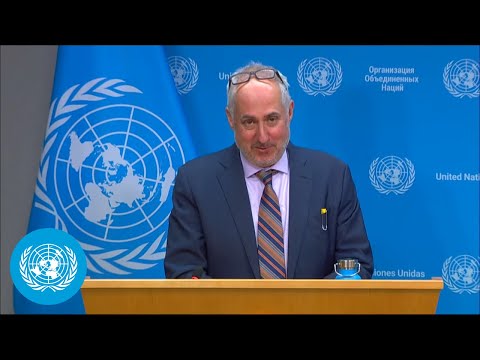
United Nations spokesperson Steph said on a briefing that humanitarian access in Gaza remains severely restricted and that a recently proposed modality by Israeli authorities “does not meet the minimum bar for principal humanitarian support.” The briefing summarized statements from the UN emergency relief coordinator and UN humanitarian partners on conditions in Gaza and the occupied West Bank.
Steph said Tom Fletcher, the UN Under-Secretary-General for Humanitarian Affairs, “said in a statement that the hostages in Gaza must be released, but international law is unequivocal. As the occupying power, Israel must allow humanitarian support in aid and the civilian lives it saves should never be a bargaining chip.” The spokesperson added that Fletcher described the humanitarian movement as “independent, it's impartial, and it's neutral.”
UN humanitarian teams on the ground reported that movement restrictions inside Gaza, ongoing military activity, and attacks continue to jeopardize the safety of aid workers and storehouses, disrupting relief operations. Recent strikes reportedly hit residential buildings and tents sheltering displaced persons in Rafah and eastern Gaza City. Humanitarian partners estimated more than 423,000 people had been displaced again, with “no safe place to go.” The spokesperson also said attacks on convoys and looting were increasing, noting two incidents in Gaza City the previous day.
Steph cited public health partners saying the World Health Organization and others report “severe shortages of vital medicines and medical equipment” and warned that cases of acute watery diarrhea have risen about 4 percent compared with previous weeks as hygiene conditions deteriorate. She said UN teams have been unable to retrieve remaining stocks of fuel that require coordination with Israeli authorities, adding that eight of nine such retrieval attempts have been denied since mid-April.
The briefing also noted the humanitarian situation in the West Bank: Steph said today marks 100 days since Israeli operations in northern West Bank areas began, causing “a wave of deaths, injuries, destruction, and displacement.” She said roughly 40,000 Palestinians remain displaced and unable to return home, and that nearly 7,000 families have received a first round of cash assistance since January 21.
The spokesperson emphasized the effects on children, saying partners working on child protection warn that children—who make up roughly half of Gaza's population—face escalating trauma, interrupted education, and disrupted protection services. She said humanitarian partners continue to deliver food, water, sanitation, health services, psychosocial support, and cash assistance where feasible.
The UN briefing presented the humanitarian concerns and the practical constraints facing aid delivery; no new authorization or operational change was announced during the briefing.