Get Full Government Meeting Transcripts, Videos, & Alerts Forever!
Get email alerts on the Municipal Finance topic
No spam. Unsubscribe anytime.
Lafayette staff outline $74 million plan to rebuild civic, recreation and service facilities; tax increase options discussed
Summary
City of Lafayette staff presented detailed cost estimates and financing options for three priority facility projects at a community meeting, saying the work would total about $74 million and likely require voter-supported borrowing.
City of Lafayette staff presented detailed cost estimates and financing options for three priority facility projects at a community meeting, saying the work would total about $74 million and likely require voter-supported borrowing.
Megan Davis, a city staff presenter, told attendees the city has identified three top-priority projects after a facilities assessment: a renovation and expansion of the BBRC recreation center, a new civic center on South Public Road north of the downtown “dragon” location, and a service center on South Boulder Road that houses public works operations. “We are looking at 3 projects for, potential development and renovation,” Davis said.
Why it matters: the city’s preliminary estimates put the recreation center and civic center at roughly $34 million each and the service center at about $6 million, for a combined estimated capital cost of approximately $74 million. Staff said issuing 20-year bonds to pay for the work would create roughly $5.9 million in annual debt service. That scale would require a new revenue stream, with staff presenting either a sales-tax increase or a property-tax (mill levy) increase as the main options.
Staff and consultants outlined the city’s fiscal picture and the likely financing impacts. Morgan Walton, identified as an acting finance director attending the meeting, and Maddie Pernonovic of Hilltop Securities participated in the finance discussion. Pernonovic said, “The assumed interest rate for the bonds that are kinda making up these debt service numbers is 5%,” and added that if bonds were sold immediately the effective rate might be closer to 4.5% given recent market movement.
City staff described the sales-tax option as the one that would most directly generate the $5.9 million annual debt service in their preliminary model. The presentation said Lafayette’s city sales tax is currently 3.87%, with 3.00 points going to the general fund; staff estimated a minimum additional 0.85 percentage-point city sales-tax increase would be needed to support the full package. That change would put the city’s sales tax at about 4.72% and raise the total local sales-and-use tax rate (including state, RTD and county shares) to about 9.9%, staff said. The presentation noted Lafayette is already near the high end among comparable Front Range municipalities for combined sales taxes.
On property tax, Alex Nelson, assistant to the city manager, explained Colorado’s mill-levy system and said Lafayette’s 2025 mill levy is 15.87 mills, which includes earmarks: about 4.5 mills for ambulance and fire and 2 mills for general public safety. Nelson gave a per-household framing: the three-project package would translate to an estimated increase of roughly $48 per year for each $100,000 of assessed value, or about $300 annually for a house with an assessed value profile staff used in the example (the presentation used a $685,000 market-value benchmark after state value adjustments). Nelson emphasized that school and county levies make up the majority of a homeowner’s annual bill; Lafayette receives roughly 18 cents of every property-tax dollar collected in the city.
Budget and capital context: staff gave a brief recap of Lafayette’s 2025 budget, saying the total 2025 budget is about $121 million and that approximately 23% of that is capital. They said about 84% of capital spending is from dedicated or enterprise funds, 14% from the general fund, and roughly 2% goes to facility maintenance. Historical annual facility-maintenance budgets were listed in a broad range of $200,000–$650,000, reflecting that facilities are typically prioritized after debt service and personnel costs.
Cost assumptions and risks: staff said their preliminary estimates included a 4% annual escalation assumption and soft-cost allowances of about 25–30%. They did not model catastrophic cost increases (for example, doubling of construction costs) and told the public they would not recommend proceeding in the event of extreme cost escalation. Consultants noted that delaying construction typically raises costs over time, but staff also acknowledged market and interest-rate volatility could affect final borrowing costs and project timing.
Community questions and concerns: attendees raised questions about how the civic center would change the distribution of municipal services currently spread across the city, what would happen to the existing city building, and whether moving municipal court out of the police building might raise operating costs. A resident who identified himself as Frank and said he served on the police-building committee asked about separating courts from police; staff said municipal court space now serves multiple uses and that separating courts from police is a common practice intended to reduce perceived intimidation and improve safety.
Residents also pressed staff on transportation and basic road-maintenance funding. Several participants asked why major bonding would be proposed for buildings when staff said the city is not currently meeting some recommended annual road-maintenance spending levels. Staff responded that routine road maintenance is funded through annual general-fund budgeting, while large multimodal transportation projects typically rely on state and federal grants or dedicated capital funding; staff said bonding is not always the best tool for annual pavement maintenance.
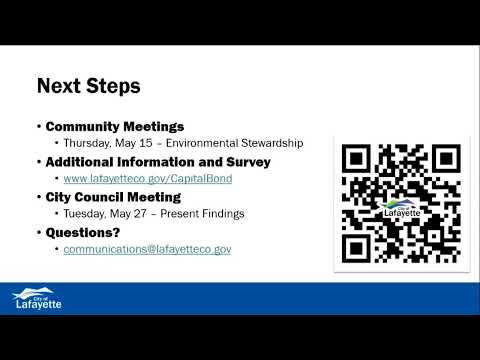
Process and next steps: Davis said the city is in an early exploratory phase. Staff are finishing a statistically representative survey and will compile meeting feedback to report to council in May; the council may decide whether to advance a ballot question for voter consideration. If council chooses to proceed this year, staff said the earliest ballot date would be the November election; other options include postponing to a later year. The presentation also noted that each project would require a separate design process (roughly 8–16 months) with additional community engagement if the projects move forward.
No formal vote or council decision occurred at the community meeting. Staff emphasized the material presented was preliminary and that additional study, design and public engagement would be required before any bond issuance or ballot measure.
Ending: City staff encouraged residents to take an online survey and to use comment boards at the meeting; staff said they would report survey and meeting findings back to city council for further direction.