House approves plain-language updates to garnishment forms from Debt Fairness Act implementation
Summary
Senate File 2847, which updates statutory garnishment forms following last year’s Debt Fairness Act and applies plain-language revisions, passed the House 133-0 on April 30. The changes update exemptions, definitions and wage garnishment tiers and were developed with input from courts, banks, employers and advocacy groups.
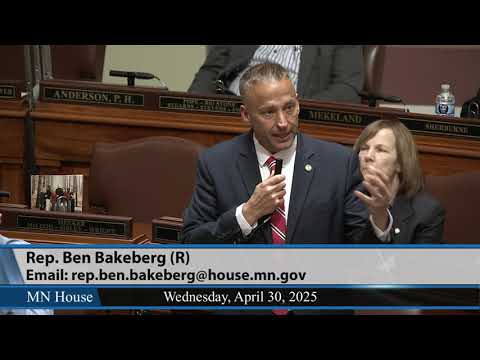
The Minnesota House on April 30 passed Senate File 2847, legislation that updates statutory garnishment forms and incorporates plain-language revisions following changes enacted in last year’s Debt Fairness Act. The bill passed 133-0.
Representative Reyer (member from Dakota), the bill’s floor sponsor, said the Debt Fairness Act modernized bank and wage garnishment processes and, because processes changed, “the required forms also needed to change.” Reyer described a stakeholder-driven process led by the attorney general’s office that included courts, attorneys, banks, employers, consumers and advocacy groups; a plain-language specialist also participated.
Reyer said three types of content changes were necessary: updating exemptions, updating definitions and incorporating new wage-garnishment tiers. After those substantive edits, the drafts received plain-language revisions focused on simplified language and clearer layout. He said a subject-matter expert signed off on the forms and a copy of that sign-off letter was being circulated on the floor.
Representative Scott (member from Anoka) described the bill as “important, not exciting,” and said periodic updates to forms are necessary. The bill then received a third reading and the clerk recorded 133 ayes and 0 nays.
Senate File 2847 updates statutory garnishment forms to align with substantive changes made by the Debt Fairness Act and applies plain-language design improvements intended to reduce mistakes by consumers and other parties who must complete the forms.
AI generated
The text on this page is AI generated. Summaries, highlights, analysis, and video transcripts are all produced from the original source material.
AI can make mistakes, so if you spot one, and we will fix it for everyone.
Note: the source content is unaltered by us. Any content source we link to, be it a video, an audio recording, or a document, is presented exactly as its publisher released it. That publisher is usually a government body, sometimes an individual official or another organisation.