Get Full Government Meeting Transcripts, Videos, & Alerts Forever!
Get email alerts on the Mdot Bond Program topic
No spam. Unsubscribe anytime.
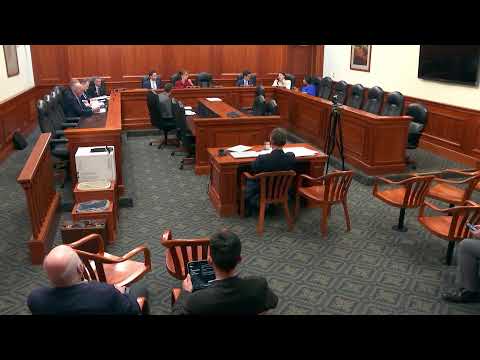
Subcommittee hears overview of MDOT bond program, outstanding debt and borrowing limits
Summary
William Hamilton, fiscal agent with the Michigan House Fiscal Agency, told the Appropriations Subcommittee that MDOT uses revenue bonds secured by restricted transportation revenue and that the department has sold about $2.8 billion of a $3.5 billion authorization.
William Hamilton, fiscal agent with the Michigan House Fiscal Agency, told the Appropriations Subcommittee on State and Local Transportation that the Michigan Department of Transportation has used revenue bonds for decades to accelerate its capital construction program.
Hamilton said states commonly use bond financing for transportation and that Michigan has approximately $3 billion in outstanding transportation-related debt. He traced Michigan's bond sales back to 1919 and cited Public Act 25 of 1919 and Public Act 22 of 1950 as historical examples. He explained that the authority to issue bonds for state trunk line projects rests with the State Transportation Commission and that MDOT’s bonds are revenue bonds secured by constitutionally restricted transportation revenue (fuel taxes and registration taxes), not full faith and credit obligations of the state.
On the Rebuilding Michigan bond authorization, Hamilton said the State Transportation Commission authorized up to $3.5 billion in bonds in 2020; to date MDOT has sold about $2.8 billion and the department anticipates selling roughly $700 million of the remaining authorization within the calendar year. He emphasized that bond proceeds are not appropriated in the annual budget and that the budget interacts with bond financing chiefly in the debt service appropriation unit.
Hamilton outlined statutory and policy debt limits. He said Public Act 51 limits State Trunk Line Fund (STF) debt service so constitutionally restricted STF revenue must be at least twice the related STF debt service (a 2:1 coverage rule), and that State Transportation Commission policy sets a more restrictive 4:1 revenue-to-debt-service coverage target. Hamilton said current STF revenue is about 5.4 times the amount needed to cover STF debt service, which places Michigan below the statutory and policy limits in the most recent statements he reviewed.
Committee members asked how long current debt will take to retire and how much total interest and principal would be paid over time. Hamilton said bond maturities vary by series and structure, that some issues are callable and refinancings are pursued when they meet MDOT’s policy threshold (net present value savings of at least 3 percent), and that he could provide MDOT-calculated estimates of total lifetime cost and the schedule of debt service on request.
Representative Morgan, Representative Edwards and others pressed for clarity on how borrowing shifts costs across generations; Hamilton acknowledged borrowing pulls future restricted revenue into present capital work but said the tradeoff is that motorists receive improved facilities sooner.
Ending: Hamilton offered to provide additional figures and the MDOT financial statements as they become available for further committee review.