Get Full Government Meeting Transcripts, Videos, & Alerts Forever!
Get email alerts on the County Budget topic
No spam. Unsubscribe anytime.
Multnomah County outlines budget calendar, amendment rules and public hearing schedule ahead of chair’s proposed budget
Summary
County chair and budget staff briefed commissioners on the budget calendar, public hearing schedule, the 10% rule for fund increases after approval, and expectations for amendments and budget notes; commissioners raised concerns about timing, transparency and public outreach for hearings.
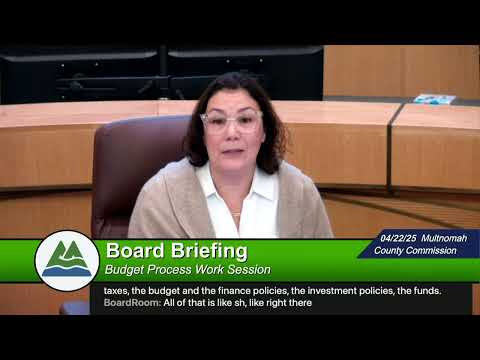
Multnomah County Chair Vega Peterson and Budget Director Christian Elkin briefed the Board of Commissioners on the county’s budget timeline, amendment procedures and public engagement for the upcoming budget process.
Elkin said the chair’s proposed budget will be released on Thursday (date provided in meeting materials) and outlined a sequence of public hearings, department work sessions and an approval step scheduled for May 8. He described the statutory complication introduced by the county’s use of the Tax Supervising and Conservation Commission (TSCC): once the board approves a budget, Oregon local budget law limits increases to a four‑digit fund by more than 10% without an additional hearing or a supplemental process.
“Elkins explained the 10% rule applies at the fund level and not to department line items,” Chair Peterson said during the briefing. The budget office said the rule primarily affects smaller funds and capital funds; large funds such as the general fund have room to absorb changes through the standard amendment process, while larger increases may require an additional TSCC hearing or later supplemental budget.
The briefing described how the board’s approval step differs from final adoption: approval allows the board to publicly begin deliberations and submit materials to TSCC, and adoption — the final legal step — occurs after public hearings and any adjustments. Commissioners asked for clarity on sequencing because the county serves as both the executive proposer and the governing board, a dual role that conflates stages that in other jurisdictions are handled by separate budget committees.
Commissioners raised several process and transparency concerns, including the short turnaround between release and the approval vote, the visibility and timing of department technical amendments, how the county will track and publish amendments and whether commissioners’ proposed board amendments should include offsetting reductions to keep the overall budget balanced.
The budget office said it will provide a detailed kickoff packet after the chair’s release that includes appendices, a public calendar, the budget‑to‑actual monitoring dashboard and a proposed schedule for department presentations and follow‑ups. Staff noted they will lengthen the deliberation period this year and post materials online; commissioners asked staff to make the materials accessible (language access and readability) and to do targeted outreach to expand public participation beyond the typical demographics that use the hearings.
The county encouraged commissioners who plan to file amendments to coordinate with budget staff early, to propose balanced amendments where possible, and to use budget notes to set clear expectations for departmental follow‑up and public reporting. The board scheduled multiple department work sessions and follow‑ups over a seven‑week deliberation window.
The briefing closed with staff offering to post presentation notes with the board packet and to continue refining the calendar; commissioners asked for additional clarity on the TSCC schedule and for the budget office to collect feedback after the process for improvements in future cycles.