Get Full Government Meeting Transcripts, Videos, & Alerts Forever!
Get email alerts on the Housing Tenant Protections topic
No spam. Unsubscribe anytime.
Oxnard staff propose code tweaks, administrative rules to tighten just-cause evictions and rent-stabilization enforcement
Summary
City staff presented proposed amendments to OxnardCity Code sections governing just-cause evictions and proposed administrative regulations on registration, right of first refusal and the Ellis Act; staff removed a proposed fair-return petition rule for further stakeholder work and recommended council consider first reading by title only.
Alba Marshall, rent stabilization and just-cause eviction program supervisor for the Oxnard Housing Department, told the City Council that staff recommend amending the citycode to strengthen enforcement of the Just Cause Evictions and Other Tenant Protections ordinance and adopting administrative regulations to implement parts of the rent stabilization and just-cause programs.
Marshall said the city originally adopted the just-cause ordinance on April 13, 2022 (effective June 2, 2022) and that ordinance amendments were later adopted on Jan. 25, 2024 and July 30, 2024. She told the council staff introduced further amendments to the Just Cause Ordinance and draft administrative regulations to the Community Services, Public Safety, Housing and Development Committee on March 25, 2025.
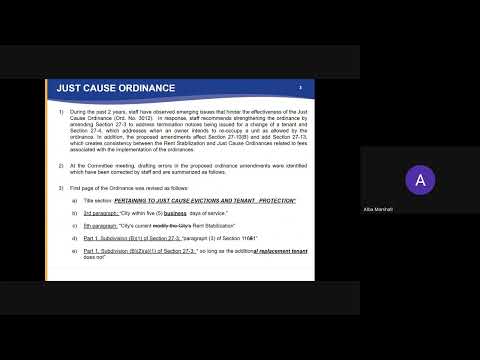
The proposed code changes would amend Oxnard City Code section 27-3 to address termination notices issued for a change of tenant and section 27-4 to clarify rules for owner reoccupancy. Staff also propose amending section 27-10(b) and adding a new section 27-13 to align fee provisions between the rent stabilization and just-cause ordinances. Marshall said drafting errors identified at the committee meeting have been corrected in the current draft.
Marshall summarized specific language clarifications in the draft ordinance, including revised text ensuring an owner who intends to reoccupy a unit must demonstrate an intent in good faith to occupy the unit as a principal residence for a minimum of 24 months commencing within 90 days of the tenancy termination. She also noted updates to registration provisions tied to section 27-29 and section 27-13 in the registration regulatory exhibit.
On administrative regulations, Marshall said staff propose three initial rules to implement the ordinances: a registration regulation, a right-of-first-refusal regulation, and an Ellis Act regulation. She said staff removed the draft fair-return petition regulation from the package after public comment and committee discussion, and that staff will collaborate with community stakeholders to further refine that regulation and return it to committee at a later date.
Marshall reported that the city received written comments from the law offices of Barbara Macri Ortiz, Coz, and Carl Lawson; she said most of the written comments raised concerns about the proposed fair-return petition regulation and also identified drafting errors in the administrative regulation exhibits. Staff corrected the drafting errors and updated exhibit lettering after removing the fair-return petition regulation.
As a next step, Marshall recommended that the City Council review and approve the ordinance for first reading by title only, waive further reading, and approve a resolution establishing the administrative regulations that remain in the package. The transcript does not record a council vote or further action on that recommendation.
Staff emphasized that the fair-return petition regulation will be developed further with community stakeholders before returning to committee, and that the administrative regulations already in the package (registration, right of first refusal, Ellis Act) are intended to close implementation gaps and make the ordinances easier for tenants, landlords and staff to apply.