Get Full Government Meeting Transcripts, Videos, & Alerts Forever!
Get email alerts on the County Facilities topic
No spam. Unsubscribe anytime.
Cochise County facilities director outlines aging infrastructure, seeks energy-audit options to cut costs
Summary
Facilities Director Daryl Crowley told the Board of Supervisors the county is managing more than 1,200 work orders this year, faces widespread HVAC and building maintenance needs, and is pursuing energy audits and grant funding to reduce long-term costs.
Daryl Crowley, Cochise County director of facilities, told the Board of Supervisors during a work session that the county’s facilities operation is handling a heavy workload and facing aging infrastructure that will require large, multi-year investments.
Crowley said the county has logged about 1,200 work orders in the nine months covered by the current operating year and that “only a 30 of them are still open,” a figure he offered to show the department’s turnaround on routine requests. He described facilities’ scope as broad, covering building maintenance, parking lots, backup power systems and transfer stations.
The county’s HVAC inventory is a central concern. Crowley said an earlier assessment showed “within the next 5 years, 80 to 85% of all of our HVAC units were past due, being replaced.” He told supervisors that individual HVAC replacements typically cost in the “quarter to a half a million dollars” range per building and that several large replacements remain on the department’s multi‑year list.
Crowley said the department has explored third‑party energy audits and efficiency programs and has been in discussions with a company identified in the meeting as McKinstry. He described McKinstry as having grant writers and staff who can seek federal funding and manage efficiency projects and said one full investment‑grade audit would normally require an upfront fee the county had been reluctant to pay: “it’s a hundred thousand dollars that we'd have to pay them upfront. And if we didn't do anything with them, they'd get a hundred thousand. If we did, then that money would go…be part of the whole investment grade audit and moving forward.”
Board members and Crowley discussed retrofit versus new‑building decisions. Crowley emphasized that building in energy‑saving features during initial construction can avoid more costly retrofits later. He described examples such as automated HVAC controls that can place buildings into unoccupied mode overnight and solar‑collecting skylight/LED combinations McKinstry had described as potential cost savers when grants are available.
Crowley also listed common, recurring maintenance problems that drive costs: lighting and roof work, rusted water lines in rocky backfills, elevators (the county has four), and equipment damaged by lightning or storm events at remote facilities. He said some facilities are more than 100 years old and require work to meet modern code and usability standards.
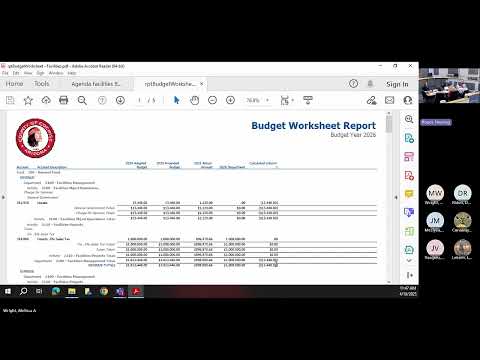
Crowley told the board his current budget request is largely unchanged from the prior year and that the department expects to remain “a little tight” as the year closes, but he did not ask for additional operating funds at the session.
Supervisors asked operational questions about access, maintenance design considerations and contractor availability; Crowley noted the county tries to perform as much work in‑house as possible because the local pool of contractors is small and quoting can be time consuming. He also described efforts to centralize HVAC controls so technicians can monitor systems remotely.
Crowley recommended continued pursuit of external funding where available; he described McKinstry’s pitch that it could identify grant opportunities and manage projects so the county would not always have to come up with large sums up front. Board discussion repeatedly returned to balancing upfront cost with lifecycle savings.
Crowley closed by emphasizing the long list of deferred and scheduled replacements and upgrades the department is managing and offered to walk board members through individual line items if they wished to drill into specific buildings or vendor accounts.