Get Full Government Meeting Transcripts, Videos, & Alerts Forever!
Get email alerts on the Infrastructure And Utilities topic
No spam. Unsubscribe anytime.
Stormwater coordinator outlines NPDES‑driven program, local projects and volunteer green‑infrastructure plans
Summary
The town’s stormwater coordinator summarized regulatory requirements, capital projects (Quailwood/ Fourth Street, Lakeshore stabilization), mapping and a planned volunteer green‑infrastructure program to build rain gardens and bioswales.
Prescott Valley — The town’s stormwater coordinator, Ariana Odom, briefed the council on April 3 about the town’s National Pollutant Discharge Elimination System (NPDES) obligations, ongoing capital projects and plans for volunteer‑led green infrastructure.
Odom said the town’s stormwater program implements the Arizona Pollutant Discharge Elimination System permit (ADEQ administers NPDES in Arizona) and described six minimum control measures the town must manage: public education and outreach; public participation; illicit discharge detection and elimination; construction‑site runoff control; post‑construction stormwater management for new development; and pollution prevention/good housekeeping for municipal operations.
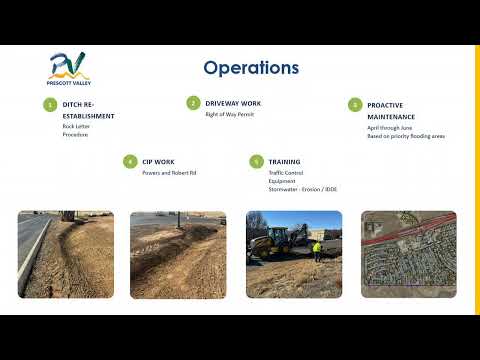
Program activity and projects highlighted: - Capital and stabilization: Odom noted the nearly completed Fourth Street drainage work in Quailwood and identified two Lakeshore stabilization locations with erosion concerns (including near Towago). She said those sites are candidates for riprap and other bank stabilization measures. - Mapping and inspections: The town maintains storm‑drain mapping in GIS and conducts dry‑weather screening (visual inspections) for at least 20% of outfalls per year and wet‑weather monitoring during storm events as required by permit. - Maintenance and operations: Crews are conducting ditch reestablishment, culvert cleaning and upsizing undersized culverts where needed; staff said a backlog of work orders has been largely cleared and the town is now moving to a more proactive maintenance posture. - Volunteer green infrastructure: Odom described a planned volunteer‑driven program to build neighborhood rain gardens and bioswales to slow runoff, provide infiltration and beautify public spaces with low overhead.
Regulatory context: Odom stressed that the town’s activities are driven by federal and state permit requirements and noted the town participates in a Northern Arizona MS4 collaborative to share best practices with neighboring jurisdictions.
Next steps: Odom said operations crews will continue stabilization and maintenance work, staff will develop the volunteer green‑infrastructure rollout, and the program will integrate with water‑conservation outreach and other town initiatives.
Ending: Council members commended the operations work (culvert cleaning and ditch maintenance) and the coordinator’s outreach plans; Odom said she will continue stakeholder coordination and return with program updates as needed.