Get Full Government Meeting Transcripts, Videos, & Alerts Forever!
Get email alerts on the Public Works topic
No spam. Unsubscribe anytime.
Residents decry tree removals as council advances alley and street reconstruction projects; hearings continued
Summary
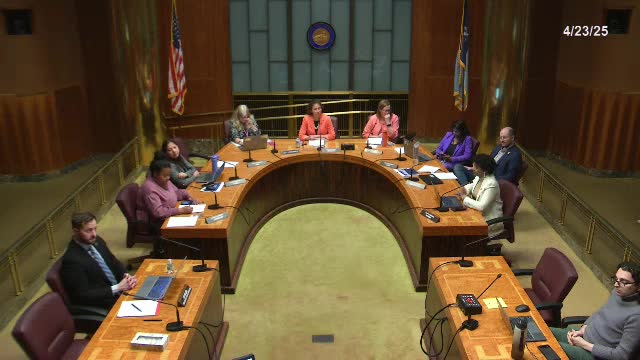
The Saint Paul City Council adopted a final order for the 2025 alley improvement program and ratified an assessment roll, but heavy resident turnout over tree removal and special assessments led the council to continue a larger streets reconstruction public hearing to May 7.
The Saint Paul City Council on April 23 adopted a final order for the 2025 Alley Improvement Program and ratified assessments related to a multi‑year street paving program, but public testimony focused on the removal of mature street trees and on special assessments prompted the council to continue the larger streets reconstruction public hearing to May 7.
Assistant Street Engineering Division Manager Steve Dodge told the council the alley program inventory includes roughly 2,300 alley segments and about 330 miles of alleys; current annual funding for alley work is approximately $400,000, supplemented by assessments and capital funds. Staff said the new program will use a special‑benefit analysis and a capped assessment approach similar to the city’s street program; staff noted $3.4 million in capital improvement funds available to leverage assessments.
Council adopted the final order for the 2025 Alley Improvement Program (item 31) and ratified assessments for the Griggs‑Shepherd Paving and Lighting Phase II project (item 32). The council recorded routine votes (multiple items passed with 6 in favor, 1 opposed).
During the public hearing on the broader 2025 street reconstruction projects (item 33), dozens of residents testified about tree removals and the impacts of assessments. Testimony included:
- “It’s horrible,” resident Rita Amendola said of the denuded streets after recent removals. “The only word that goes to my head over and over again is that it’s horrible.”
- Zane Umstead, a resident in the project area, said he had spoken to realtors and estimated lost canopy could reduce property values, adding that many residents see little private benefit from new sidewalks compared with the loss of mature trees.
- Others described the emotional and neighborhood‑character impacts of losing mature canopy and urged alternatives to wholesale removal.
Staff and finance officials explained how assessments are calculated and noted exemptions. Lynn Rolfe of the Office of Financial Services said assessment caps vary by property class: single‑family parcels had a higher cap (1.25% in the cited project) while condos and multifamily had lower caps, and some properties were counted for frontage but not assessed where there is no access or benefit.
Council members also pressed staff for clarity on why trees were removed before the public hearing; Mr. Dodge explained that state endangered‑species rules affecting long‑eared bat hibernation require removals be completed before April 14, the end of the DNR hibernation window. “Their hibernation period is from November 1 to April 14,” Dodge told council; staff said trees for 2025 projects statewide were removed during the allowable window to comply with state wildlife protections.
Because many constituents had contacted Ward 5 Council Vice President Kwajang Kim and she was absent on a planned leave, Council President Naker moved and the council voted to continue the street reconstruction public hearing to May 7 so Vice President Kim can participate and to allow additional public input.
Why it matters: These projects involve large capital investments (one reconstruction cited a total project cost of about $17 million with roughly $2 million assessed, about 11% of the project cost) and long‑term impacts on neighborhood character, canopy, stormwater management and property assessments. Residents, developers and public‑works staff raised competing priorities: infrastructure upgrades, stormwater improvements and resident concerns about tree canopy and assessment burdens.
What’s next: The council continued the public hearing to May 7; staff committed to return with additional materials about backlog, program funding needs, assessment calculations and a proposed capital improvement plan for alleys.