Get Full Government Meeting Transcripts, Videos, & Alerts Forever!
Get email alerts on the Drinking Water Notification Law topic
No spam. Unsubscribe anytime.
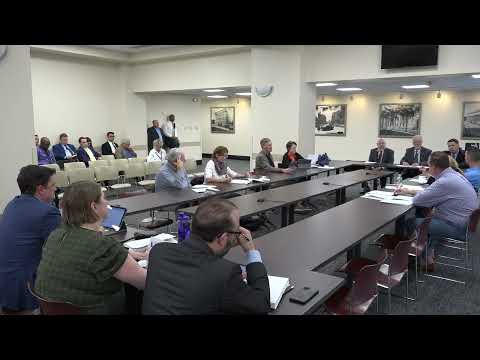
Albany County holds public hearing on proposed local law to expand county notification for elevated drinking‑water findings
Summary
At a May 1 public hearing, county health and executive staff described edits to proposed Local Law B‑2025 that would require the Department of Health to notify adjacent municipalities and select officials when elevated contaminant or algal toxin levels are discovered in county testing.
Albany County held a public hearing on proposed Local Law B‑2025 on May 1 that would amend the county code to require the Albany County Department of Health to notify local officials when elevated contaminant or algal toxin levels are found in drinking‑water testing.
Presenters said the draft law was revised after consultation with the county executive's office and environmental health staff to narrow the department's responsibilities to what it can operationally perform. "We did remove language regarding testing of soil, and I think there was some discussion of air quality testing. The department doesn't do that kind of testing," the presenter said, describing edits that focus the local law on water testing and notification.
The changes also add operational detail about notifying adjacent municipalities. The presenter recounted a recent local incident in which well tests in New Scotland prompted a response: the locations of private wells were closer to a county reservoir than initially realized, prompting broader notification needs. "The point of this is notification: if DOH is doing that kind of testing to not just notify the municipality, but the adjacent municipalities," the presenter said.
Other edits described at the hearing include relying on state and federal test results (for example, from the New York State Department of Environmental Conservation) when appropriate, trimming the list of officials who would receive automatic notices to limit volume, and switching from mailed notices to email to expedite delivery to local leaders. The presenter said the version posted on the county's agenda (Granicus) was the updated draft developed with the executive office and environmental health experts.
The public hearing record in the meeting closed after discussion and a clerical amendment was made to correct the hearing date to May 27 where required. No final committee vote on the local law was recorded in the transcript excerpt; the presenter said the committee had voted the item out the previous night and this hearing reflects the public‑hearing step in the local‑law process.